
SpaceX Stock: Investment Outlook and Aerospace Market Trends
SpaceX remains a privately held company, but investor interest in its valuation and aerospace sector growth continues to surge in 2026. Analyzing the company's role in commercial spaceflight and defense contracts reveals critical trends shaping the future of private aerospace investment.

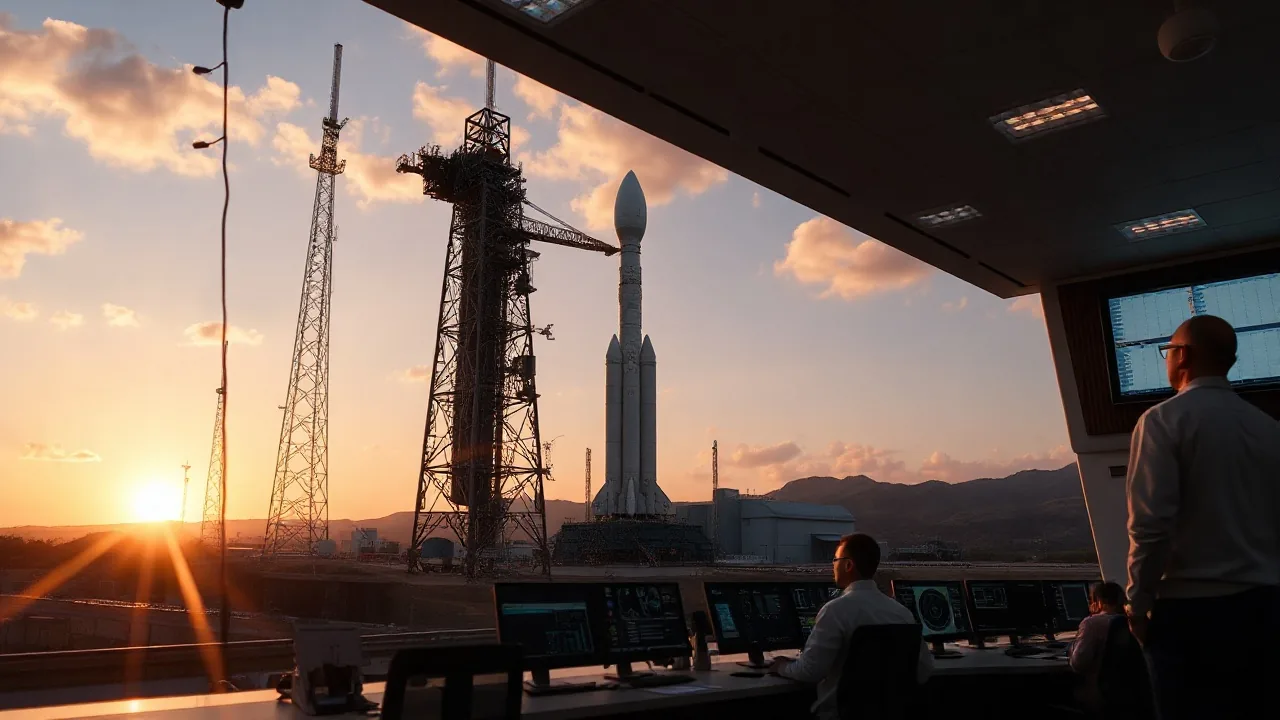
Elon Musk's SpaceX has become the focal point of aerospace investment discussions in 2026, even as the company remains privately held and unavailable on public exchanges. The surge in retail investor interest seeking exposure to SpaceX reflects broader momentum in the commercial space industry, where private contractors now handle tasks once reserved for government agencies.
The aerospace sector has undergone a seismic shift over the past five years. SpaceX's Falcon 9 rockets completed over 80 successful launches by mid-2026, cementing the company's dominance in cargo and crew resupply missions to the International Space Station. The U.S. Space Force awarded SpaceX a multi-year certification to launch National Security Space Launch missions, a contract category worth billions.
For investors unable to buy SpaceX directly, understanding the company's financial trajectory and market position offers crucial insight into where aerospace investment opportunities lie. SpaceX's latest valuation, as of April 2026, reached approximately $210 billion in secondary market transactions, making it one of the most valuable private companies globally.
Why SpaceX Valuation Matters in 2026
SpaceX's valuation growth reflects genuine operational expansion, not speculation. In 2026, the company launched Starship, its fully reusable super-heavy lift vehicle, completing 12 test flights and moving toward regular orbital operations. Each successful test de-risks the company's long-term revenue model centered on lunar missions, Mars transport, and satellite constellation deployment.
"SpaceX has fundamentally changed the economics of space access," said Marco Rodriguez, aerospace analyst at Apollo Capital Partners. "Their reusable rocket technology cuts launch costs by 70 percent compared to legacy providers, unlocking entirely new markets." This cost advantage translates directly to higher margins and justifies investor appetite for ownership stakes at elevated valuations.
The company's commercial customer base now includes satellite operators like Starlink's own division, private space stations, and international governments. Revenue generation from rideshare launches, national security contracts, and emerging space tourism activities provides multiple revenue streams independent of NASA funding.
Public Market Alternatives and Related Opportunities
Investors seeking private aerospace exposure through public markets have options beyond waiting for a SpaceX IPO. NASA stock is not traded directly, but NASA contractors like Lockheed Martin (LMT), Boeing (BA), and Northrop Grumman (NOC) remain active on U.S. exchanges. These companies supply rockets, spacecraft, and components to federal missions and increasingly partner with private firms on hybrid projects.
Axiom Space, which builds commercial space station modules, and other emerging aerospace firms have attracted venture capital rather than going public. Spacefleet Technologies and other SpaceX competitors in commercial launch services remain private or backed by institutional funds not accessible to typical retail investors.
The real opportunity for public market participants lies in recognizing which established aerospace contractors are winning contracts from SpaceX's success. Vibrant subcontracting networks have emerged around commercial spaceflight, creating supply chain wealth that flows through publicly traded component manufacturers and systems integrators.
Government Contracts Driving Growth
U.S. Department of Defense spending on commercial space services reached $18.3 billion in fiscal year 2026, with SpaceX capturing approximately 60 percent of military launch contracts. The Space Force's Space and Missile Systems Center has awarded SpaceX continuous responsibility for national defense missions, a trust-building arrangement that ensures steady revenue.
NASA signed a new agreement with SpaceX in March 2026 extending Commercial Crew Program funding through 2028, guaranteeing quarterly crew rotation missions to the International Space Station. This recurring revenue stream provides financial stability that supports capital expenditure on next-generation vehicles.
International interest has expanded rapidly. India, Japan, and European agencies have booked SpaceX Falcon 9 flights for scientific and commercial payloads. Government customers now view SpaceX as the reliable global standard for space launch, a reputation that commands premium pricing and long-term contracts.
Stock Analysis in a Pre-IPO Context
SpaceX has not filed for public offering and Musk has repeatedly stated the company will remain private until achieving sustainable profitability at Mars colonization scale, a target unlikely before 2030 at earliest. This timeline leaves current retail investors with few direct paths to ownership outside of employee stock options or secondary market purchases through specialized funds.
Secondary market pricing for SpaceX shares has appreciated 15 percent annually since 2024, outpacing traditional aerospace indices. Professional investors and family offices view these shares as a proxy for high-risk, high-reward exposure to space technology commercialization.
For stock analysis purposes, tracking SpaceX's operational metrics provides insight into company health: launch cadence, customer acquisition, profit margins per mission, and development progress on Starship. These indicators often precede public announcements and secondary market repricing.
The future of space commerce will likely center on companies achieving rapid reusability, low operating costs, and diverse revenue streams. SpaceX currently leads on all three measures, justifying its valuation premium despite remaining private. Investors monitoring SpaceX's trajectory gain foresight into broader aerospace market evolution and can position themselves accordingly through publicly traded partners and supply chain participants.