
SpaceX Stock: Evaluating Private Aerospace Investment Potential
SpaceX remains a closely watched private aerospace player amid growing investor demand for exposure to space commerce. Here's what potential investors should know about the company's financial standing and market outlook.

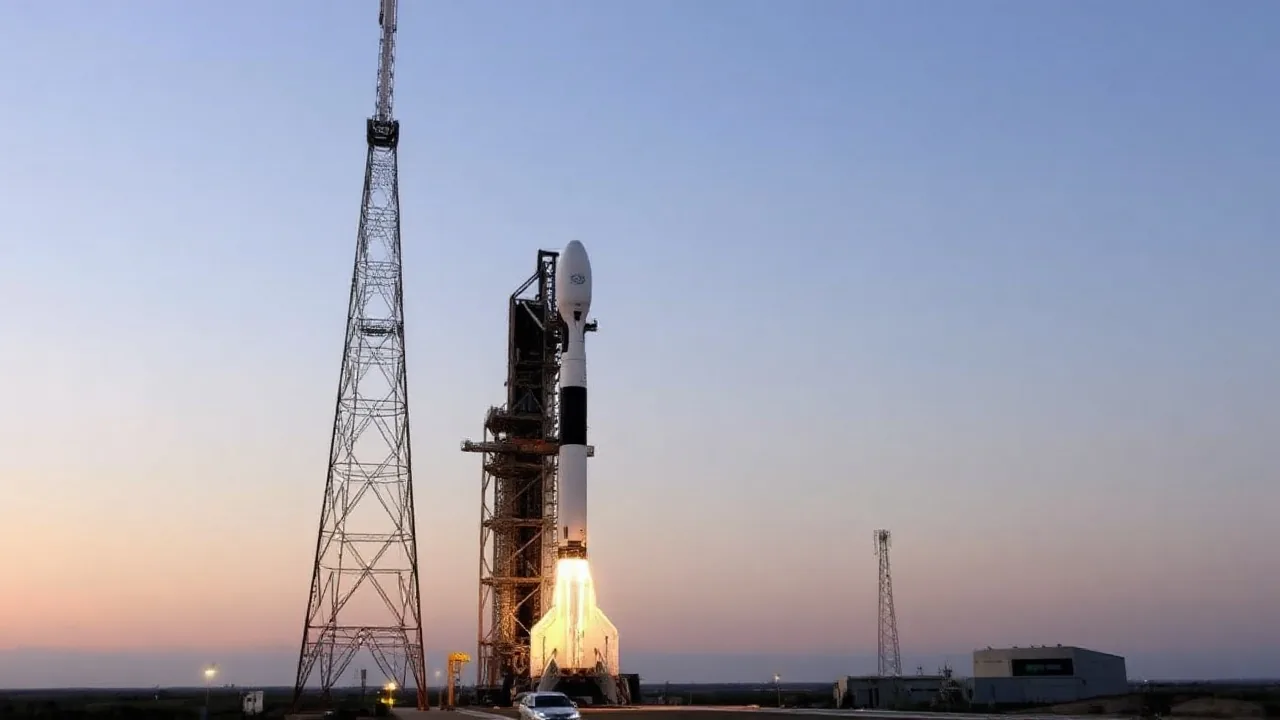
Elon Musk's SpaceX has become one of the most scrutinized private companies in the aerospace sector, with institutional investors and retail traders alike seeking exposure to the booming commercial space economy. As of August 2026, SpaceX's valuation has reached approximately $210 billion following its latest funding round, making it one of the most valuable private aerospace firms globally. The company's dominance in launch services, satellite deployment, and long-term exploration contracts has intensified market curiosity about potential public offerings and investment vehicles.
Unlike traditional publicly traded aerospace giants, SpaceX has maintained private ownership while accepting strategic capital injections from venture funds, government contracts, and secondary market transactions. This structure creates unique challenges for retail investors seeking direct equity exposure.
The Current Market Landscape
SpaceX's core business segments have demonstrated substantial revenue growth throughout 2026. Starlink, the company's satellite internet division, has reached over 8 million active subscribers globally, with monthly revenue exceeding $160 million. The Falcon 9 rocket, which conducted 52 orbital launches in 2025 and is on pace for similar numbers this year, continues to be the workhorse for both government and commercial missions.
SpaceX's government contracts represent a significant portion of revenue. The U.S. Space Force and National Reconnaissance Office rely on Falcon 9 for national security launches, while NASA contracts for Dragon cargo missions to the International Space Station continue through 2030. These multi-year agreements provide revenue stability that attracts conservative institutional investors.
"SpaceX has transformed the economics of spaceflight in ways that traditional aerospace contractors couldn't achieve," said Jonathan Mitchell, senior aerospace analyst at Orbital Economics Research. "Their launch costs have fallen to roughly $1,500 per kilogram to low Earth orbit, which is approximately 40 percent lower than competitors from just three years ago."
The private aerospace sector has expanded rapidly beyond launch services. SpaceX competes in orbital refueling, in-space manufacturing platforms, and lunar cargo delivery through partnerships with other companies and government agencies.
Investment Access and Future IPO Speculation
For most American investors, direct SpaceX stock ownership remains unavailable through traditional brokerage accounts. The company has not filed for an initial public offering, and Musk has stated publicly that he prefers to delay going public until the company achieves profitability on a sustainable basis and completes foundational development of Starship, the next-generation heavy-lift vehicle.
Several investment paths exist for those seeking exposure to SpaceX's success:
- Secondary market shares through platforms like EquityZen, Forge, and other accredited investor networks typically trade at valuations reflecting SpaceX's latest funding round
- Publicly traded aerospace contractors that benefit from SpaceX's supply chain demand, including Axiom Space and Relativity Space
- Aerospace ETFs and mutual funds with exposure to space-economy companies
- Venture capital funds that hold SpaceX equity positions from earlier investment rounds
The secondary market for SpaceX shares has remained robust. Recent transactions in July 2026 valued the company between $205 billion and $215 billion, reflecting investor optimism about Starship's development and Starlink's continued subscriber growth.
Financial Performance and Future Catalysts
SpaceX achieved positive cash flow from operations in 2025 and expects to maintain that trajectory in 2026, though the company has not released official financial statements. Industry analysts estimate annual revenue between $8 billion and $10 billion based on publicly available contract data and Starlink subscriber metrics.
Starship development represents both the company's largest capital expenditure and its most significant long-term value driver. Successful orbital refueling tests, which SpaceX aims to achieve by year-end 2026, would validate the technical approach needed for missions to the Moon and Mars. Such milestones typically trigger secondary market price increases.
The future of space commerce depends heavily on reusable heavy-lift capability. SpaceX's Starship is designed to reduce launch costs to roughly $100 per kilogram to low Earth orbit when fully operational, a decrease that would unlock new commercial applications in space manufacturing, orbital tourism, and resource utilization.
Government spending on space infrastructure remains strong. The U.S. Space Force's budget for fiscal year 2027 includes significant allocations for assured access to space launch, and SpaceX is positioned as the primary launch provider for critical national security missions. Congress has demonstrated bipartisan support for maintaining competition in launch services, which reduces regulatory risk for SpaceX's government contracts.
Risks to SpaceX's valuation include regulatory delays at the Federal Aviation Administration, technical setbacks in Starship development, increasing competition from Blue Origin and emerging Chinese launch providers, and macro-economic pressures affecting venture capital funding rounds. Insurance costs and debris management regulations also pose operational challenges.
For investors evaluating spaceflight companies and the broader investment case for private space, SpaceX remains the largest and most operationally mature option. Access remains limited to accredited investors and those with existing positions, but as the space economy matures, additional public investment vehicles are likely to emerge in coming years.