
Space Telescope Rescue Mission Faces Setback Amid Robotic Craft's Spin Issues
A critical mission to save the Neil Gehrels Swift Observatory from re-entry has encountered serious problems. The robotic spacecraft designed to capture it, LINK, is experiencing severe attitude control issues, causing it to spin and disrupting communications.

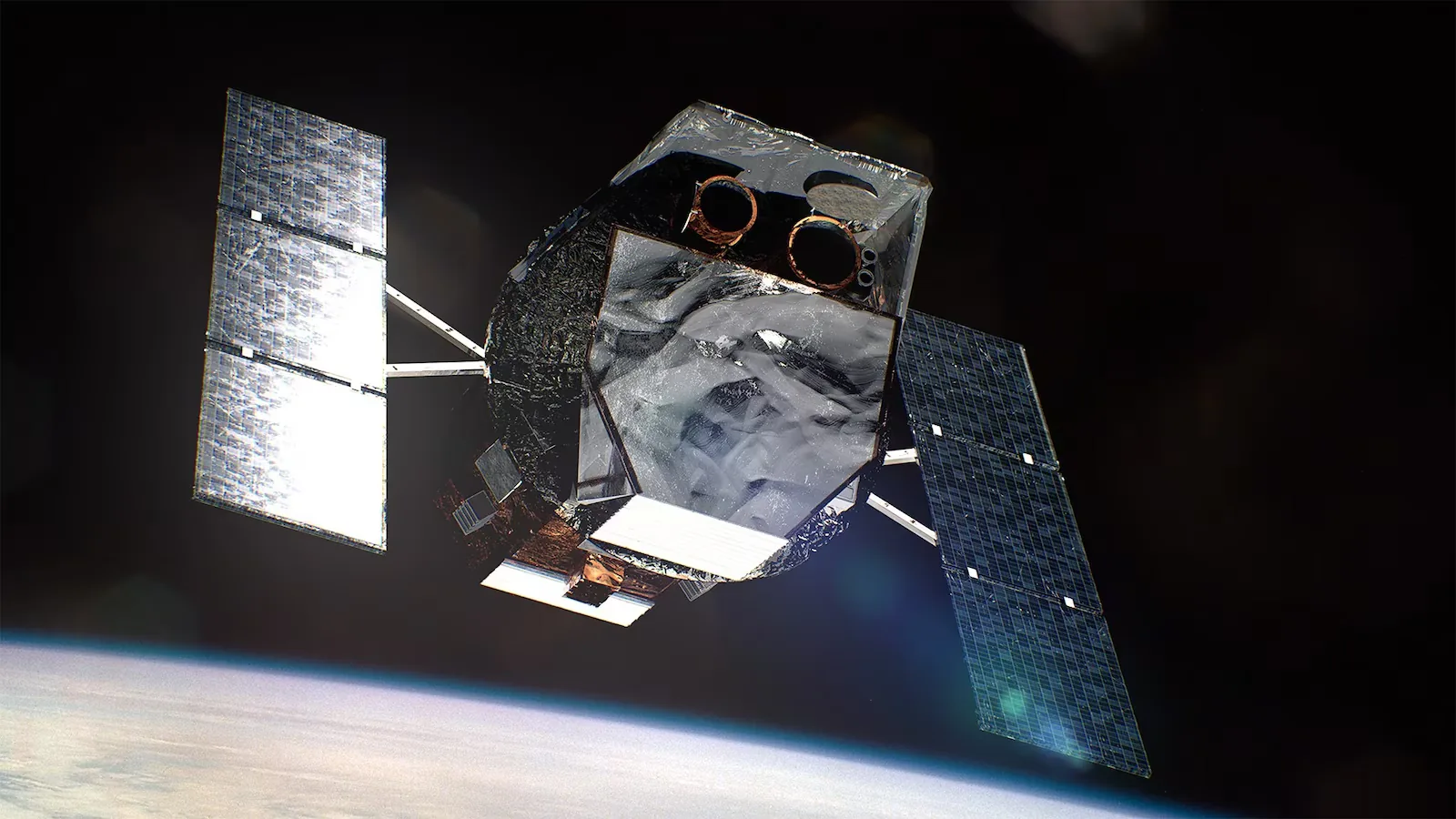
A highly anticipated mission to save NASA's Neil Gehrels Swift Observatory from burning up in Earth's atmosphere has encountered significant technical difficulties. The specialized robotic spacecraft, named LINK, which was tasked with nudging the aging telescope into a more stable orbit, has experienced critical issues with its attitude control systems. According to an update from NASA, these problems have caused the spacecraft to enter an uncontrolled multi-axis spin, leading to intermittent communication with ground control.
Katalyst Space, the company responsible for designing the LINK spacecraft, revealed that a preliminary investigation pointed to a power system malfunction. This issue has reportedly disabled two of LINK's three vital reaction wheels, components essential for maintaining the spacecraft's orientation and stability in space. Furthermore, NASA reported a partial loss of functionality in the craft's cold gas thruster system, which is crucial for the precise maneuvering required to capture the Swift Observatory. Katalyst Space is actively working to stabilize the spinning craft by utilizing LINK's gimbaled electric propulsion thrusters. The company stated on its website, "We have already begun this series of burns and are seeing the intended effect," indicating a focused effort to regain control.
A Path Forward Amidst Uncertainty
Once the uncontrolled spin is halted, Katalyst Space plans to update the spacecraft's guidance, navigation, and control (GNC) systems. These updates are intended to compensate for the degraded configuration and enable the mission to proceed. Despite these technical hurdles, Katalyst Space expressed optimism, noting that LINK's other major subsystems remain operational. "While these technical issues require a revised approach, our team is working around the clock alongside our NASA partners. The mission remains active and we continue to believe that with these changes, LINK has a viable path to rendezvous with Swift," the company stated.
However, the future of the mission remains uncertain. NASA and Katalyst Space will jointly assess revised plans for approaching and capturing the Swift Observatory once the GNC systems are updated. The ultimate decision to proceed with the capture attempt will hinge on the safety of the approach and the overall health of the LINK spacecraft. The stakes are high for this ambitious endeavor, which represents a novel approach to extending the life of valuable scientific assets in orbit.
The LINK spacecraft was launched on July 3 aboard a Northrop Grumman Pegasus XL rocket from Kwajalein Atoll in the Marshall Islands. This mission is a first-of-its-kind effort by NASA, aiming to provide a much-needed boost to the Neil Gehrels Swift Observatory, a powerful tool for studying gamma-ray bursts. Swift has been a cornerstone of astrophysics research, operating for over two decades despite an initial two-year design life. The observatory has been instrumental in studying black holes, stars, and comets, collecting data across visible, ultraviolet, X-ray, and gamma-ray spectra.
The urgency for the $30 million mission stems from the observatory's rapidly decaying orbit. Swift has been sinking faster than anticipated due to increased atmospheric drag, exacerbated by space weather conditions. If the observatory descends too far, a rescue attempt will become impossible. Without intervention, Swift is expected to reenter Earth's atmosphere and break apart by the end of 2026, marking the end of its illustrious scientific career.