
What Is SpaceX: The Company Reshaping Space Travel
SpaceX has revolutionized aerospace with reusable rocket technology and ambitious plans for Mars. Learn what the private company does, how it operates, and why it matters to the future of space exploration.

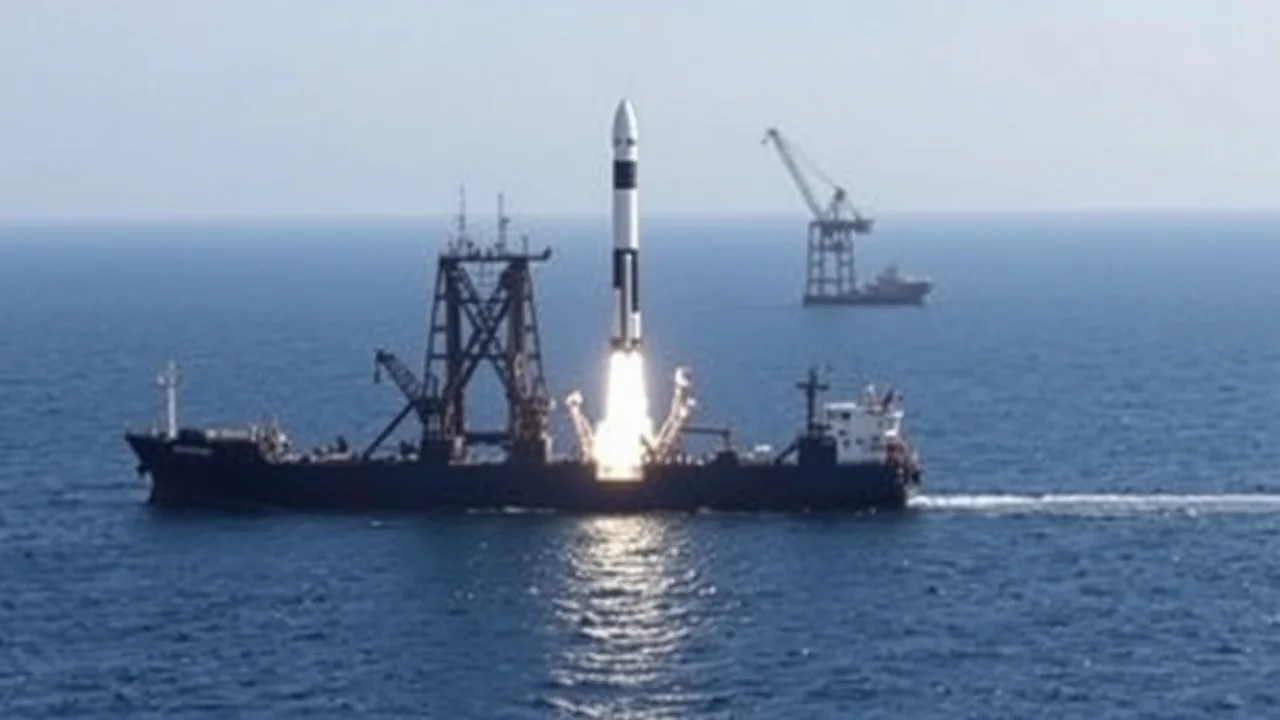
Elon Musk founded SpaceX in 2002 with a single mission: make space travel affordable and routine. Two decades later, the Hawthorne, California-based company has become the dominant force in commercial spaceflight, launching cargo and crew to orbit, operating a global satellite internet network, and laying groundwork for crewed missions to Mars.
SpaceX is not a publicly traded company. It remains privately held, with Musk holding the largest stake and serving as chief engineer. The firm generates revenue through government contracts with NASA and the U.S. Space Force, as well as commercial launch services for private companies and international clients.
The company's core innovation centers on reusable rocket technology. Before SpaceX, rockets were single-use—expensive hardware discarded after one flight. SpaceX's Falcon 9 booster lands itself vertically on a drone ship or ground pad, enabling rapid reuse and slashing costs dramatically.
How SpaceX Operates and Makes Money
SpaceX generates revenue through three main business lines. First, it launches satellites and cargo for government agencies, including NASA missions to resupply the International Space Station under a billion-dollar contract signed in 2008. Second, it provides commercial launch services to telecommunications firms and other satellite operators worldwide. Third, it operates Starlink, a constellation of thousands of internet satellites offering broadband coverage globally.
The Starlink division has become increasingly central to SpaceX's business model. As of May 2026, Starlink serves over two million subscribers across rural and urban areas where terrestrial broadband is unavailable or unreliable. Monthly subscriptions generate steady recurring revenue, distinguishing SpaceX from pure launch-service competitors.
SpaceX's workforce numbers approximately 10,000 employees across manufacturing, engineering, and operations teams. The company designs, builds, and operates its hardware in-house—a vertical integration strategy that reduces costs and accelerates development cycles compared to traditional aerospace contractors.
According to aerospace analyst Jonathan McDowell of the Astrophysics Center at Harvard-Smithsonian, "SpaceX has fundamentally transformed the economics of spaceflight. Their reusable Falcon 9 has become the workhorse of the commercial space industry, with launch costs now approaching $60 million per mission." This is roughly one-tenth the cost of comparable vehicles from competitors a decade ago.
Rockets, Spacecraft, and the Mars Vision
SpaceX operates several launch vehicles suited to different mission profiles:
- Falcon 9 - The company's primary workhorse, capable of delivering payloads to low Earth orbit and beyond. The rocket's first stage returns to Earth and lands for reuse.
- Falcon Heavy - A heavy-lift variant combining three Falcon 9 first stages, capable of launching the heaviest payloads to orbit. First launched in February 2018.
- Dragon - A crewed spacecraft that ferries NASA astronauts to and from the International Space Station. Commercial crew missions began in May 2020.
- Starship - A fully reusable super-heavy-lift vehicle still in development, designed for cargo and crewed missions to Mars and lunar orbit.
Starship represents Musk's long-term bet on Mars colonization. The vehicle is taller than the Saturn V rocket that carried Apollo astronauts to the Moon. SpaceX has conducted multiple integrated flight tests of Starship's upper stage since April 2023, progressively extending flight durations and practicing landing procedures.
Musk has stated that establishing a self-sustaining city on Mars requires hundreds of successful Starship flights to transport crews, equipment, and supplies. No timeline for a crewed landing has been formally announced by SpaceX, though the company has discussed targets in the 2030s during investor presentations and public remarks.
Beyond Mars, space exploration contracts with the U.S. military and NASA drive near-term priorities. SpaceX has won a contract to develop a lunar lander variant of Starship for NASA's Artemis program, targeting crewed Moon landings in the coming years.
Why SpaceX Matters and What Comes Next
SpaceX's success has reshaped the entire aerospace industry. Competitors including Blue Origin, Relativity Space, and Axiom Space are developing their own reusable vehicles and commercial services. Traditional aerospace giants like Boeing and Lockheed Martin have adjusted business strategies in response to SpaceX's cost advantages.
The company's achievements in rocket technology have also drawn attention from national security officials. The U.S. government relies on SpaceX for critical military satellite launches and is diversifying launch providers to reduce dependence on any single company. SpaceX now conducts roughly 60% of all U.S. orbital launches.
Looking ahead, SpaceX's roadmap centers on completing Starship's development, scaling Starlink satellite production, and securing government contracts for national defense missions. Elon Musk has indicated the company will pursue rapid iteration and testing cadences, launching multiple Starship flights monthly once full operational capability is achieved.
The private space industry remains young and volatile. SpaceX's sustained technical success and financial backing from SpaceX's operations differentiate it from earlier space startups that failed to scale. Whether the company executes its Mars vision or encounters setbacks, its role in shaping the next era of human spaceflight is already assured.