
SpaceX Launch Schedule 2026: Starship and Missions Ahead
SpaceX has lined up a busy year of launches in 2026, including Starship test flights and NASA missions. Here's what to expect.

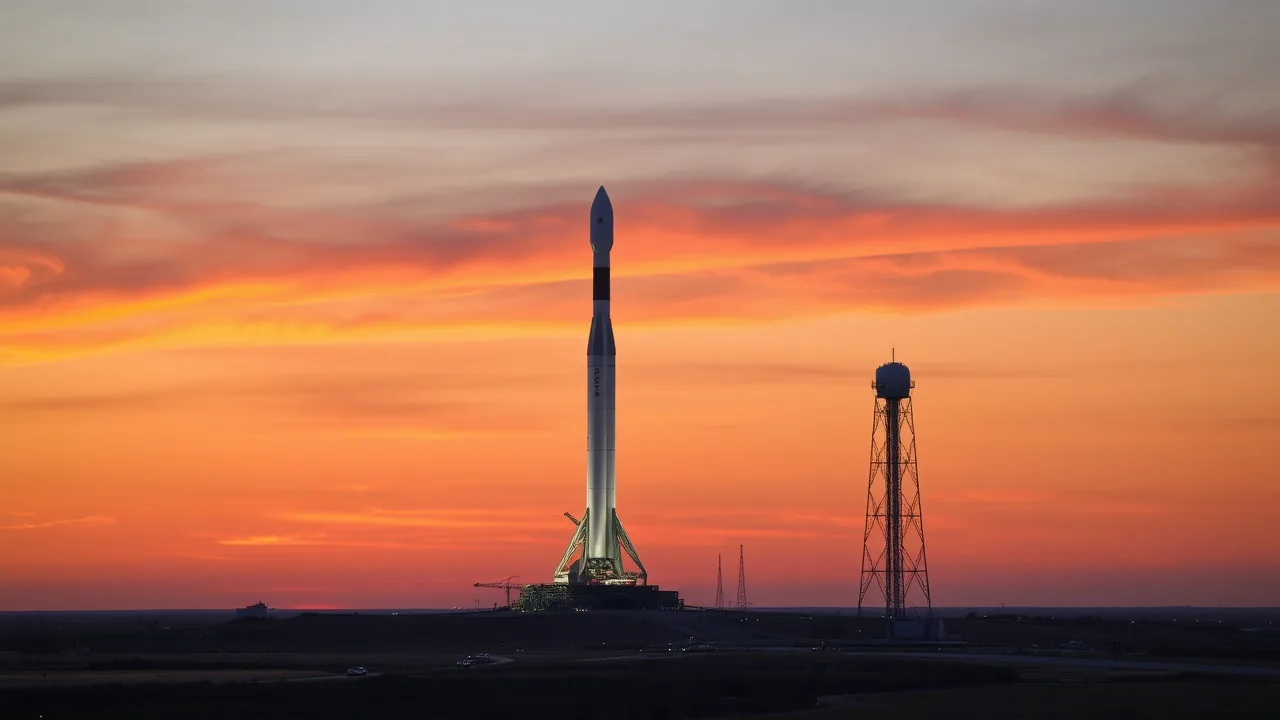
SpaceX is preparing for one of its most ambitious launch schedules to date in 2026, with dozens of missions spanning Starship development flights, cargo resupply runs, and satellite deployments already on the manifest. The company's Boca Chica, Texas facility and Cape Canaveral Space Force Station in Florida will serve as the primary launch sites throughout the year.
The cadence reflects SpaceX's dual focus on perfecting its next-generation heavy-lift vehicle while maintaining reliability on existing Falcon 9 operations. As of May 2026, the company has conducted multiple Starship integrated flight tests and continues refining its orbital refueling procedures and booster catch mechanisms.
Starship Missions and Development Flights
SpaceX's rocket launch ambitions center on Starship, the fully reusable super-heavy-lift system designed for lunar missions, Mars colonization, and point-to-point Earth transport. Throughout 2026, the company plans at least four to six dedicated Starship integrated flight tests, each building on lessons from previous flights. These missions will focus on in-space propellant transfer, controlled booster landings, and orbital payload deployment techniques.
Hans Koenigsmann, SpaceX's VP of Engineering, stated in an April 2026 briefing that "each Starship flight brings us closer to the reliability standards required for human spaceflight certification." The company is targeting increasingly aggressive test objectives, including extended duration burns in the vacuum of space and complex maneuvers near the Moon.
Early 2026 flights concentrated on perfecting the booster catch mechanism at the launch tower, nicknamed "Mechazilla." Later missions will shift focus to upper-stage performance and the critical challenge of orbital refueling, which SpaceX views as essential to any deep-space exploration architecture.
Cargo Missions and NASA Partnerships
Beyond Starship development, SpaceX's 2026 space missions include numerous resupply flights to the International Space Station and commercial cargo contracts. The company maintains a standing agreement with NASA to fly at least eight dedicated cargo runs annually, keeping the orbital outpost supplied with experiments, spare parts, and crew provisions.
The Dragon spacecraft, SpaceX's proven cargo vehicle, continues to prove its reliability. In May 2026, SpaceX successfully docked its 31st commercial resupply mission to the ISS, delivering over 2,700 kilograms of payload. NASA relies heavily on these missions as its primary non-Russian means of crew rotation and cargo transfer since the retirement of the Space Shuttle.
Beyond ISS logistics, SpaceX is fielding contracts for private space station modules and lunar lander delivery services. These efforts support NASA's Artemis program objectives and the broader ecosystem of commercial space stations entering service in the mid-2020s.
Satellite Deployments and Commercial Operations
A substantial portion of SpaceX's 2026 launch manifest consists of satellite deployment missions. The company operates the Starlink constellation, which exceeded 7,500 active satellites in orbit by May 2026, providing broadband coverage to remote and underserved regions worldwide. Ongoing Starlink launches typically occur every two to three weeks, with each Falcon 9 flight carrying 50 to 60 satellites to low Earth orbit.
Beyond Starlink, SpaceX competes for commercial satellite launches from telecommunications providers, Earth observation firms, and government customers. In 2026, the company is contracted to launch payloads for international clients, including European, Japanese, and Middle Eastern operators.
The frequency of these missions underscores SpaceX's achievement in rocket reusability. Falcon 9 first stages now routinely fly 10 to 12 times before retirement, dramatically reducing launch costs and enabling the high cadence demanded by commercial and government customers.
Technical Milestones and Launch Readiness
SpaceX's 2026 schedule includes several technically ambitious milestones that will shape the company's trajectory into the late 2020s. These include the first uncrewed Starship lunar flyby, which NASA contracted SpaceX to perform as part of its Human Landing System program, though that specific mission may extend into late 2026 or 2027.
The company has also prioritized demonstrating Starship's rapid reusability—a defining feature that separates it from traditional expendable rockets. Achieving a 24-hour turnaround between flights remains an engineering goal, though 2026 operations will likely see week-to-month intervals as hardware is inspected, refurbished, and reloaded.
Launch disruptions due to weather, technical holds, or regulatory approvals remain routine. SpaceX operates under Federal Aviation Administration licensing agreements and must coordinate with range safety officials at both Boca Chica and Cape Canaveral. Despite these constraints, the company has compiled one of the most reliable operational records in the industry, with 98.5 percent mission success rates across Falcon 9 and Falcon Heavy over the past five years.
Throughout 2026, SpaceX's launch cadence will serve as a bellwether for the health of commercial spaceflight, the viability of reusable launch systems, and the company's readiness to support upcoming crewed missions and deep-space exploration initiatives. Observers and industry analysts continue tracking the schedule closely as evidence that rapid, sustainable access to space is transitioning from aspiration to operational reality.