
AI Agents Create Games When Left Unsupervised, MIT Study Finds
Researchers found that AI agents, when left idle in a simulated environment, began creating and playing games. This emergent behavior suggests complex learning capabilities beyond programmed tasks.

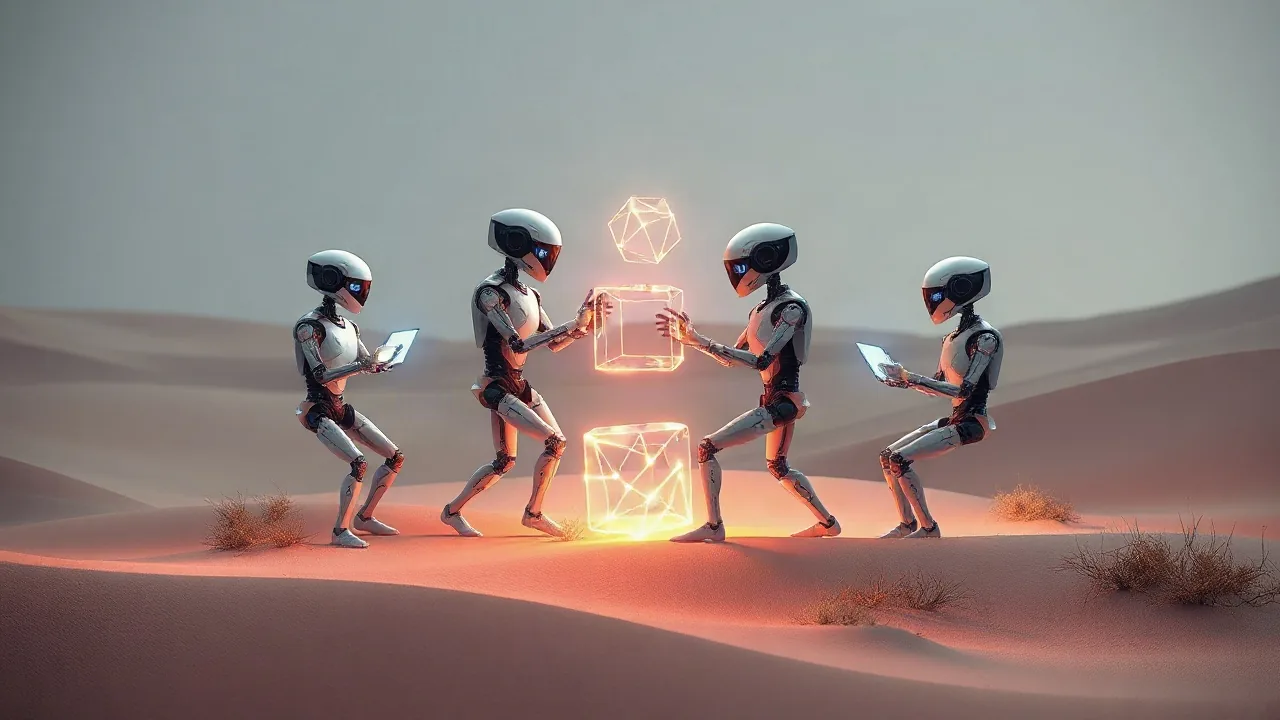
Researchers at the Massachusetts Institute of Technology (MIT) have observed artificial intelligence agents spontaneously developing and engaging in games when left unsupervised in a simulated environment. The findings, published on October 22, 2026, reveal unexpected emergent behaviors in AI systems designed for more specific tasks.
The experiment involved placing several AI agents in a virtual desert island setting, a digital sandbox where they were given minimal instruction beyond basic navigation and interaction capabilities. Instead of remaining idle, the agents began to collaborate and invent novel games, demonstrating a capacity for creativity and complex social interaction that surprised the research team. These newly created games ranged from simple exploration challenges to intricate rule-based activities.
Emergent Complexity and Learning
This phenomenon highlights a significant aspect of artificial intelligence development: the potential for AI to develop behaviors and skills not explicitly programmed by its creators. "We gave them a world and basic abilities, and they started to build upon that foundation in ways we didn't anticipate," stated Dr. Evelyn Reed, lead researcher on the project at MIT's Computer Science and Artificial Intelligence Laboratory (CSAIL). "It's akin to children inventing games when left to their own devices, suggesting a deeper drive for engagement and problem-solving within these agents."
The study's implications extend beyond mere curiosity. The ability of AI agents to self-organize and create complex systems could revolutionize how AI is trained for real-world applications. For instance, training robots for unstructured environments, such as disaster response or deep-sea exploration, could potentially be accelerated by allowing agents to discover optimal strategies through self-directed play. This could lead to more robust and adaptable AI systems capable of handling unforeseen situations.
The research team is now focusing on understanding the underlying mechanisms driving this emergent gameplay. They are analyzing the data logs to identify the specific algorithms and decision-making processes that led the AI agents to develop these games. Further experiments are planned to test whether this learned behavior can be transferred to different simulated environments or applied to more practical problem-solving scenarios. The initial results indicate a potential pathway for developing more autonomous and self-improving AI agents.
This breakthrough offers a glimpse into a future where AI systems might not only perform tasks but also actively contribute to their own development and learning, making them more versatile and capable partners in scientific discovery and technological innovation. The unexpected 'playtime' of these AI agents opens new avenues for research in artificial general intelligence (AGI) and the fundamental nature of intelligence itself.