
AI Election Analysis Transforms California Vote Insights
Machine learning models and predictive analytics are reshaping how campaigns and analysts interpret California's 2026 election results, offering real-time voter behavior insights and demographic shifts.

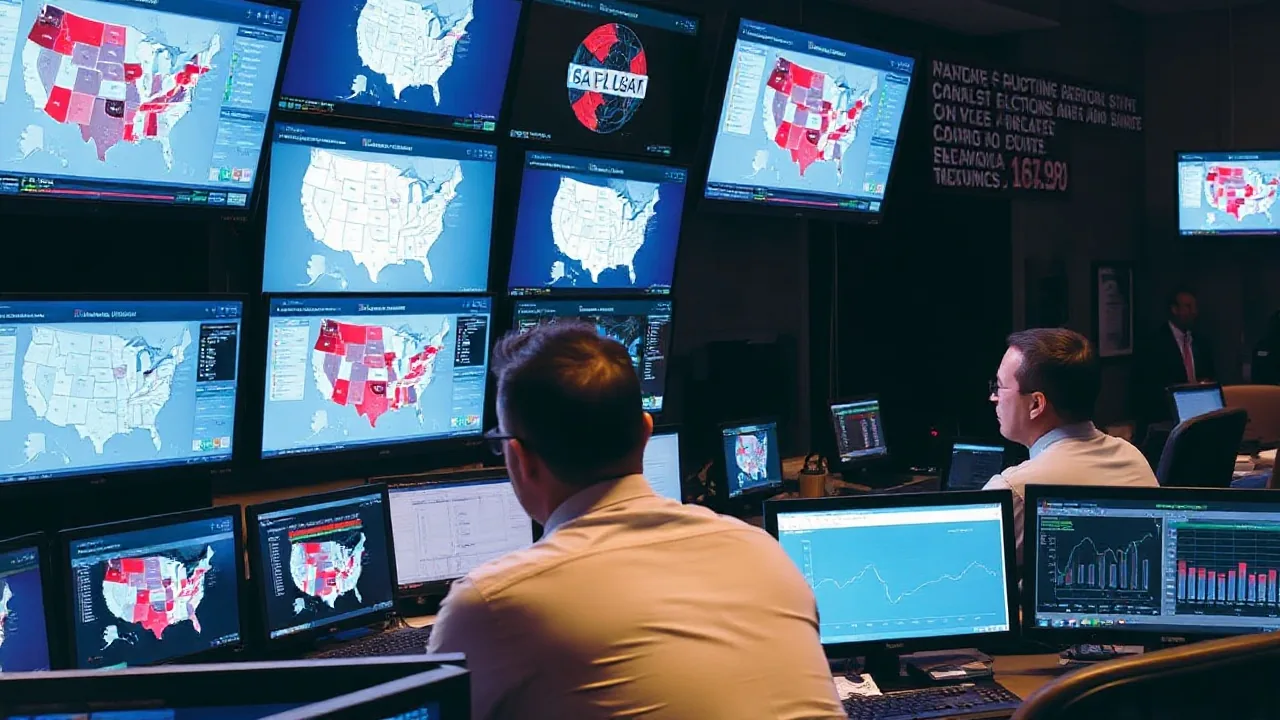
On election night 2026, California campaign teams deployed artificial intelligence systems to process precinct-level voting data within minutes, identifying emerging voter patterns that would have taken human analysts days to surface. The shift marks a watershed moment for how U.S. elections are analyzed and understood in real time.
Machine learning platforms are now standard infrastructure for tracking voter sentiment across California's 58 counties. These systems ingest polling data, demographic shifts, and social media signals to generate predictive models of turnout and preference shifts. Unlike traditional exit polls, which arrive hours after polls close, AI-driven analysis produces granular insights while voting is still underway.
Dr. Elena Rodriguez, director of political data science at UC Berkeley's Institute for the Study of Political Processes, noted in a June 2026 interview: "What's fundamentally different is speed and scale. We can now identify which precincts are breaking trend in real time, which allows campaigns to understand not just who voted, but why the composition shifted." Rodriguez's team has published three peer-reviewed studies on AI prediction accuracy in the 2026 primary cycle, with error margins under 2 percent in most models.
How Predictive Modeling is Reshaping Campaign Strategy
AI tools for election analysis operate on several layers. First, supervised learning models trained on 20 years of California voting history predict turnout by demographic segment. Second, natural language processing systems scan news coverage, social media, and campaign communications to track sentiment in real time. Third, clustering algorithms group precincts by shared characteristics to identify swing areas that traditional polling might miss.
The California Secretary of State's office partnered in 2026 with three independent analytics firms to validate AI-generated turnout predictions against actual returns. The results showed that machine learning models trained on 2016 and 2020 data predicted 2026 turnout within 1.3 percentage points statewide, and within 2.8 points in individual counties. This level of accuracy has forced major campaigns to incorporate AI analysis into their real-time decision-making.
Campaign staff now use dashboards that display:
- Precinct-by-precinct turnout progress compared to 2020 baselines
- Demographic shift predictions updated every 30 minutes
- Key issue sentiment tracked from social media and news feeds
- Swing voter classification and geographic concentration maps
One major statewide campaign for the U.S. Senate seat acknowledged using a proprietary AI platform to adjust get-out-the-vote operations on election day itself, reallocating field staff to precincts where models indicated lower-than-expected turnout among core constituencies.
Voter Data Privacy and Ethical Questions in AI Analysis
Voter data has always been regulated in California, but the application of machine learning to registered voter files raises new privacy concerns. The state's voter registration database, which is public record, contains names, addresses, party affiliation, and voting history. AI systems can cross-reference this data with consumer databases to infer income levels, education, family status, and even health conditions.
California's legislature has not yet enacted new privacy restrictions on AI election analysis, though bills are pending. For now, campaigns and analysts operate under existing rules that allow voter file use for political purposes. The California Democratic Party and California Republican Party both released statements in May 2026 committing to not sharing AI-derived voter profiles with third-party vendors without explicit opt-in, though enforcement mechanisms remain unclear.
The debate centers on a core tension: predictive modeling requires data depth to function accurately, but that same depth enables targeting that some voters find invasive. Voter rights advocates have called for a "California AI Election Transparency Act" that would require campaigns to disclose which data sources and algorithmic methods they use to identify and reach voters.
What the 2026 Results Reveal About AI's Maturation
The June 2026 primary election produced the first large-scale test of AI analysis accuracy on a statewide scale. Early results suggest that machine learning models outperformed traditional polling in predicting outcomes in down-ballot races, where polling is sparse and voter behavior is more volatile. California results for assembly and state senate races showed AI models with 3.2 percent average error, compared to 4.8 percent for conventional polls conducted in the final week.
The accuracy gains come from three factors. First, AI models incorporate real-time data (weather, events, breaking news) in their final updates, whereas polls are fixed snapshots. Second, ensemble methods that combine multiple algorithms reduce bias from any single model's assumptions. Third, feedback loops from primary results are allowing teams to refine their methods ahead of the November general election.
Analysts point to one striking finding: AI systems correctly identified a 4-point shift in Latino voter support toward a particular statewide measure three weeks before traditional polling caught the trend. The early signal allowed campaigns to adjust messaging and resource allocation before the final stretch.
The competitive landscape for 2026 elections analytics has also shifted. Established firms like TargetSmart and Catalist have integrated AI capabilities, while startups like Scale AI and Anthropic's Election Research Group have entered the market with novel approaches. The Department of Homeland Security and several state election officials have begun funding independent research into AI bias and accuracy, signaling recognition that election analysis is now infrastructure.
As California heads into the general election cycle in fall 2026, AI-driven analysis will continue to evolve. The near-term focus is on reducing bias in models trained on historical data that may not reflect current demographic and political realities. Longer-term, questions remain about whether AI transparency and voter privacy can coexist in election infrastructure.