
AI Accelerates Scientific Discovery: Experts Explore Future
A new collection of essays from leading scientists explores how artificial intelligence is revolutionizing scientific discovery and what the future may hold for research.

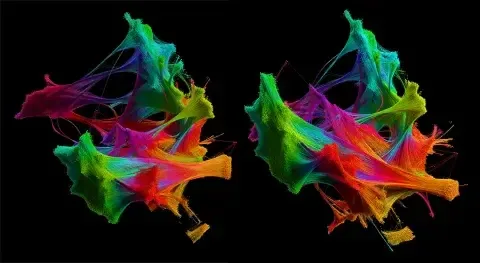
A new compilation of perspectives from 33 leading scientists, published by the American Academy of Arts and Sciences, probes the transformative impact of artificial intelligence on the future of scientific discovery. The collection, featured in a special double issue of the journal Dædalus, argues that the integration of AI marks the dawn of a new era in scientific exploration, with profound implications across numerous fields.
The authors, drawing from diverse disciplines including life sciences, medicine, cognitive science, neuroscience, physical and earth sciences, chemistry, materials science, computer science, mathematics, and social sciences, highlight recent breakthroughs facilitated by AI. Among these is the ability to predict the structure of nearly every known protein, a feat with substantial ramifications for understanding biology, health, and disease treatment. These advancements are significant not only for their outcomes but also for the innovative methods employed, suggesting a fundamental shift in how scientific progress can be achieved.
Navigating the Evolving Landscape of Research
The essays delve into the burgeoning capabilities of AI, examining both its current achievements and the potential it unlocks for future research. Contributors analyze the inherent limitations of artificial intelligence and the ongoing efforts to enhance its functionalities. Furthermore, the collection scrutinizes the broader consequences of AI-assisted science, including its influence on research methodologies, the evolving role of scientists, and the very foundations of the scientific method. The complexities and challenges associated with this paradigm shift are also a central theme.
A long-standing, symbiotic relationship exists between AI and science: AI advancements propel scientific understanding, while scientific challenges drive the development of more sophisticated AI. This dynamic has led to unprecedented progress, but the future trajectory remains a subject of intense speculation. Possibilities range from a golden age of scientific breakthroughs to novel forms of human-machine collaboration, the advent of entirely autonomous laboratories, and even discoveries that may elude human comprehension.
The contributors to this special issue emphasize the need to actively shape this evolving relationship. Realizing the full beneficial potential of AI in science will require careful consideration and strategic guidance. The collection serves as a critical examination of what is currently happening at the nexus of artificial intelligence and scientific research, offering informed speculation on where this powerful partnership is headed and what it means for humanity's quest for knowledge.