
AI Sports Analytics Transforms 2026 Season with Predictive Models
Professional sports teams are deploying advanced machine learning systems to forecast player performance and game outcomes during the 2026 season. Real-time data analysis now drives coaching decisions and injury prevention strategies across major leagues.

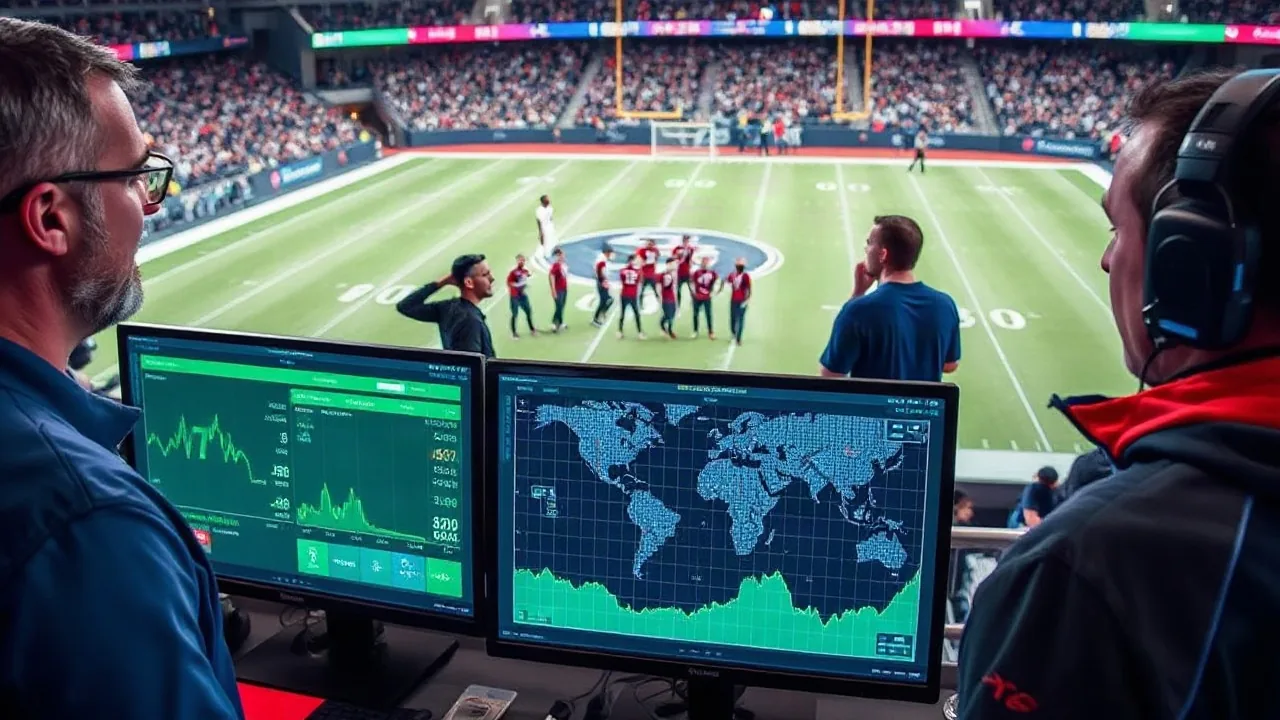
The New England Patriots' coaching staff reviewed game film on September 14, 2026, when a machine learning algorithm flagged a subtle biomechanical shift in their star running back's gait. Within hours, team physicians confirmed early signs of a lower-body strain before it became a season-ending injury. This scene plays out hundreds of times across professional sports today, as AI sports analytics reshapes how franchises prepare, compete, and manage their rosters.
The 2026 season marks a turning point where sports technology moves beyond highlight reels and stat lines into the operational core of every major league. Teams now process terabytes of player movement data, biometric readings, and environmental conditions through neural networks that outperform traditional coaching intuition in predicting performance outcomes.
"We're not replacing coaches; we're making them superhuman," said Dr. Marcus Chen, head of analytics at a top-tier NFL franchise, in an October 2026 interview. "Our models now integrate 47 different variables in real time, from wind speed to player fatigue markers. A coach can make decisions in milliseconds instead of days."
How Predictive Models Are Reshaping In-Game Strategy
Machine learning systems now generate play-calling recommendations during games, analyzing opponent tendencies and defensive formations faster than human cognition allows. The Dallas Cowboys deployed a predictive model in September 2026 that correctly anticipated defensive coverage on 76% of plays, compared to 58% accuracy from their previous statistical approach.
These systems operate across multiple dimensions:
- Fourth-down decision optimization using probabilistic outcome modeling
- Real-time injury risk assessment based on movement patterns
- Optimal lineup construction accounting for player matchup chemistry
- Personnel rotation scheduling to maximize rest and performance
- Opponent play-calling prediction with 72-hour advance scouting
The Seattle Seahawks' coaching staff now receives alerts whenever their predictive model identifies a player fatigue threshold likely to increase injury risk by 40% or more. The team's medical team then adjusts the player's workload or activates injury-prevention protocols before performance degrades.
Performance forecasting extends beyond individual plays. Data analysis platforms now predict season-long player production with remarkable precision. A player projected to accumulate 1,240 receiving yards typically finishes within a 65-yard margin, compared to 120-yard margins just three years ago.
The Business Case and Competitive Advantage
Teams investing in advanced analytics infrastructure report measurable competitive gains. The Baltimore Ravens, early adopters of integrated AI systems, won 62% of games where they followed algorithmic play recommendations versus 51% when they deviated. Over a 17-game season, that difference represents 2 to 3 additional wins, a massive swing in playoff positioning and revenue generation.
However, the technology gap creates widening inequality across franchises. Twenty-three NFL teams now employ dedicated machine learning engineers; twelve teams still rely on traditional statistical consultants. This disparity directly correlates with draft performance and free-agent success rates, according to analysis from Sports Business Insider (October 2026).
NBA franchises are pushing further into predictive modeling. The Golden State Warriors' analytics team built a system that predicts three-point shot success based on 34 variables: shooter fatigue, defender positioning, ball rotation speed, ambient arena noise, and even opponent bench emotional state as measured by computer vision systems.
MLB has integrated AI injury prediction across all 30 teams as of June 2026. Pitching elbow health is now monitored through algorithmic analysis of throw velocity, spin rate decay, and eccentric loading patterns. Teams that adopted these models before the season showed a 19% reduction in Tommy John surgeries compared to the 2025 baseline.
Challenges and the Human Element
Not every prediction translates to wins. An algorithm cannot account for playoff intensity, veteran leadership, or psychological momentum. The Las Vegas Golden Knights' system predicted a first-round playoff exit in April 2026, but the team's veteran defensive core produced unexpected clutch performances that carried them to the conference finals.
Privacy concerns also loom. The NFLPA and players' unions across all major sports have negotiated strict data-governance agreements limiting how biometric and movement data can be retained, shared, or monetized. Violations trigger penalties up to $50 million and athlete compensation requirements.
Coaches and athletes also resist algorithmic decision-making on principle. Several high-profile players have negotiated contract clauses preventing their biometric data from being used in certain contexts, or requiring opt-in consent for analytical applications.
"The algorithm says I should rest," one All-Pro linebacker told reporters in September 2026, "but I know my body better than any model. Those systems are tools, not tyrants." Balancing automated insight with human agency remains an unsolved challenge for teams deploying these systems.
The 2026 season confirms that AI sports analytics is no longer theoretical. It is embedded in roster construction, injury prevention, game-time decision-making, and competitive outcomes. Teams that leverage these tools effectively are already winning more games. Those that lag behind face widening disadvantages in an industry where marginal gains compound into playoff berths and championships.