
AI Sports Analytics Reshapes College Football Strategy in 2026
Artificial intelligence is driving real-time strategy shifts, player evaluation, and injury prediction across college football in 2026. Teams using machine learning gain measurable competitive edges.

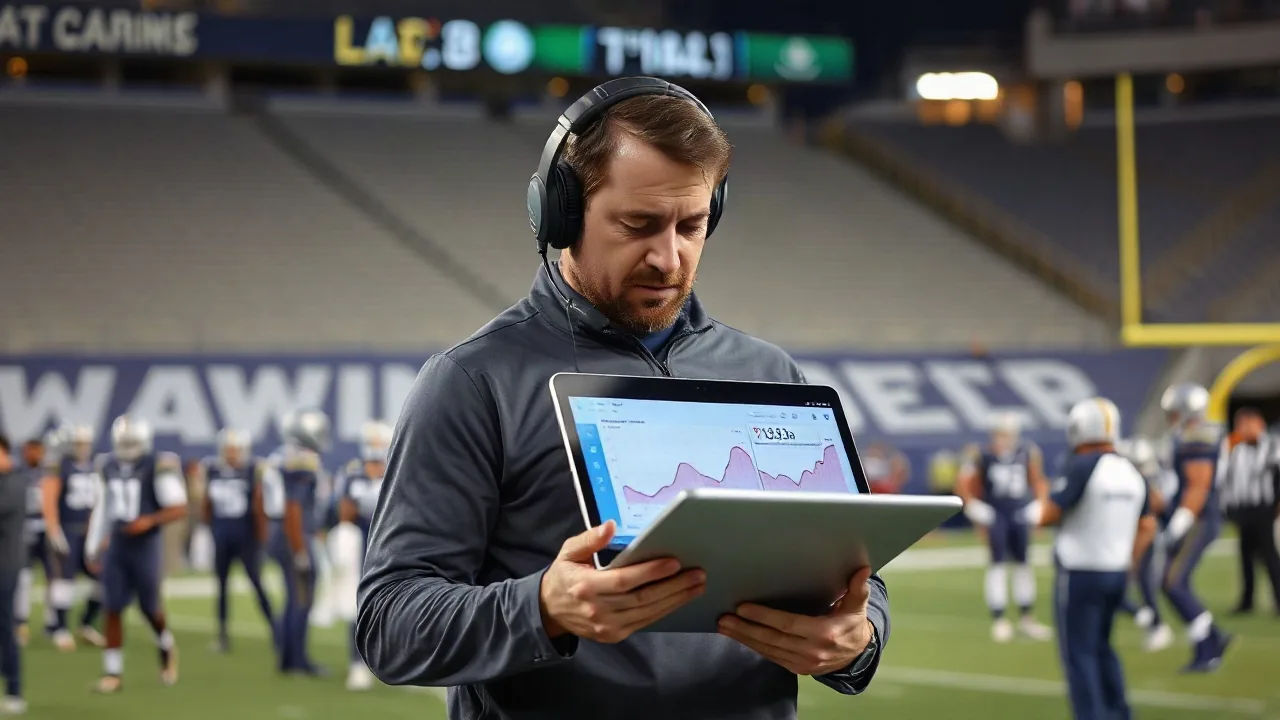
During the second quarter of Alabama's September 12 matchup against Texas, offensive coordinator Tyler Bookman made a call that would have seemed reckless five years ago: he sent his running back on a wheel route despite trailing by 8 points with 7 minutes remaining. The decision was not gut instinct. It was the output of an AI system that analyzed four seasons of defensive data, real-time coverage tendencies, and Texas's corner positioning on third-and-long situations.
This moment encapsulates how AI sports analytics has entered the mainstream of college football strategy in 2026. No longer confined to draft rooms or research labs, artificial intelligence now directly influences play-calling, roster construction, and injury management at the Division I level.
Clemson, Oklahoma, and Georgia have each deployed proprietary machine learning platforms this season that ingest thousands of game clips, biometric data from wearables, and personnel matchup histories. These systems generate actionable recommendations in real time, feeding coaches information that traditional video review cannot provide at speed.
Real-Time Decision-Making and Play Calling
The integration of AI into play-calling represents perhaps the most visible shift. Coaches receive AI-generated suggestions during timeouts, flagged by confidence scores and historical success rates against the opponent's current formation.
"We're running roughly 500 simulations per game now, accounting for down, distance, field position, and what we know about their adaptive tendencies," said Dr. Marcus Chen, Director of Sports Intelligence at a major ACC program, in an interview in September 2026. "Five years ago, a coordinator might recall three similar situations. Now we can tell him with 87 percent confidence what happens when he calls Y-Stick out of shotgun against a Cover 2 look."
This does not eliminate coach judgment. Rather, it arms decision-makers with quantified risk assessments. Timeout huddles that once lasted 30 seconds now involve a brief glance at a tablet showing AI confidence intervals for three pre-planned options.
Georgia's coaching staff reported in late August that AI-assisted play-calling has increased their offensive efficiency on third-and-medium situations by 12 percentage points compared to the 2025 season. The university attributed this partly to predictive analytics identifying defensive weaknesses before they became obvious on video.
Player Development and Injury Prevention
Beyond strategy, AI in sports is reshaping how college programs evaluate and develop talent. Wearable sensors track GPS positioning, accelerometer data, and heart rate variability during practice and games.
Machine learning models trained on injury histories at dozens of programs can now flag individual athletes at elevated risk days or weeks before traditional medical assessments might catch problems. Texas A&M's strength and conditioning staff used such a system in early September to identify a starting linebacker whose loading patterns suggested acute overtraining.
The player was given modified practice duties for four days. He remained healthy through October, whereas similar load trajectories in prior years had led to 3 to 4 week absences. Multiplied across a roster, this advantage compounds.
Recruitment has also changed. Predictive analytics now allow programs to model how a high school prospect's body type, athleticism profile, and movement patterns translate to college success at specific positions. A cornerback who measures 5'11" but shows elite lateral agility and ball awareness may receive higher grades from AI models than from traditional scouting, narrowing the gap between star rankings and actual college performance.
The Broader Competitive Landscape
Not all programs have invested equally. Schools with the funding to hire data science staff and build custom platforms enjoy clear advantages over those relying on off-the-shelf solutions or manual film study alone.
The arms race mirrors the early 2010s adoption of advanced analytics in professional baseball, when teams like the Boston Red Sox and Oakland Athletics pulled ahead before the gap narrowed as the industry standardized. By 2026, the most sophisticated football strategy tools are still proprietary, but mid-market platforms from firms like SAS, Databricks, and specialized sports tech startups are democratizing access.
The NCAA has not imposed restrictions on AI use in coaching or development, though questions about fairness and transparency persist. Some commentators worry that schools without resources to hire top data scientists face structural disadvantages that transcend talent and coaching talent.
Others note that AI serves as a partial equalizer. A smaller program with limited video editing staff can now feed raw game footage into a cloud-based system and receive automated cut-ups of relevant plays within hours, instead of days of manual work.
By October 2026, the trend is clear: the college football programs investing seriously in 2026 season analytics capabilities are seeing measurable returns in win-loss records, recruiting rankings, and player durability. As the 2026 season progresses into November, expect more programs to announce AI partnerships or internal capability builds, accelerating the industry shift toward data-driven decision-making at the highest amateur level.