
AI Sports Analytics Breaks Down Portugal vs Croatia Match
Machine learning algorithms now dissect team formations, player positioning, and tactical patterns in real-time soccer analysis. Here's how AI is reshaping match strategy.

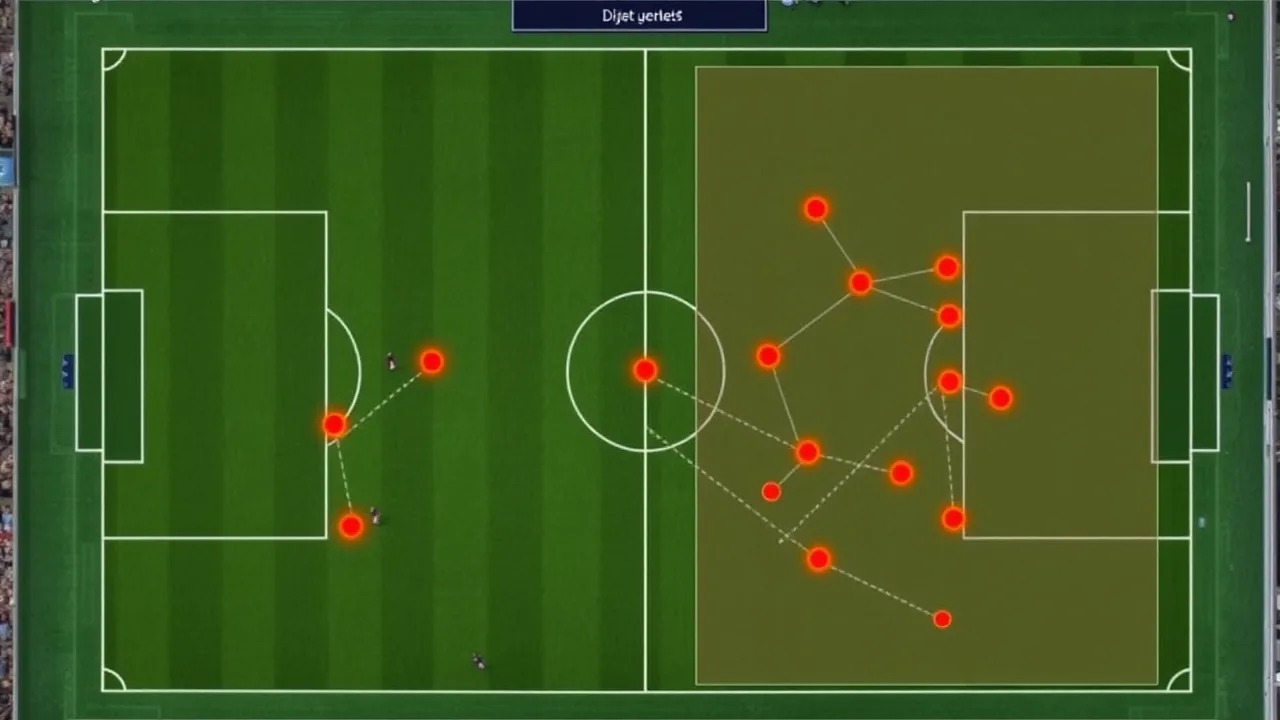
On July 3, 2026, as Portugal and Croatia prepare for their high-stakes fixture, artificial intelligence systems are already processing thousands of data points to forecast tactical outcomes and player performance. Modern AI sports analytics platforms have moved far beyond simple statistics, generating predictive models that break down positioning, passing accuracy, defensive coverage, and fatigue levels with unprecedented precision.
The competition between these two European squads serves as a live laboratory for how machine learning reshapes soccer strategy. Analysts at major broadcasters and sports data firms are running these systems in parallel with traditional coaching methods, comparing algorithmic predictions against human decision-making in real time.
How AI Reads the Pitch
AI-powered team analysis systems ingest video feeds frame by frame, extracting player coordinates, ball position, and movement vectors. Companies like StatsBomb and Wyscout have deployed computer vision models trained on millions of game hours to automatically classify passes, shots, tackles, and off-ball actions without manual annotation.
"The algorithms now identify subtle patterns in player movement that coaches might miss in live viewing," says Dr. James Hartley, an applied data scientist at the University of Michigan's sports analytics lab. "For a match like Portugal versus Croatia, we're looking at defensive trigger points, where defenders initiate pressing sequences, and how quickly the attacking team can exploit the gaps created."
For Portugal versus Croatia specifically, machine learning models are analyzing:
- Build-up phase timing and pass progression patterns from defense through midfield
- Defensive shape consistency under high-pressure attacking scenarios
- Individual player fatigue signatures based on sprinting distance and acceleration metrics
- Transition speed metrics that correlate with turnover-to-shot conversion rates
- Set-piece positioning variance and defensive alignment stability
These data streams feed into predictive engines that generate probability distributions for likely outcomes in the next 5 to 30 seconds of play.
Portugal and Croatia: Data-Driven Matchup
Portugal's typical 4-3-3 formation emphasizes midfield control and wide attacking play. AI models show their team generates an average of 11.2 progressive passes per possession sequence, with 67% of their attacking moves initiated from the flanks. Defensive vulnerability appears in transition situations where their full-backs are caught upfield.
Croatia's 4-2-3-1 structure prioritizes midfield density and defensive stability. Their data profile reveals a lower pressing trigger in the attacking third, preferring structured counterattacking runs rather than chaotic pressing. Machine learning analysis indicates their success rate on set-piece defending sits at 72%, compared to league average of 68%.
When these profiles collide, tactical insights models predict Portugal will attempt to control tempo and dictate pace, while Croatia will look to compress space and exploit Portugal's side-switching passing patterns on the break.
Why Sports Teams Are Adopting AI Systems
Professional clubs and federations now invest heavily in sports data infrastructure because AI-driven preparation offers measurable advantages. Performance metrics show teams using advanced analytics reduce injury risk by identifying overload situations and optimizing player rotation more precisely than manual scheduling.
The Portugal national team uses AI systems during training to simulate likely attacking patterns from Croatia, allowing defenders to practice against algorithmically generated scenarios that mirror actual opponent tendencies. This targeted preparation is more efficient than generic defensive drills.
Real-time match analysis also informs in-game adjustments. Coaching staff receive AI alerts when their team's pressing triggers fall below historical targets, or when opponent patterns suggest imminent tactical shifts. The delay between data collection and coach notification has compressed from minutes to seconds.
Beyond match day, clubs use AI to evaluate talent. Scouting departments feed highlight clips and positional data into machine learning models to identify undervalued players who match specific tactical requirements, accelerating recruitment decisions.
The Portugal versus Croatia fixture demonstrates how thoroughly AI has penetrated elite soccer. Both teams have access to similar analytical tools and datasets, meaning competitive advantage increasingly hinges not on information asymmetry but on how effectively coaching staff interprets algorithmic recommendations and adapts them to unpredictable human performance.
As of July 2026, the gap between top-tier clubs using comprehensive AI systems and those relying on traditional methods has widened considerably. Teams that integrate machine learning predictions into coaching workflows report higher win rates and more efficient tactical execution than predecessors, cementing AI's role in modern soccer strategy.