
Barbara Walters' Legacy Meets AI Transformation in Journalism
Barbara Walters revolutionized broadcast journalism for five decades. As AI reshapes newsrooms in 2026, her principles of personal connection and rigorous reporting offer a blueprint for media's future.

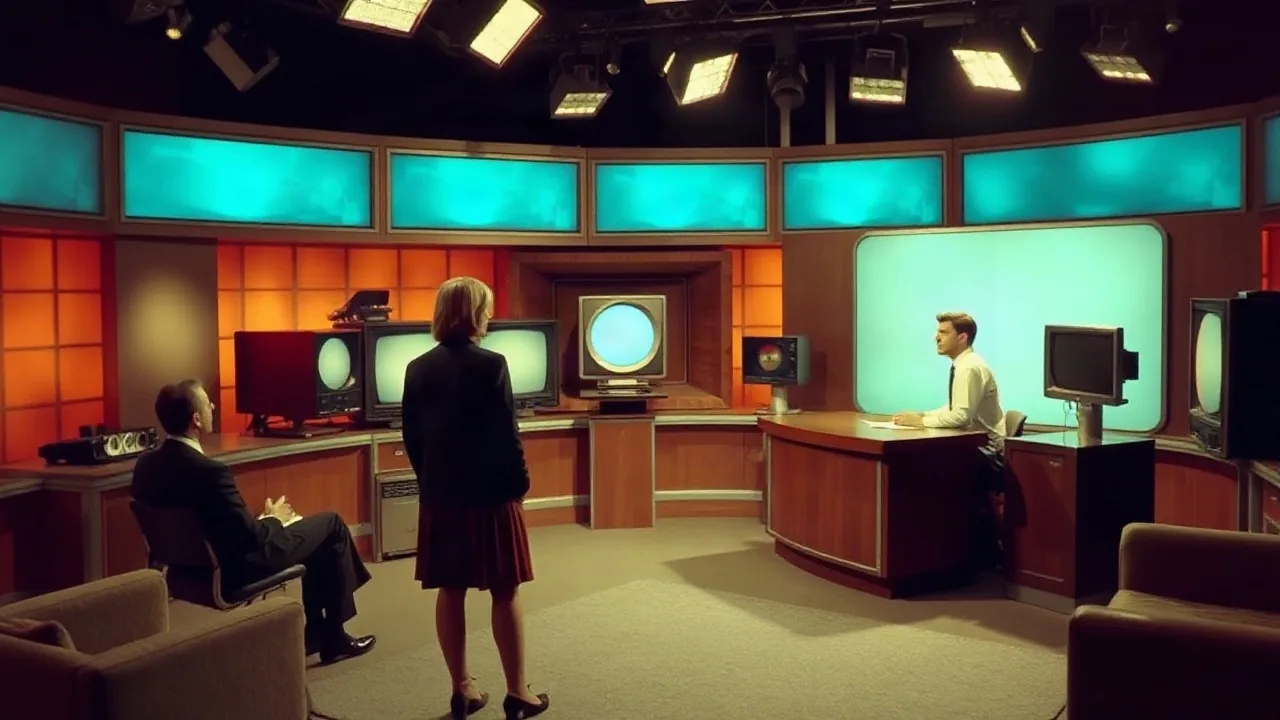
Barbara Walters, who passed away in December 2022, left an indelible mark on American journalism that continues to shape how news organizations approach their craft. Her career, spanning nearly six decades at ABC News, NBC, and The Today Show, established a model for broadcast journalism centered on human connection, deep research, and breaking through barriers that others thought impossible. As newsrooms across the country grapple with artificial intelligence tools in 2026, the contrast between Walters' methods and today's automation raises urgent questions about what journalism loses and gains in the digital age.
Walters conducted the first joint interview with an incumbent U.S. president and First Lady in 1976, interviewed every sitting president from Richard Nixon through Barack Obama, and became the first female evening news anchor on a major network in 1976. Her approach relied on meticulous preparation, psychological insight, and the ability to build rapport with subjects ranging from celebrity figures to world leaders. She did not simply read news; she discovered stories through persistent questioning and human intuition.
Today, media companies deploy AI systems to draft articles, summarize documents, flag trending topics, and even select interview subjects. Newsroom leaders face pressure to adopt these tools to remain competitive on staffing costs and publication speed. Yet the speed and scale that AI provides raise uncomfortable questions about whether the industry is abandoning the investigative rigor and personal narrative that defined Walters' best work.
How AI Is Reshaping Newsroom Operations
Automation has entered journalism at multiple levels. Wire services use AI to generate earnings reports and sports recaps. Major outlets deploy language models to draft article outlines, check facts, and suggest headlines. Some newsrooms employ AI tools to monitor social media sentiment, predict which stories will engage readers, and even recommend story angles based on trending searches.
"AI is a tool that can accelerate routine work and free journalists to focus on deeper investigation," said Dr. Emily Chen, director of the Stanford Media Innovation Lab, in an August 2026 interview. "But it only works if human editors maintain editorial judgment and don't simply publish what the algorithm suggests." Chen's research, published in the Journal of news industry studies, found that newsrooms that abandoned human editing for cost savings saw measurable declines in reader trust and reporting accuracy within six months.
The economics are straightforward. A mid-size newspaper or online media outlet can reduce its reporting staff by 15 to 25 percent if AI handles initial drafting, research aggregation, and basic fact-checking. Between 2023 and 2026, more than 2,500 newsroom positions across the United States were eliminated or consolidated into AI-assisted roles. The displaced journalists often lack opportunities to move into remaining slots, which are increasingly reserved for senior reporters, editors, and human specialists in complex investigations.
The Walters Principle: What Speed Cannot Replace
Barbara Walters' most celebrated interviews took weeks or months to arrange and prepare. She read entire books written by her subjects, studied their past statements, and crafted questions designed to elicit unexpected honesty rather than prepared talking points. Her 1979 interview with Fidel Castro required months of negotiation and research. Her 1981 interview with President Reagan and former President Carter demonstrated mastery of political nuance that came only from deep contextual knowledge.
That preparation time is precisely what modern artificial intelligence systems cannot replicate. An AI language model can generate 50 plausible interview questions in seconds, but it cannot understand the psychological vulnerability of a subject or recognize when a follow-up might unlock a confession. It can summarize a person's public record but cannot build the trust that leads someone to speak candidly about private pain or moral conflict.
"Walters understood something fundamental," said James Morrison, a veteran ABC News producer who worked with Walters on major stories during the 1990s. "The interview is a human moment. The camera is secondary. She made subjects feel heard. That cannot be generated; it must be earned." Morrison's observation captures a truth that 2026 newsrooms are beginning to confront: the cost savings from AI come with hidden losses in the depth and authenticity of reporting.
Several outlets have begun investing in "hybrid newsrooms" that use AI for routine tasks, fact-checking, and research aggregation while protecting time for senior reporters to conduct in-depth interviews and investigative projects. The model resembles how Walters worked, with research teams supporting her in-depth interviews. NPR, The New York Times, and The Wall Street Journal have publicly committed to this approach, arguing that human expertise and connection remain the foundation of journalism that readers trust.
Redefining News in an Age of Automation
Walters' legacy offers a framework for news organizations navigating AI adoption. Her insistence on original reporting, her refusal to accept easy answers, and her commitment to showing viewers the humanity of her subjects all represent values that AI cannot be programmed to embody. News organizations that simply automate away the human elements of journalism risk producing content that is current but not compelling, factually correct but emotionally hollow.
The question facing journalism in 2026 is not whether to use AI, but how to use it without surrendering the values that make journalism matter. AI can handle transcription, initial summarization, fact database queries, and routine writing tasks. But the decision of what matters, whom to interview, how to challenge power, and what story the public needs to hear must remain in human hands.
Barbara Walters succeeded not because she worked faster than her competitors, but because she worked deeper. She saw her role as more than transmitting information; she was a witness to history and a vehicle for human truth. That vision, nearly four decades after her last broadcast, remains the gold standard against which 2026 journalism should measure itself.