
Dr. Fauci's Public Health Legacy and AI Data Analysis
Dr. Anthony Fauci's decades-long career in epidemiology inform modern AI approaches to health data analysis and epidemic response. Today's machine learning tools can process the scale of pandemic data that defined his career.

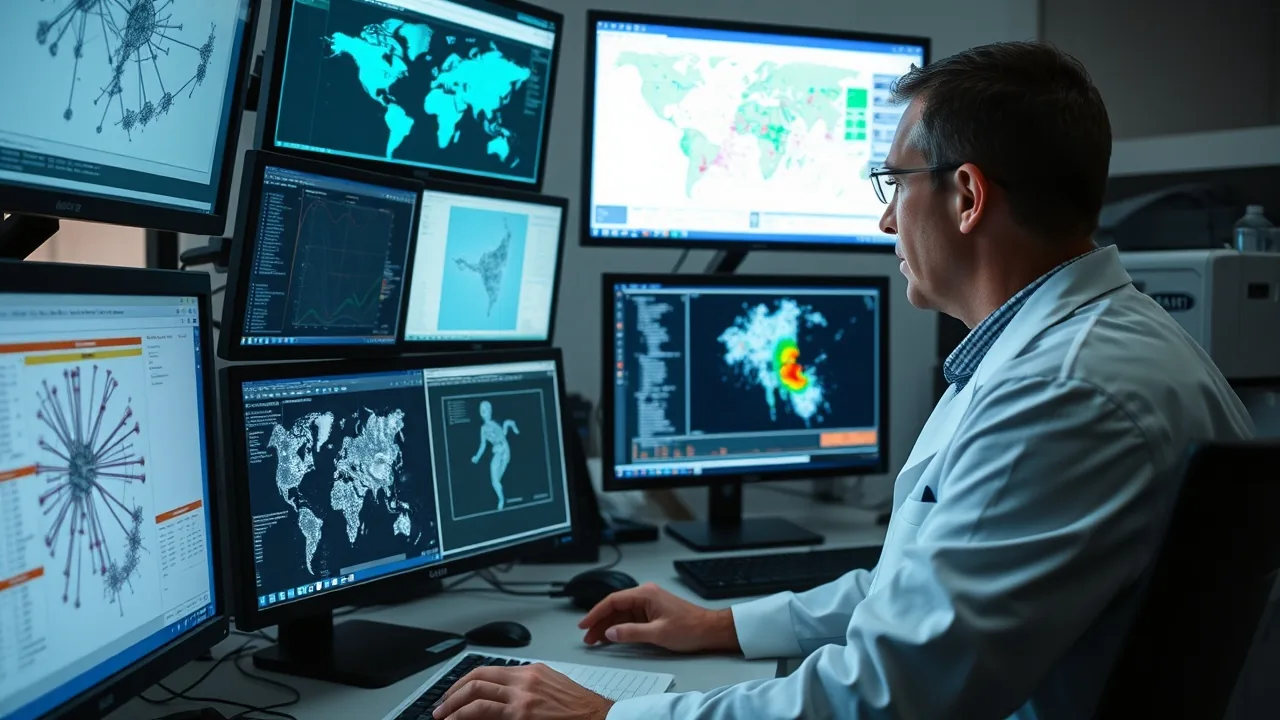
Dr. Anthony Fauci spent over five decades at the National Institute of Allergy and Infectious Diseases (NIAID), guiding the nation through multiple health crises from AIDS to COVID-19. His work depended on analyzing incomplete data under extreme time pressure, a challenge that artificial intelligence and machine learning can now address at unprecedented scale.
The parallels between Fauci's epidemiological approach and modern AI analysis methods reveal how technology can extend the reach of public health expertise. Where Fauci manually reviewed case reports and laboratory results, today's systems process millions of data points simultaneously, identifying patterns that inform policy in real time.
Fauci's Framework for Crisis Response
Fauci's career demonstrates how domain expertise shapes outbreak response. During the early AIDS crisis in the 1980s, he synthesized fragmented data from hospitals, research institutions, and patient networks to understand transmission patterns and guide treatment protocols. His method was iterative: collect data, analyze, communicate findings, adjust course, repeat.
"The fundamental principle is to use the best available science to guide policy," Fauci stated in a 2024 interview with Health Affairs. This principle remains central to how epidemic response teams operate today. The difference is volume. In 2026, health agencies collect data from electronic medical records, genomic sequencing, wearable devices, and social media signals simultaneously.
Fauci's experience highlighted critical bottlenecks in traditional epidemiology. Waiting weeks for laboratory confirmation delayed intervention. Coordinating across fragmented health systems slowed information sharing. Case investigations consumed months when days mattered. These operational gaps are exactly where machine learning and natural language processing excel.
AI Tools for Modern Epidemiology
AI analysis platforms now tackle the scale that overwhelmed manual methods. Real-time health data integration combines multiple information streams into unified datasets. Machine learning models identify emerging clusters faster than human review cycles allow. Predictive algorithms flag high-risk populations for targeted intervention.
The Centers for Disease Control and Prevention (CDC) has integrated machine learning into surveillance systems that Fauci helped establish. These tools scan hospital admission patterns, laboratory test results, and search query trends to detect outbreaks days or weeks earlier than traditional reporting chains. The time savings directly enable faster public health response.
Specific applications in 2026 include:
- Genomic analysis pipelines that sequence novel pathogens within hours rather than days
- Natural language processing that extracts clinical details from unstructured medical notes
- Forecasting models that predict hospital bed demand and supply chain strain
- Network analysis that maps disease transmission pathways through population data
- Anomaly detection systems that flag unusual symptom clusters in real time
Dr. Claire Broido, computational epidemiologist at Johns Hopkins University, explains the shift: "AI doesn't replace epidemiological thinking. It amplifies it. We can now ask 'what if' questions with real data at scales that were impossible a decade ago. Fauci's methodology was sound, but his tools were limited."
Challenges in Implementation
Epidemiology remains fundamentally about making decisions with imperfect information. AI systems can accelerate analysis, but they introduce new risks. Training data bias, algorithmic errors, and overconfidence in model predictions have all caused problems in public health contexts.
Fauci consistently emphasized the importance of transparent communication and acknowledging uncertainty. Modern medical insights derived from AI must meet the same standard. A predictive model that is 92% accurate sounds strong until 8 out of every 100 patients are misclassified, potentially changing treatment recommendations for vulnerable populations.
Privacy considerations add complexity. Effective epidemic response requires detailed health information, but collecting and analyzing such data raises legitimate privacy concerns. Fauci navigated these tensions throughout his career, advocating for data sharing while respecting individual autonomy.
Integration remains incomplete. As of mid-2026, many US health jurisdictions still operate fragmented surveillance systems that cannot communicate seamlessly. Achieving the data standardization required for effective AI analysis requires sustained investment and regulatory alignment that remains in progress.
Fauci's career demonstrates that good epidemiology ultimately depends on credibility and trust. AI tools can enhance analysis, but they cannot substitute for scientific integrity and clear communication. Public health agencies must earn confidence through transparent methods, honest uncertainty quantification, and consistent alignment between data and guidance.
The future of public health response will combine Fauci's epidemiological principles with AI capabilities that he lacked. Speed of analysis will increase. Comprehensiveness of surveillance will expand. But the fundamental requirement remains unchanged: turning data into timely, actionable guidance that saves lives.