
Microsoft Unveils Ambitious AI Strategy Post-OpenAI Partnership
Microsoft is forging its own path in AI development after a shift in its relationship with OpenAI. The company announced new reasoning models, AI agents, and cybersecurity tools at its recent Build conference, signaling a move towards greater independence and innovation.

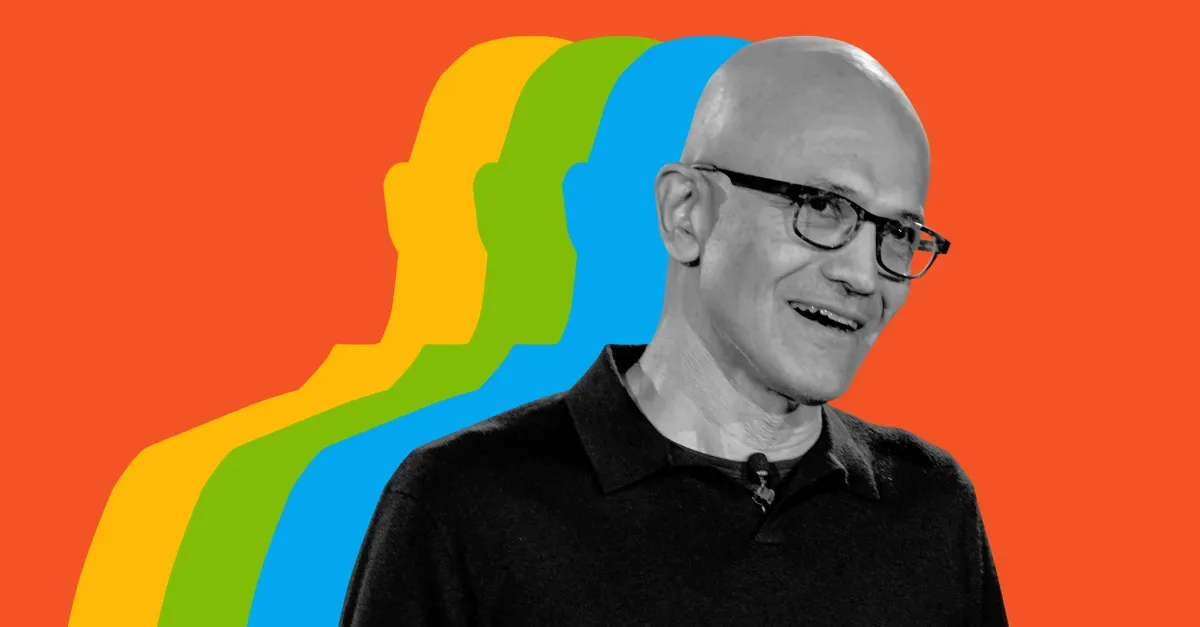
Microsoft used its annual Build conference on Tuesday to unveil a wide-ranging series of new and expanded artificial intelligence initiatives, including a forthcoming super app, proprietary reasoning models, and a dedicated cybersecurity tool. The announcements collectively signal a decisive pivot for the tech giant, positioning it as a major independent force in the rapidly evolving AI landscape. This strategic shift comes after a period where Microsoft's AI ambitions were heavily reliant on its foundational partnership with OpenAI. While still a key cloud partner for OpenAI, the relationship has undergone significant changes, leading Microsoft to accelerate its in-house development efforts.
"It’s always fun to be at developer conferences in times of great change," said Microsoft CEO Satya Nadella from the Build stage, characterizing the event as an opportunity to "come to grips with the new opportunity." AI chief Mustafa Suleyman echoed this sentiment in an interview with The Verge, stating, "The goal is to prove that we can become one of the top four labs in the world." He identified Google DeepMind, OpenAI, and Anthropic as the current leading entities, adding, "We are not one of them at the moment, and that’s always been my intention. It’s why I came here. I want to build the very best frontier models in the world, fully multimodal, and in order to do that, we have to prove that we can do everything that we need to from the ground up, and we’re not just going to take from others."
A significant part of Microsoft's strategy involves developing its own advanced AI models. Suleyman introduced MAI-Thinking-1, the company's inaugural reasoning model, alongside six other new models designed for tasks involving image, voice, transcription, and coding. Microsoft describes the medium-sized MAI-Thinking-1 as "built from scratch for serious math, coding, and real-world enterprise deployment," likely targeting enterprise clients. This move addresses a gap in Microsoft's offerings compared to competitors like OpenAI and Anthropic, who have been releasing reasoning models since late 2024. Suleyman highlighted MAI-Thinking-1's competitive performance on benchmarks, particularly in coding, and its cost-effectiveness, noting it is cheaper than comparable OpenAI models for certain tasks.
Accelerating Independent Development
Microsoft emphasized that the development of MAI-Thinking-1 did not involve any model distillation, meaning it was not trained using another company's AI output. This is a deliberate effort to underscore its independent innovation. "The pivotal moment was renegotiating our contract with OpenAI," Suleyman explained. "That meant that we were allowed to train models at a larger scale and explicitly pursue superintelligence entirely with our own IP, with our own data, no distillation, training from scratch."
Nadella also showcased Microsoft's recently launched cybersecurity tool, MDASH, which employs 100 AI agents to identify exploitable bugs more effectively than single models. This initiative appears to be a direct response to tools like Anthropic's Claude Mythos Preview and OpenAI's own cybersecurity systems, as all three companies compete for lucrative government and enterprise contracts.
The company is also making strides in the domain of AI agents, an area where platforms like the open-source OpenClaw have demonstrated significant potential. Following OpenAI's acquisition of OpenClaw's creator, Peter Steinberger, Microsoft is actively working to integrate similar agent capabilities, particularly within the Windows ecosystem. Nadella expressed strong commitment to OpenClaw support, with Microsoft developers engaging with the audience about its practical applications. Steinberger himself made a surprise appearance, discussing how OpenClaw enhances security and user trust. "What I kept hearing was, ‘Peter, I love my Claw, but can I use it at work?’" Steinberger recounted. "You can totally run OpenClaw inside your company now, and we even made the harness itself a plug-in." This development allows users to run OpenClaw atop various coding platforms, including Microsoft's own Copilot and Codex, via Windows.
Complementing these efforts, Microsoft is promoting its own "Copilot super app," which integrates OpenClaw-like agents. This mirrors OpenAI's focus on a unified super app experience, led by Greg Brockman, aiming to connect ChatGPT, Codex, and the Atlas web browser. Microsoft's approach consolidates existing Copilot AI assistants into a cohesive interface. GitHub's senior director of developer advocacy, Cassidy Williams, described Copilot as "your home base for development and operations on your computer," demonstrating how multiple agents could collaborate on tasks such as app creation. Williams even showcased a unique interaction where she could approve or deny code changes using her computer's camera.
The new agents, dubbed "Autopilots," are designed for business customers, with Nadella referring to them as "autonomous, long-running agents with full enterprise compliance." The initial offering, "Scout," is positioned as an "always-on personal agent," with the flexibility for clients to build and customize their own. These Autopilot agents are envisioned to handle tasks like managing email inboxes, participating in Teams group chats, checking calendars, and delivering daily briefings. Microsoft repeatedly stressed the security features and guardrails of Copilot, aiming to reassure enterprise clients concerned about potential AI risks.
Suleyman highlighted Microsoft's commitment to "humanist superintelligence," framing it as AI that "prioritizes humanity first." This aligns with a broader industry trend of rebranding AGI to make it more palatable in an era of increasing public scrutiny of AI. Nvidia CEO Jensen Huang, a notable collaborator with OpenAI, spoke via video to highlight how Nvidia's RTX Spark chip is powering Microsoft's AI agent ambitions. "The idea that the PC evolved from a personal computer to a personal AI is just really exciting," Huang remarked.
While Microsoft's past reliance on OpenAI may have seemed to place it behind in the AI race, its current strategy leverages existing advantages as competitors increasingly target enterprise markets for revenue. Microsoft boasts a substantial client base, a reputation for security, significant financial resources, and a diversified business model, enabling it to pursue ambitious projects with less risk. "There’s a lot of people who are either like chasing startup valuations or about to IPO, so we can operate with a little bit more humility and a little bit more long-term optimization," Suleyman told The Verge. He added that Microsoft has the financial capacity to integrate models from companies like Anthropic if needed and maintains flexibility within its Azure cloud platform, offering access to thousands of models. This approach allows Microsoft to "do it right from the start," building its own foundational capabilities while retaining strategic options.