
Dinosaur-Killing Asteroid: Rare Chondrite Meteorite Identified
New research reveals the 66-million-year-old asteroid that caused the dinosaur extinction was a rare type of chondrite, composed of carbon monoxide. This finding offers new insights into the catastrophic event.

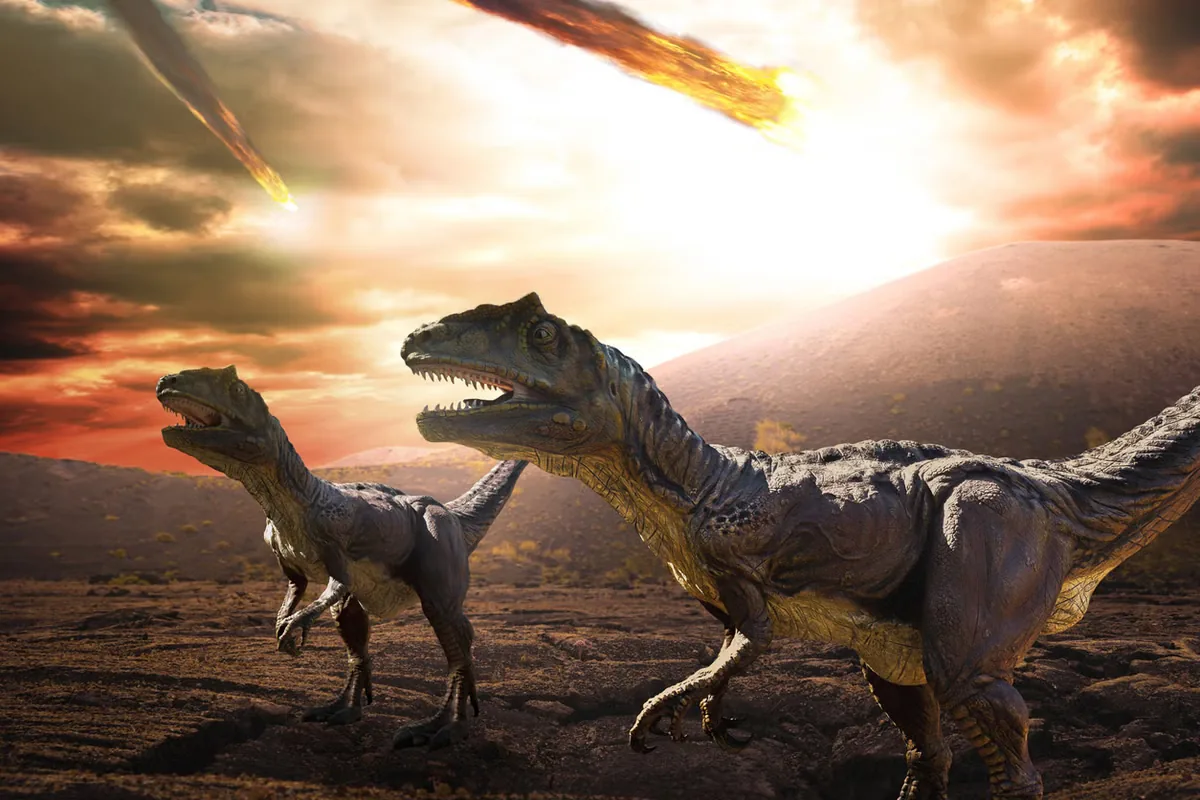
Scientists have identified the specific class of meteorite responsible for the extinction of the dinosaurs 66 million years ago, a type rarely found on Earth. The catastrophic impact event, caused by the six-mile-wide "Chicxulub" asteroid, not only created a massive crater but also scattered debris globally. New research, published Friday by scientists at the University of British Columbia, analyzed traces of the Chicxulub impact to determine the meteorite's composition. They discovered it was a carbonaceous chondrite, a primitive and uncommon type of rocky material that comprises only about five percent of meteorites found on Earth.
"Being impacted by such a rare, distant projectile really underscores how unlucky the dinosaurs were," stated Dr. Philippe Claeys, a visiting professor at the University of British Columbia. While this discovery does not alter the fundamental understanding of the Chicxulub impact event, which occurred at what is now the Yucatán Peninsula in Mexico, it does influence theories about the immediate cause of the mass extinction.
New Light on Extinction Theories
The composition of the meteorite suggests that sulfur, an element known for its combustibility, may have played a lesser role in wiping out approximately 75 percent of Earth's species. Instead, researchers now believe the fine debris ejected into the atmosphere was the primary culprit behind the global catastrophe. Dr. Claeys collaborated with international researchers, including teams from the Institut de Physique du Globe and Université de Paris in France. Together, they meticulously measured trace elements within clay layers formed directly from the meteorite impact.
The study's findings suggest the Chicxulub asteroid may have originated from the outer reaches of the asteroid belt, near Jupiter, or potentially even further out in the solar system. This origin point for such a destructive projectile adds another layer of mystery to the event. While the impact's devastating effects are well-documented, the precise mechanisms and contributing factors leading to the demise of so many species continue to be a subject of scientific inquiry. Some theories propose that climate change may have weakened ecosystems prior to the impact, while others point to widespread volcanic activity as a contributing factor.
Regardless of the exact sequence of events, the consequences were undeniably severe. In a vivid description published in The Conversation, professors Monica Grady and Michael Benton detailed the indiscriminate nature of the destruction. "Whether a dinosaur or a dung beetle, if you were near the transient cavity you would have been incinerated instantly by the blast," they recounted. "But even if you were up to 2,000 kilometers from the epicenter, you’d likely have been killed quickly by the thermal radiation and supersonic winds now spreading out from the impact site." This latest research on the asteroid impact provides crucial details about the nature of the extraterrestrial object, refining our understanding of this pivotal moment in Earth's history and the end of the dinosaur era.