
New Jersey Meteorite Offers Clues to Life's Origins
A meteorite that struck a New Jersey home on July 16, 2024, is providing scientists with rare insights into the building blocks of life. Classified as a unique CM1/2 carbonaceous chondrite, the space rock contains organic compounds and amino acids.

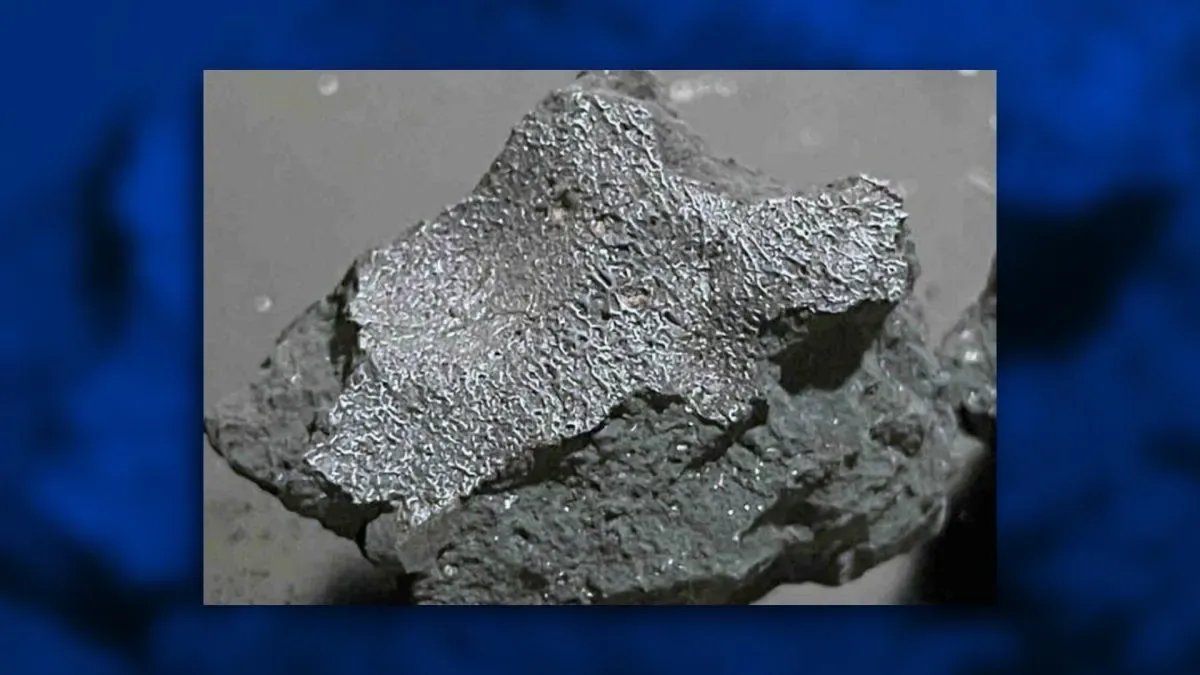
A rare meteorite that dramatically crashed through a New Jersey home on July 16, 2024, is now providing scientists with unprecedented insights into the origins of life. The space rock, which landed in the bedroom of a Hillsborough residence, has been classified as a unique CM1/2 carbonaceous chondrite, a type known for its rich organic compounds and potential to hold clues about the early solar system. The homeowner’s careful handling of the debris has been lauded by researchers, ensuring its pristine condition for scientific analysis.
The homeowner’s quick thinking preserved the meteorite’s delicate structure. After the impact, the individual used gloves to collect the fragments, wrapped them in foil, and placed them in jars. This method prevented contamination and allowed scientists to examine fragile minerals and organic compounds that are seldom found intact in recovered meteorites. These actions were crucial for the subsequent detailed study of the extraterrestrial material.
The recovered rock has been officially designated the Hillsborough meteorite, after the township where it made its fiery descent. NASA scientists, along with researchers from the SETI Institute, have classified it as a CM carbonaceous chondrite. This category of meteorites is recognized for containing some of the oldest known materials in the solar system and is rich in carbon. More remarkably, the Hillsborough specimen was given the rare CM1/2 classification, placing it between two subcategories that describe varying degrees of alteration by water on its parent asteroid. It is only the second meteorite of this specific type ever observed on Earth.
Unlocking Ancient Secrets
Analysis of the Hillsborough meteorite, published in the journal Science Advances, revealed the presence of organic compounds, minerals, and amino acids. These are considered the fundamental building blocks of all life as we know it. Danny Glavin, a senior scientist in NASA’s Astrobiology Analytical Laboratory at Goddard Space Flight Center, highlighted the significance of these findings. “It’s just more proof that the chemical building blocks of life could have been delivered — and are still being delivered — to Earth today by these carbonaceous asteroid fragments,” Glavin stated. This supports the theory that life’s essential ingredients may have originated beyond Earth.
Scientists also detected small, salty fragments within the meteorite. This discovery suggests the meteorite originated near the surface of its parent asteroid, a region where liquid water may have been present. The evaporation of this water would have left behind concentrated salt deposits. Researchers believe that such briny conditions on ancient asteroids could have been a catalyst for the complex chemical reactions necessary for life to emerge. Understanding these processes is vital for grasping the conditions under which life can form, both within our solar system and potentially on exoplanets.
The study of the Hillsborough meteorite continues to yield significant data. As researchers delve deeper into its composition, they aim to uncover new details about how water interacted with primitive asteroids and, consequently, how these processes shaped the early conditions of our solar system. This ongoing research into carbonaceous chondrites offers a direct window into the planet-forming era and the potential delivery mechanisms of life's precursors to Earth. The findings from this unique space rock are expected to refine scientific models of planetary formation and the distribution of organic materials throughout the cosmos. The implications extend to the search for extraterrestrial life, as understanding the building blocks and environmental conditions that fostered life on Earth can guide astrobiological investigations elsewhere.