
Kīlauea Volcano Summit Sees Lava Fountains Erupt After Brief Pause
Hawaii's Kīlauea volcano summit erupted with high lava fountains Saturday morning, marking the 55th eruption since 2024 after a rare two-month dormancy. The event lasted less than six hours.

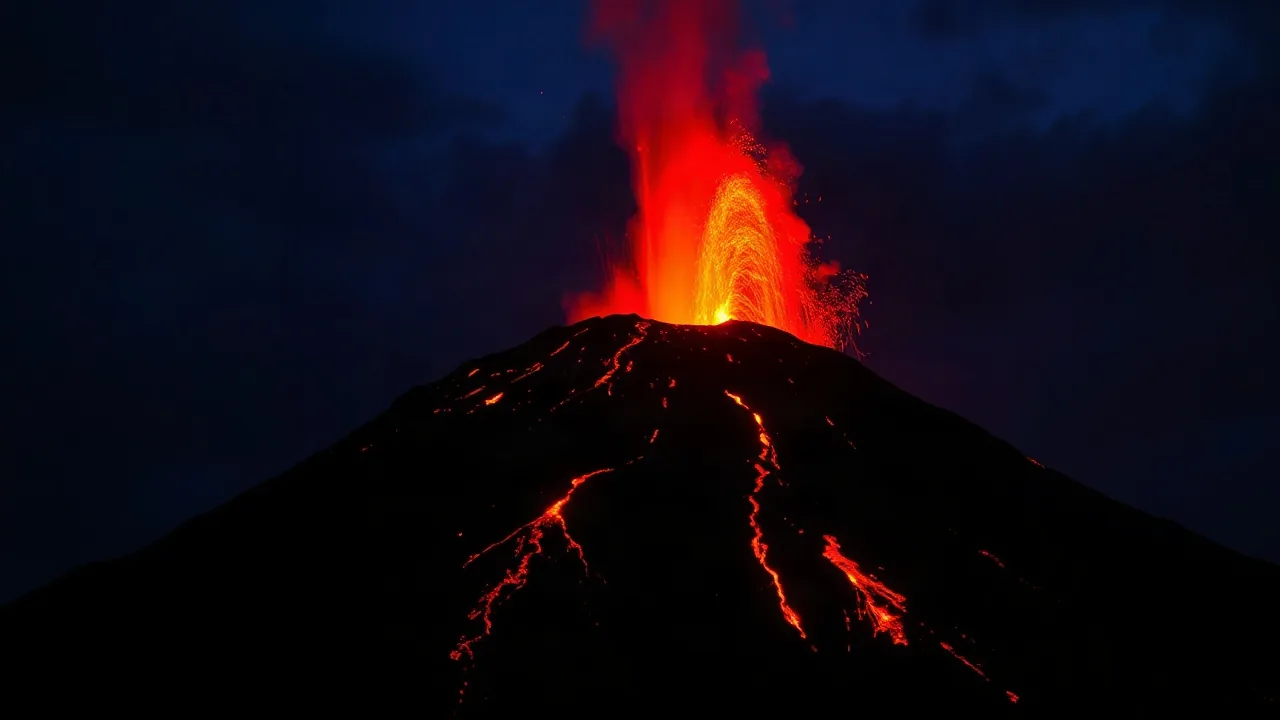
High lava fountains erupted at the summit of Hawaii's Kīlauea volcano on Saturday, October 17, 2026, following a brief and rare two-month pause in activity. The spectacle, observed within Halemaʻumaʻu crater, marked the 55th eruption sequence for the volcano since 2024 and lasted for approximately six hours.
The U.S. Geological Survey's Hawaiian Volcano Observatory (HVO) confirmed the eruption began on Saturday morning. While the fountain activity was significant, the extent of lava flow and potential hazards are being closely monitored. This event is part of Kīlauea's ongoing geological narrative, characterized by frequent but often contained eruptions originating from its summit caldera.
Volcanic Activity and Scientific Monitoring
Scientists at the HVO were actively studying the volcanic unrest that preceded this eruption, including new lava fissures that emerged in September. The observatory continuously monitors seismic activity, ground deformation, and gas emissions to assess potential threats and understand the underlying magmatic processes. Kīlauea, one of the world's most active volcanoes, provides a unique natural laboratory for volcanologists studying volcanic behavior.
The recent lull in activity, which extended for two months, was notable given Kīlauea's typical eruptive patterns. Such pauses, however, do not necessarily indicate a cessation of volcanic activity but can represent periods of magma accumulation beneath the surface. Dr. Ken Hon, the HVO scientist-in-charge, stated, "We are constantly analyzing the data to interpret the volcano's current state and predict its future behavior. Each eruption, regardless of duration, offers valuable insights."
The lava fountains are a dramatic display of molten rock being propelled into the air from a vent. The height and intensity of these fountains are influenced by factors such as the gas content of the magma and the pressure within the volcanic system. While this particular eruption was relatively short-lived, the potential for larger or more prolonged events remains a constant consideration for authorities and residents in the vicinity.
Public access to the immediate summit area, including Hawaiʻi Volcanoes National Park, is subject to safety assessments and park management decisions. Officials typically advise visitors to stay informed about current conditions and adhere to all posted warnings and closures. The Kīlauea summit eruption, though brief, serves as a reminder of the powerful geological forces at play on the Island of Hawaiʻi.
The ongoing monitoring efforts by organizations like the U.S. Geological Survey are crucial for public safety and scientific understanding. Researchers are particularly interested in how the magma system is responding after the recent period of quiet and what this might portend for future eruptions. The study of Kīlauea volcano continues to be a significant area of research in volcanology.