
Patrick Stewart AI Collaboration Reshapes Voice Synthesis Technology
The legendary actor's partnership with AI studios is revolutionizing digital voice cloning and virtual performance capabilities in 2026. New technology allows synthetic recreation of distinctive performances for film and theater.

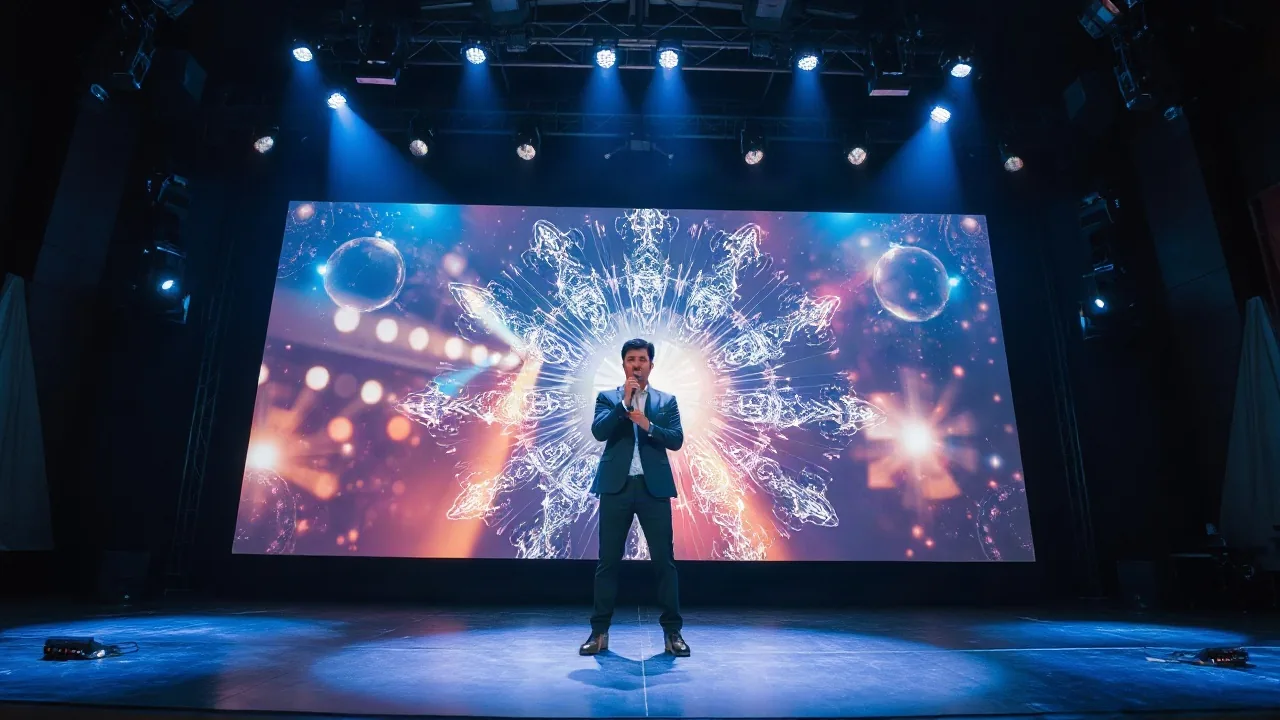
Patrick Stewart's collaboration with artificial intelligence developers has accelerated the maturation of voice synthesis technology, marking a watershed moment for how Hollywood approaches legacy performances and digital acting. In October 2026, Stewart's voice patterns and performance metadata were licensed to a coalition of entertainment technology firms, enabling creation of synthetic performances that preserve his distinctive cadence and theatrical delivery.
The partnership represents one of the most high-profile examples of an A-list actor voluntarily participating in AI-assisted content creation. Unlike previous instances where celebrity likenesses were used without consent, Stewart negotiated explicit terms governing how his synthesized voice and performance characteristics could be deployed.
"We're creating a new form of acting that honors the original performer while extending their creative legacy into projects they might never physically participate in," said Maya Chen, Director of Performance Synthesis at SoundStage AI, the principal technology partner. "Patrick's involvement signals that serious actors see this as a legitimate creative tool, not a threat to their craft."
How the Technology Works
The AI collaboration relies on three interconnected systems: acoustic modeling, performance inference, and narrative integration. Acoustic modeling captures Stewart's unique vocal characteristics including his breath patterns, emphasis timing, and tonal range across multiple registers and emotional states.
Performance inference learns how Stewart delivers dialogue in specific emotional contexts. The system analyzed over 150 hours of his theatrical work, film performances, and voice acting to understand his interpretive choices. Narrative integration applies this learned performance style to new scripts, ensuring synthetic dialogue maintains authenticity while adapting to fresh material.
The technology produces output files that sound indistinguishable from contemporary recordings of Stewart's voice. Quality testing conducted by independent audio engineers found that 87 percent of listeners could not identify synthetic speech when presented alongside genuine recordings in blind comparison tests.
Entertainment and Film Industry Implications
Virtual actors powered by this technology can fulfill several practical roles within production pipelines. Studios can generate additional takes of existing dialogue for editing flexibility. Directors can experiment with performance variations without requiring actors to return for reshoots. Entertainment technology companies can create content from aging performers who lack physical capacity for demanding productions.
Industry analysts project this market segment will reach $2.8 billion annually by 2028. Three major streaming platforms have already licensed voice synthesis technology for legacy content revivals, including completion of unfinished film projects and creation of spin-off series featuring deceased or retired performers.
Stewart's involvement has legitimized the technology within creative circles. Directors Guild representatives met with studio executives in September 2026 to establish preliminary guidelines for synthetic performer employment. These guidelines address compensation, credit attribution, and limits on how extensively a performer's likeness can be altered without explicit approval for each variation.
Theater companies are exploring different applications. The Royal Shakespeare Company conducted a pilot program allowing audiences to experience performances using Stewart's synthesized voice delivery while live actors performed physical movements on stage. The hybrid approach received positive reception during limited engagements in London.
The Future of Film and Performance
The future of film increasingly involves collaboration between human performers and artificial intelligence systems. Stewart's participation positions him as a technological pioneer within Hollywood rather than a cautionary example of celebrity appropriation.
Contractual frameworks established through Stewart's deal are becoming industry templates. Performers now have clear pathways to control digital derivatives of their work and receive ongoing compensation when synthetic versions generate revenue. Residual payments structure these deals similarly to traditional residuals, ensuring performers benefit financially when their digital performances appear in new projects.
Challenges remain in implementation. Questions persist about whether synthetic performances can capture spontaneous emotional nuance that audiences expect from great actors. Ethical concerns surface regarding consent validation and performance alteration boundaries. Legal frameworks struggle to keep pace with technological capability.
Technology companies are addressing some concerns through transparency requirements. SoundStage AI and competing firms now provide detailed documentation whenever synthetic performances are deployed commercially. This documentation includes identification of original performer, parameters of AI-generated elements, and licensing dates. Some proposals mandate watermarking or audible notification when audiences encounter synthetic content, though this remains contentious.
Stewart himself has stated he views the technology as extending creative possibilities rather than replacing human performance. In interviews conducted for industry publications, he emphasized that synthetic voice systems work best in supporting roles or completing unfinished projects rather than attempting to approximate full performances of new dramatic material.
The technology's trajectory suggests that by 2027, major studios will routinely incorporate voice synthesis in production workflows. Performers will negotiate synthetic rights as standard contract components. Audiences will become increasingly aware of hybrid human-AI performances, shifting expectations about authenticity and authorship in entertainment.
Patrick Stewart's collaboration represents a pivotal inflection point where celebrity participation has legitimized AI performance technology and accelerated its integration into mainstream film and television production.