
AI Agents Accelerate Lung Cancer Drug Discovery Breakthrough
Artificial intelligence agents have identified a promising new drug candidate for lung cancer treatment, significantly shortening the typical discovery timeline. The breakthrough demonstrates how machine learning is transforming biotech research.

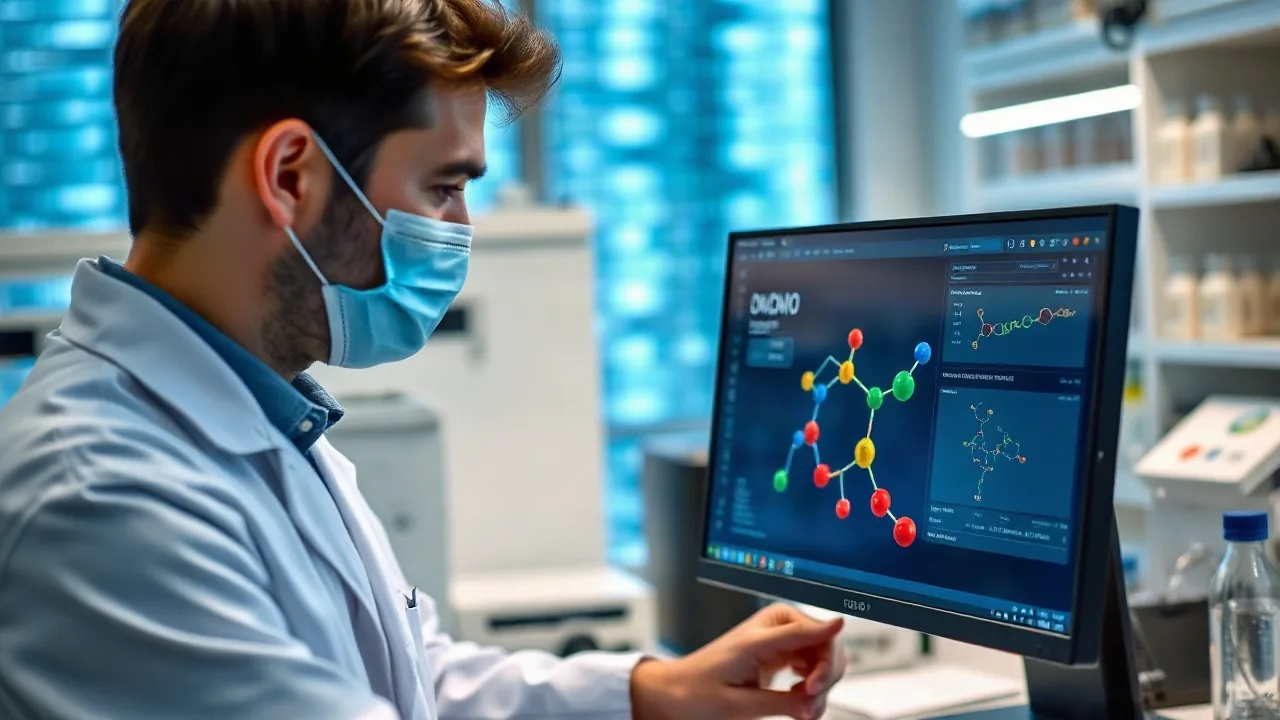
Researchers at a leading biotech firm announced in September 2026 that AI agents had discovered a novel compound showing strong potential against non-small-cell lung cancer, one of the deadliest cancer types worldwide. The computational discovery process, which typically takes years, was completed in under six months, representing a major acceleration in pharmaceutical development.
The AI system analyzed molecular structures and biological pathways across millions of potential compounds, identifying a lead candidate that survived rigorous laboratory validation. This approach bypasses months of manual screening and hypothesis-driven research, directly targeting the most promising therapeutic angles.
"Machine learning agents can process biological data at a scale humans simply cannot match," said Dr. Elena Vasquez, Chief Science Officer at the biotech firm conducting the research. "What once required a team of chemists two years to explore, these systems mapped in weeks."
How AI Agents are Reshaping Drug Development
Drug discovery has long been one of the slowest, most expensive phases of bringing new medicines to patients. A single successful drug requires screening thousands of candidates, testing each for efficacy and toxicity, a process that consumes billions of dollars and ten to fifteen years on average.
AI agents represent a fundamental shift in this workflow. Unlike traditional software, these systems can autonomously propose hypotheses, design experiments, and evaluate results without human intervention at each step. They learn from each test, refining their search strategy in real time.
- Process vast chemical libraries faster than conventional high-throughput screening
- Identify novel binding sites and mechanisms researchers might overlook
- Predict toxicity and off-target effects before synthesis
- Reduce failed compounds sent to laboratory validation
The artificial intelligence system used in this breakthrough was trained on two decades of published molecular and clinical data, including thousands of failed and successful drug candidates. It learned to recognize patterns associated with safety and efficacy, then applied those patterns to novel chemical space.
Early-stage testing in cell cultures showed the AI-identified compound blocked tumor growth in lung cancer models at concentrations lower than existing therapies. The compound also demonstrated reduced toxicity to healthy cells compared to conventional chemotherapy agents.
Implications for Lung Cancer Treatment and Beyond
Lung cancer claims over 120,000 lives annually in the United States, making it the leading cause of cancer death. Current treatments, including immunotherapies and targeted kinase inhibitors, offer benefits to specific patient populations but resistance and side effects remain significant barriers.
The newly discovered candidate addresses a different molecular pathway than most existing drugs, potentially offering efficacy in resistant tumors. Pre-clinical data suggest it may work synergistically with checkpoint inhibitors, opening possibilities for combination therapies.
The biotech company expects to file an investigational new drug application with the FDA within eighteen months, accelerating a typical timeline by several years. If approved for human trials, the compound could reach patients by 2029 or 2030, compared to 2032-2034 under conventional development schedules.
Beyond lung cancer, the same AI agents framework is being applied to colorectal cancer, ovarian cancer, and rare genetic disorders. Multiple other pharmaceutical companies have announced similar computational discovery programs targeting leukemia and pancreatic cancer.
Experts emphasize that AI acceleration does not eliminate the need for rigorous testing. The compound still requires extensive safety evaluation in animal models, followed by phase one, two, and three clinical trials in humans. However, the months saved in initial screening phase allow researchers to bring candidate drugs to human testing faster.
"This is not a replacement for the scientific method," noted Dr. James Chen, a computational biologist at Stanford Medical School. "It is a force multiplier. Researchers can now focus their creative energy on interpreting results and optimizing lead compounds rather than manually sorting through ten thousand possibilities."
The Broader Shift in Biotech and Healthtech
Biotech and healthtech companies are investing heavily in AI infrastructure as standard practice. Venture capital funding for AI-driven drug discovery exceeded $3.2 billion in the first half of 2026, doubling from 2024 levels.
Established pharmaceutical firms including Merck, Roche, and Pfizer have internal AI research divisions or partnerships with specialized AI biotech startups. The recognition that computational screening accelerates early-stage development is now industry consensus.
Regulatory bodies are also adapting to this new reality. The FDA released updated guidance in 2026 regarding computational submissions, clarifying which data types and validation approaches support approval timelines for AI-discovered compounds. This regulatory clarity has removed uncertainty and spurred further investment.
The lung cancer drug discovery breakthrough serves as proof of concept that AI agents can drive real therapeutic innovation, not merely hype. As the technology matures and more compounds reach clinical trials, the impact on patient outcomes and disease timelines will become measurable.