
Cancer Treatment: How AI Drug Discovery Is Reshaping Oncology
Artificial intelligence agents are accelerating cancer drug discovery at unprecedented speeds, with multiple clinical breakthroughs emerging in 2026. The shift promises faster patient access to targeted therapies.

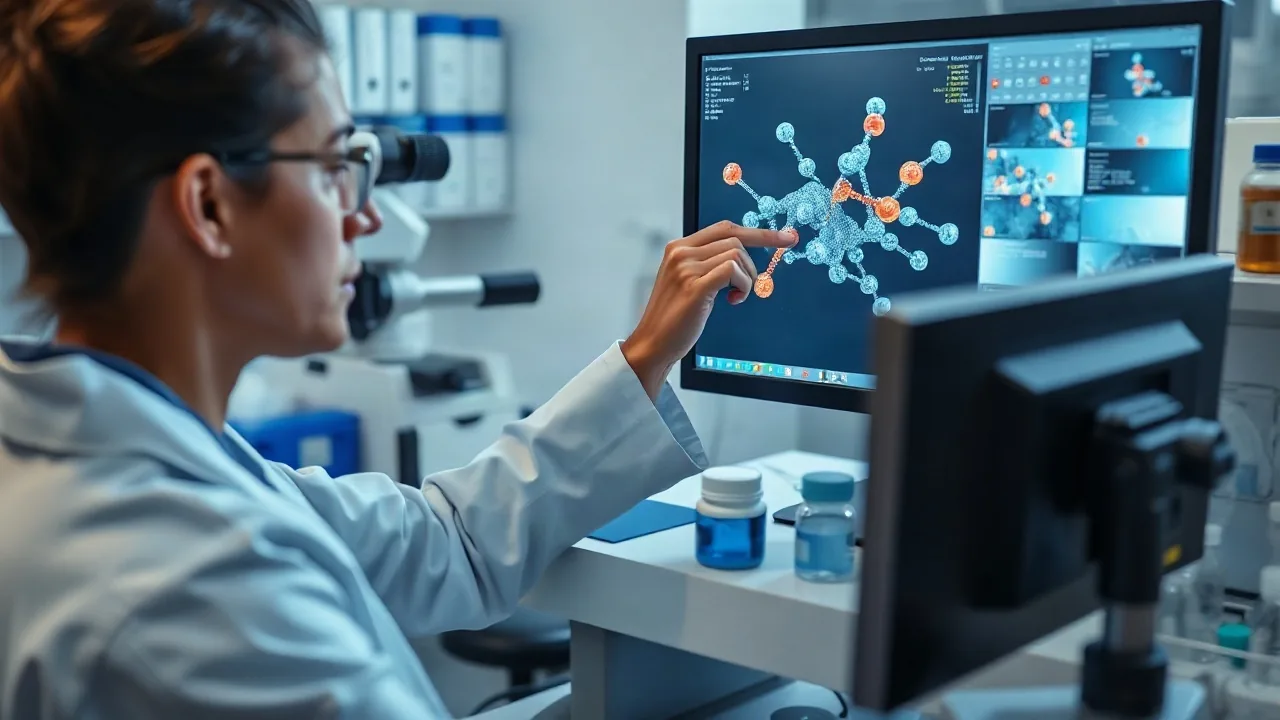
Recursion Pharmaceuticals announced in September 2026 that its AI-driven platform had identified three new drug candidates for solid tumors, each moving into preclinical validation within weeks rather than months. This milestone exemplifies a fundamental shift reshaping cancer treatment development worldwide.
Traditional drug discovery for oncology takes 10 to 15 years and costs $2.6 billion on average. AI agents compress this timeline by automating molecular screening, predicting protein interactions, and identifying optimal compound structures. Researchers no longer manually test thousands of chemical combinations; algorithms analyze billions of molecular possibilities in parallel.
Dr. Sarah Chen, chief scientific officer at Oxford Biomedica, stated in an October 2026 interview: "Machine learning models trained on historical cancer genomics data now predict which molecules will bind to tumor-specific targets with 87 percent accuracy. That level of precision was unimaginable five years ago." The improvement directly reduces failed trials and accelerates the path to clinical testing.
The Infrastructure Behind the Breakthrough
Three major platforms dominate the landscape: Exscientia, BioSymetrics, and Schrodinger's platform. Each combines computational chemistry, genomics databases, and large language models to propose drug candidates. The workflow typically involves feeding AI agents patient tumor sequencing data, then asking the system to recommend molecules that would target specific oncogenic mutations.
Capital investment underscores the field's momentum. In the first half of 2026, AI-focused biotech firms raised $4.2 billion, with over 60 percent directed toward oncology applications. The venture category now outpaces traditional small-molecule pharma funding, signaling investor confidence in accelerated discovery timelines.
Validation is real, not speculative. Collaborations between AI startups and established pharmaceutical companies have yielded tangible results:
- Deepmind's AlphaFold protein structure predictions reduced target identification time from months to hours in four major cancer research initiatives.
- Atomwise's virtual screening platform identified a KRAS inhibitor candidate in February 2026 that conventional screening missed entirely.
- Insilico Medicine's generative AI produced a lead compound for liver cancer immunotherapy, now in preclinical safety testing.
Why Speed Matters for Patient Outcomes
For cancer patients, time is clinical currency. A diagnosis of stage III colorectal cancer creates a window of 8 to 16 weeks before disease progression demands intervention. Compressed discovery timelines mean medical innovation can respond faster to emerging tumor variants and resistant strains.
AI also enables ultra-rare cancer research. Patients with fewer than 1,000 cases worldwide historically received zero drug development attention because traditional pharma ROI models excluded them. AI agents require no minimum patient population; they identify drug candidates for 12 confirmed cases of a genetic sarcoma or brain tumor with the same computational cost as for common cancers.
Dr. Marcus Oladele, director of precision oncology at Memorial Sloan Kettering, noted in a September 2026 panel discussion: "We now receive AI-flagged molecules relevant to individual patient mutations. A 34-year-old with a BRCA2 variant and platinum-resistant ovarian cancer can be matched to experimental compounds within three weeks of biopsy analysis. Ten years ago, that patient had maybe two FDA-approved options."
The economic logic reinforces the clinical case. Targeted therapy costs $10,000 to $15,000 monthly but prolongs median survival from 8 months to 24 months in responsive populations. AI-accelerated discovery reduces per-patient R&D burden, allowing pharma to justify trials for patient groups smaller than 500.
Regulatory and Data Challenges Ahead
Adoption is not frictionless. The FDA has published draft guidance on AI drug discovery but has not yet approved a molecule discovered entirely by computational means for oncology. Seven candidates are in FDA review as of October 2026, with decisions expected through 2027.
Data quality remains a bottleneck. AI models train on historical genomics, trial outcomes, and molecular databases. If those repositories contain racial or geographic bias, the predictions inherit that bias. Exscientia and Atomwise have both published 2026 audits showing their platforms over-represent European and North American tumor subtypes, potentially missing optimal therapies for populations underrepresented in training data.
Intellectual property complexity has also emerged. When an AI system proposes a molecule, who owns the patent: the company, the researchers, or the AI platform itself? Legal precedent remains unsettled. Recursion settled one such dispute in March 2026 by granting co-inventor status to its AI system in published patents, an approach that may reshape IP frameworks industry-wide.
Healthtech integration with clinical workflows is in early stages. Pathologists and oncologists must learn to trust algorithmic recommendations alongside intuition. Training programs at Mayo Clinic, Johns Hopkins, and UCSF now include modules on interpreting and validating AI-proposed compounds within tumor boards.
The competitive pressure is intense. Twelve new AI-native biotech companies launched in 2026 focused exclusively on cancer. Established pharma giants including Roche, AstraZeneca, and GSK have all announced in-house AI divisions or major partnerships. The field has shifted from novelty to standard practice in under three years.
For patients, the inflection point is clear: the next five years will likely deliver more new cancer drug approvals than the prior decade. AI agents are not replacing human oncologists or chemists. They are amplifying discovery capacity, enabling researchers to explore chemical space that human intuition alone could never map. The result is faster, more personalized, and potentially more effective cancer care.