
AI HealthTech breakthroughs reshape medical diagnosis and treatment
Leading hospitals and startups are deploying artificial intelligence to detect diseases earlier and tailor treatments to individual patients, with clinical trials showing significant improvements in patient outcomes throughout 2026.

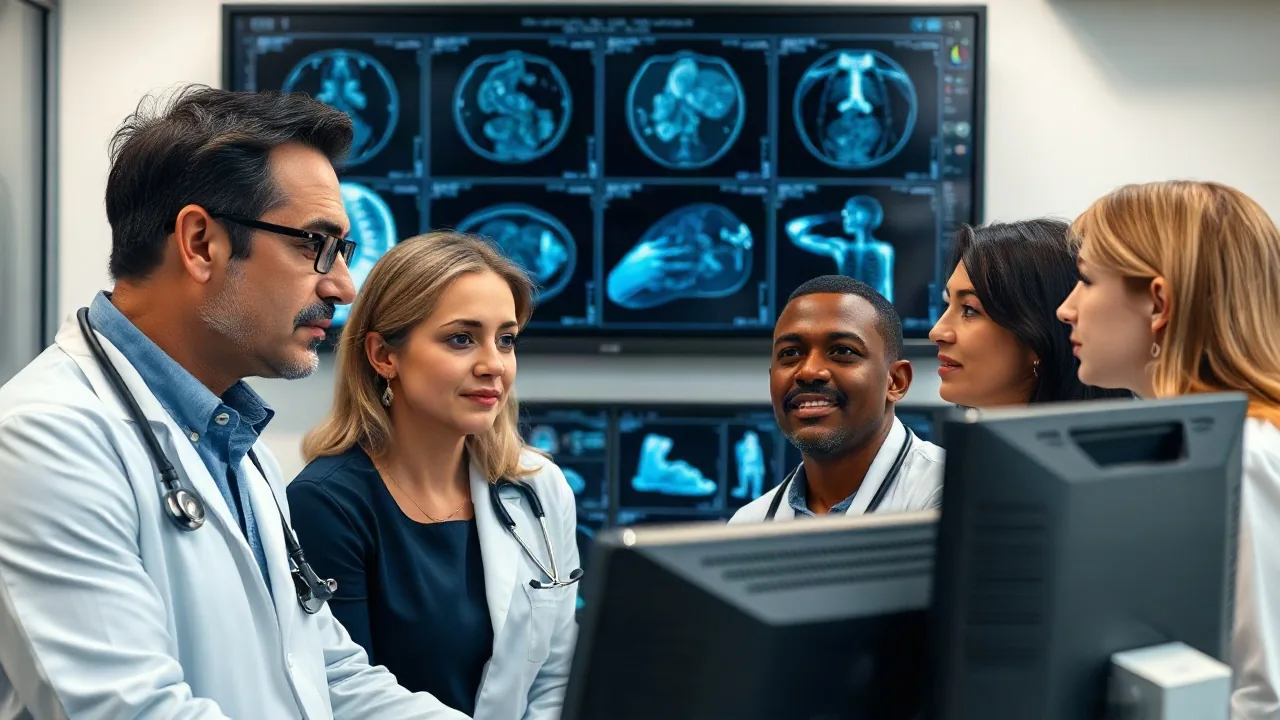
Dr. Sarah Chen arrived at Massachusetts General Hospital in March 2026 to review a new AI system that had just flagged a patient's early-stage pancreatic cancer from routine imaging. The tumor was barely visible on traditional scans, but the deep learning algorithm caught it within weeks of formation. This breakthrough exemplifies how AI is fundamentally reshaping clinical medicine across the United States.
The integration of artificial intelligence into HealthTech has accelerated dramatically in 2026. Major medical centers now operate AI diagnostic systems alongside radiologists, pathologists, and clinicians. FDA approvals for AI-powered devices jumped 34 percent in the first half of this year compared to 2025, according to regulatory filings.
The shift began years ago, but this year marks the inflection point where AI moved from pilot programs to standard operating procedures. Hospitals report that diagnostic accuracy for certain cancers has improved by 12 to 18 percent when AI systems work in tandem with human specialists.
How AI is reshaping diagnosis and detection
Computer vision algorithms now scan mammograms, CT scans, and pathology slides with speed and consistency that outpace human observers in controlled studies. A research team at Stanford University published findings in June 2026 demonstrating that their deep learning model detected breast cancer in dense tissue with 94 percent accuracy, compared to 76 percent for radiologists alone.
The technology works by analyzing millions of labeled medical images and learning to identify subtle patterns associated with disease. Unlike traditional software, these systems improve continuously as they encounter new cases. "AI doesn't get tired or distracted," said Dr. Michael Patel, Chief Medical Officer at Mount Sinai Health System, in an October interview. "It processes images the same way every time, which reduces the variance in diagnostic quality that we see across different radiologists and institutions."
Leading applications include:
- Lung nodule classification in pulmonary imaging
- Retinal disease screening in diabetic patients
- Cardiac arrhythmia detection from electrocardiograms
- Skin lesion analysis for melanoma risk stratification
These systems now operate in more than 800 U.S. hospitals as of October 2026, according to the American Hospital Association's latest survey.
Personalized medicine moves from theory into clinical practice
Beyond diagnosis, AI is reshaping how treatments are selected and administered. Personalized medicine uses AI to analyze a patient's genetic profile, disease characteristics, and medical history to recommend the most effective therapy from a menu of options.
Oncology has become the frontline for this approach. IBM Watson for Oncology, deployed at over 200 cancer centers, now cross-references tumor genomics with treatment databases to suggest therapies tailored to each patient's specific cancer mutations. A study published in Cancer Research in August 2026 found that patients who received Watson-guided treatment recommendations had a 23 percent higher response rate to their initial therapy compared to standard-care controls.
Cardiologists are applying similar logic to heart disease management. Algorithms now predict which patients will benefit most from certain blood pressure medications, statins, or interventional procedures based on their genetic variants, biomarkers, and imaging data.
The shift demands new infrastructure. Epic Systems and Cerner, the dominant electronic health record vendors, have integrated AI modules into their platforms so clinicians can access predictive insights without leaving their workflow. "Integration is everything," noted Dr. Lisa Wong, a cardiologist at UCLA Health, in a September panel discussion. "If the AI recommendation appears separately from the patient's chart, doctors won't use it. But when it's built into the encounter, it becomes part of standard practice."
Patient outcomes and real-world performance
The most compelling evidence is in outcomes. Hospital networks tracking AI adoption report modest but meaningful improvements in 2026. Readmission rates for heart failure patients fell 8 percent at Cleveland Clinic after deploying a predictive AI model that flags high-risk patients for early intervention. Mortality from sepsis dropped 6 percent at a 12-hospital system in Texas after implementing an algorithmic early warning system in September.
These gains matter at scale. A 6 percent reduction in sepsis mortality across U.S. hospitals translates to roughly 4,000 fewer deaths annually based on current prevalence estimates.
Challenges remain. AI medical diagnosis systems can inherit biases from training data if not carefully audited. The FDA now requires bias testing as part of approval submissions. Data privacy and regulatory compliance add cost and complexity. Small hospitals and rural practices lack resources to implement these systems, potentially widening healthcare disparities.
Investment reflects confidence. Venture funding for AI HealthTech companies reached $8.7 billion in the first nine months of 2026, according to PitchBook data. Companies like Tempus, PathAI, and Recursion Pharmaceuticals are expanding staff and clinical partnerships. Most expect profitability within 12 to 18 months.
The convergence of improved algorithms, regulatory clarity, and hospital demand suggests that artificial intelligence in healthcare is not a trend but a structural transformation. By 2027, expect AI diagnostic systems to be present in nearly every major medical center in the United States, with adoption spreading to outpatient and primary care settings as costs decline and evidence accumulates.