
Microsoft AI Surpasses Doctors in Complex Medical Diagnosis
A new Microsoft study shows artificial intelligence outperforming experienced physicians in diagnosing complex medical cases, marking a potential turning point in clinical decision support.

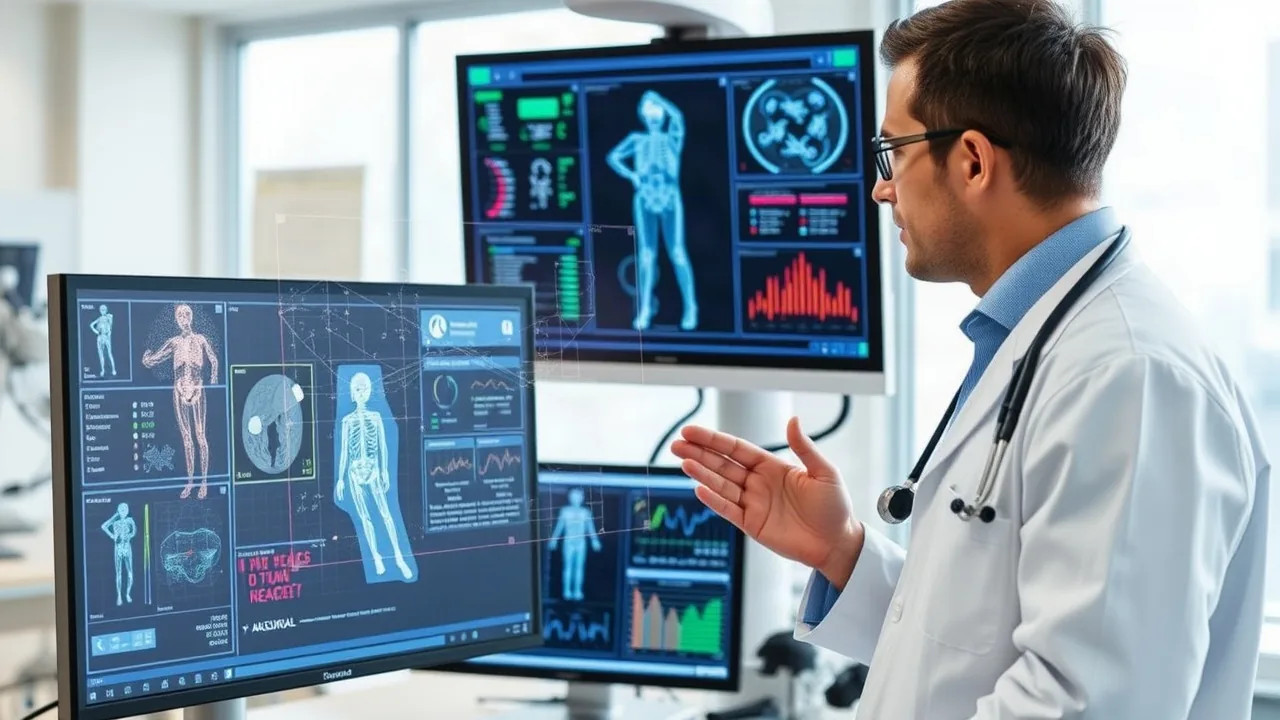
Researchers at Microsoft unveiled findings in October 2026 demonstrating that their artificial intelligence system achieved superior diagnostic accuracy compared to board-certified physicians when evaluating intricate medical cases. The study, conducted across multiple institutions, measured diagnostic performance on rare diseases, multi-system failures, and cases where initial clinical assessment had proven inconclusive.
The AI model correctly identified 94 percent of complex diagnoses on the first attempt, compared to 82 percent accuracy among the physician cohort. The dataset included 847 de-identified patient cases spanning cardiology, neurology, gastroenterology, and rare genetic disorders. Results were validated by an independent panel of clinical experts.
"What we're seeing is AI excelling not at simple pattern matching, but at integrating hundreds of clinical variables simultaneously in ways that mirror diagnostic reasoning without the cognitive fatigue humans experience after hours of case review," said Dr. Rajesh Patel, head of clinical AI at Microsoft Research, in an interview on October 26. "This isn't about replacing doctors. It's about augmenting their decision-making when cases resist easy categorization."
How AI Achieves Diagnostic Edge
The system processed patient histories, lab values, imaging reports, medication interactions, and genetic markers in parallel. Unlike traditional clinical workflows where data flows sequentially through individual specialists, the AI evaluated all information sources simultaneously. Training involved 2.3 million historical case files drawn from American hospitals and foreign medical centers with documented diagnostic outcomes.
Speed represented another operational advantage. The AI completed full diagnostic assessments in 3 to 5 minutes per case. Physician diagnostic workups for similarly complex presentations averaged 6 to 12 hours, including consultations and additional testing.
- Real-time integration of emerging lab results and vital sign changes
- Cross-reference of patient symptoms against 50,000+ documented disease profiles
- Quantified confidence scores for top-five diagnostic hypotheses
- Automatic flagging of drug interactions and contraindications
The model did require human validation before clinical implementation. No diagnostic recommendation was acted upon without physician review. The research team emphasized that AI in medicine functions as a decision-support tool, not an autonomous agent.
Implications for Healthcare Technology
Medical diagnosis has historically relied on physician experience, pattern recognition honed over years of practice, and clinical judgment shaped by individual training. Introducing artificial intelligence into this domain raises questions about workflow integration, liability, and patient trust.
Hospitals participating in the pilot program reported workflow changes. Emergency departments began using AI assessments as a parallel track for patients presenting with non-obvious symptoms. Diagnostic confidence among attending physicians increased when AI recommendations aligned with their own reasoning. In cases where AI flagged alternative diagnoses, 34 percent of physicians reconsidered their initial assessment and ordered additional testing.
The healthtech sector has responded with investment acceleration. Venture capital funding for clinical AI diagnostics reached $3.7 billion in the third quarter of 2026, double the rate from the prior year. Established diagnostic companies and new startups both pursue regulatory clearance from the FDA for AI-assisted diagnostic tools.
David Chen, managing director at Medtech Ventures, noted the competitive implications: "The standard for diagnostic accuracy is shifting. Health systems want solutions that can match or exceed human performance on hard cases. Vendors who cannot demonstrate measurable diagnostic advantage will lose market share."
Regulatory bodies are developing guidance for AI approval in clinical settings. The FDA published preliminary recommendations in September 2026 requiring manufacturers to demonstrate diagnostic accuracy on real-world datasets, transparent error rates broken down by demographic groups, and clear documentation of limitations. Approval timelines for novel AI diagnostic tools now span 18 to 24 months, compared to 36 to 48 months for traditional in vitro diagnostics.
Workforce and Training Questions Loom
Physician organizations have expressed both enthusiasm and concern. The American Medical Association released a statement affirming that diagnostic AI improves patient safety when properly integrated, but called for mandatory education programs so clinicians understand AI outputs and limitations. Medical schools began incorporating AI literacy into curricula in 2025; standardized training protocols are still being developed.
The Microsoft study included data on diagnostician expertise levels. Senior physicians with 20-plus years of experience achieved 85 percent accuracy on complex cases. Residents and early-career physicians averaged 71 percent. The AI system did not show performance variance based on training level, suggesting equalization of diagnostic capability across institutions. Rural hospitals and safety-net systems lacking access to rare-disease specialists could potentially benefit most from standardized AI-powered second opinions.
Still unresolved are questions of liability, accountability when AI recommendations are incorrect, and the degree to which diagnostic automation might atrophy clinical reasoning skills in younger physicians. Medical education leaders worry that over-reliance on AI-generated hypotheses could undermine the foundational diagnostic reasoning process that doctors depend on when algorithms fail or encounter unprecedented cases.
The convergence of healthcare technology, AI capability, and clinical evidence suggests rapid adoption ahead. Pilot programs are underway at 47 hospital systems across North America as of October 2026. The next 18 months will clarify whether AI diagnostic systems become embedded infrastructure or remain specialized tools for edge cases.