
Giant 'D-rex' Fungus Discovered in China, Dates Back 65 Million Years
Chinese scientists have identified a colossal new fungus species, dubbed 'D-rex,' found in Yunnan province. This remarkable organism belongs to a fungal family that emerged around the time of the dinosaur extinction event.

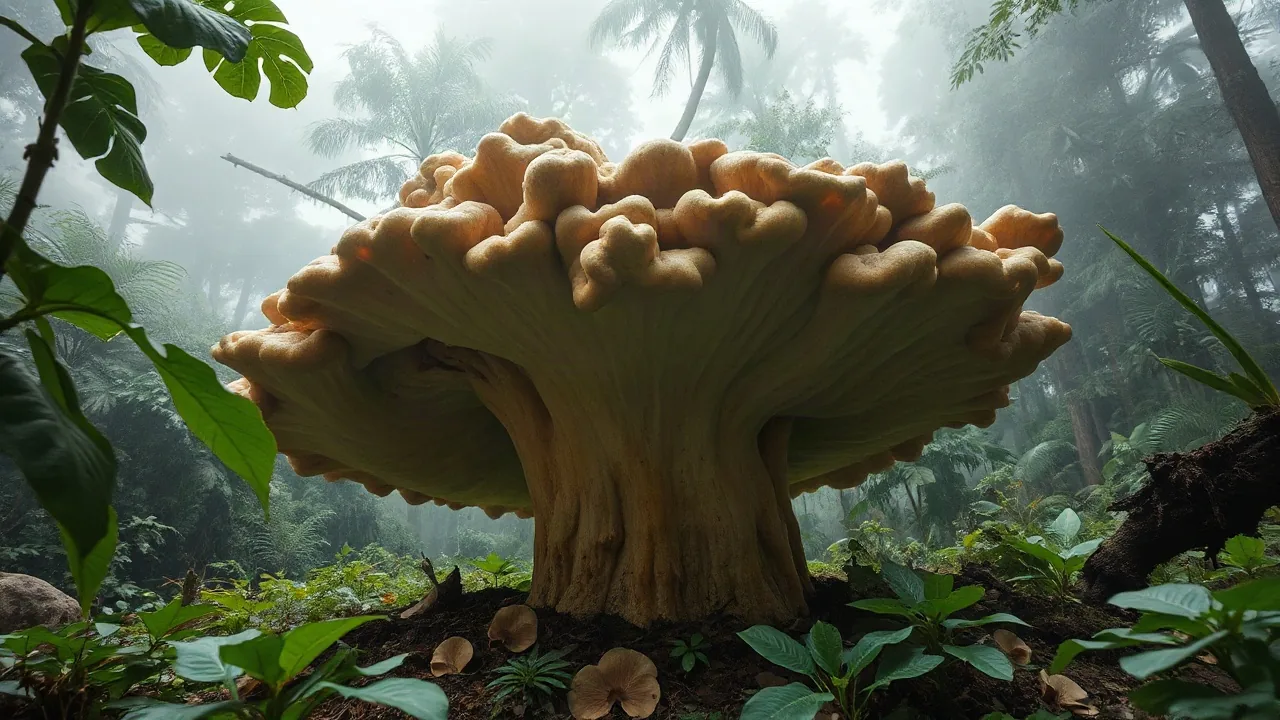
A monumental fungus species, named 'D-rex' for its immense size and ancient lineage, has been discovered by scientists in China's Yunnan province. Researchers from the Chinese Academy of Sciences identified the organism, which is part of a fungal family estimated to have originated approximately 65 million years ago, coinciding with the mass extinction event that ended the age of dinosaurs.
The discovery was announced by a research team led by Dr. Yu-Cheng Dai, a prominent mycologist at the Chinese Academy of Sciences. The new species, formally designated as *Dendrotylus rex*, boasts a massive fruiting body, though its most significant feature is its deep-rooted mycelial network, suggesting an ancient evolutionary history. This finding offers a unique glimpse into the biodiversity that survived and thrived through major geological periods.
Ancient Roots in a Changing World
The evolutionary timeline of the *Dendrotylus* genus, to which D-rex belongs, suggests its origins trace back to the Paleogene period. This era, following the Cretaceous–Paleogene extinction event around 66 million years ago, saw dramatic shifts in global ecosystems. The survival and diversification of such ancient fungal lineages underscore their resilience and adaptability. Fungi play a critical role in nutrient cycling and ecosystem health, making discoveries like this vital for understanding the planet's biological past and present.
Dr. Dai stated in a press release, "This discovery highlights the incredible biodiversity still waiting to be uncovered, even in well-studied regions. The genetic analysis indicates that this fungal family has ancient roots, surviving through significant environmental upheavals." The research, published in the journal *Fungal Diversity*, involved extensive fieldwork and genetic sequencing to confirm the species' unique status and evolutionary placement.
The colossal size and ancient origins of D-rex position it as a significant find in mycology. Fungal diversity is crucial for soil health, decomposition, and supporting plant life. Understanding the evolutionary history of such organisms can provide insights into ecological resilience and adaptation strategies. This discovery contributes to the growing body of knowledge about the intricate web of life that has persisted through Earth's history.
Further research is planned to explore the ecological role of Dendrotylus rex and its potential interactions with local flora and fauna in Yunnan province. Scientists hope to uncover more about its reproductive strategies and its specific adaptations that allowed it to persist for millions of years.