
Ancient Denisovan Fossils Offer First Glimpse of Appearance
New fossil discoveries are providing the first concrete clues about the physical appearance of Denisovans, an extinct human relative known only from genetic material and a few bone fragments.

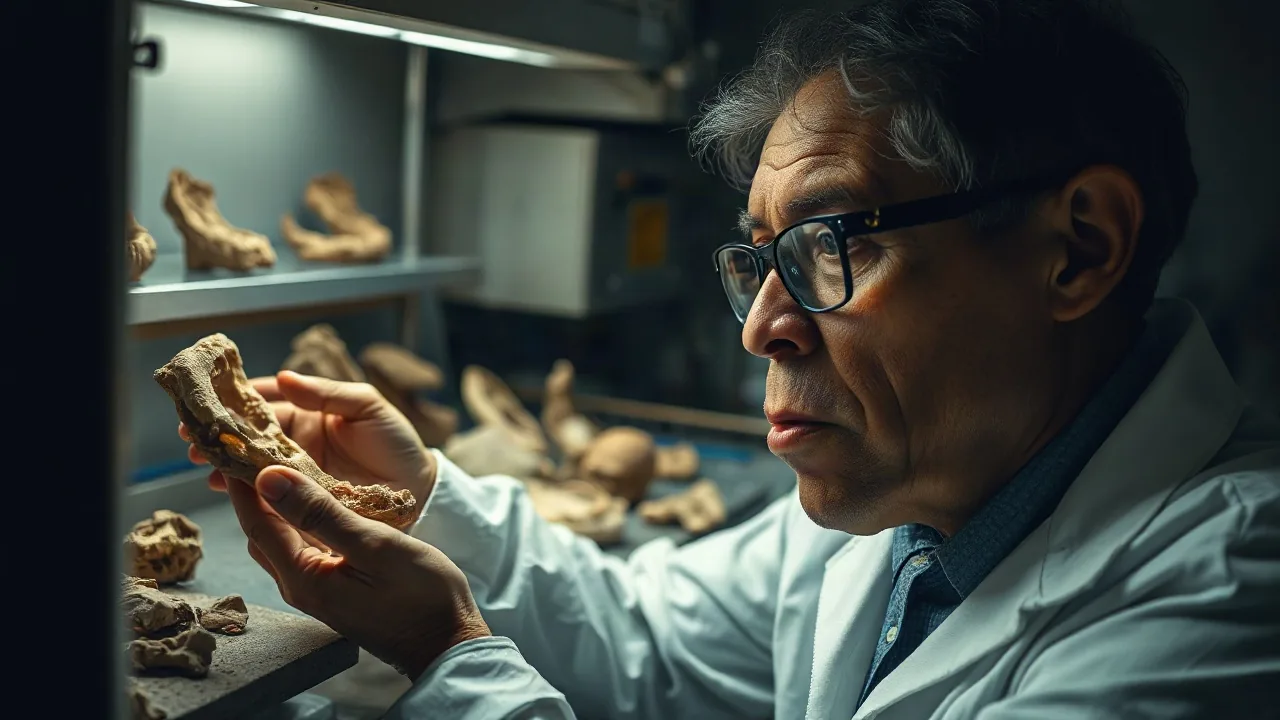
For the first time, scientists have gained a rare glimpse into the physical characteristics of Denisovans, an enigmatic group of extinct humans who coexisted with Neanderthals and early Homo sapiens. Researchers on October 23, 2026, announced that proteomic analysis of Middle Pleistocene fossils from the Xujiayao site in China, combined with modern computational techniques, has allowed them to reconstruct a potential facial structure and morphology for these ancient hominins. Previously, knowledge of Denisovans was largely confined to their DNA, pieced together from a finger bone found in Siberia and a few other scant remains, leaving their appearance a subject of intense speculation.
The study, published in the journal Nature, focused on the Xujiayao fossils, which date back approximately 100,000 to 120,000 years ago. By analyzing proteins extracted from the fossilized remains, specifically a mandible fragment and teeth, the team was able to identify genetic markers associated with specific physical traits. This proteomic data, when fed into advanced facial reconstruction algorithms, generated a composite image that suggests Denisovans may have possessed a broad face, a large dental arch, and potentially other distinctive cranial features that set them apart from Neanderthals and modern humans.
Unlocking the Secrets of a Mysterious Relative
The breakthrough comes after decades of mystery surrounding the Denisovans, who are known to have inhabited vast swathes of Asia, from Siberia to Southeast Asia. Their existence was first confirmed in 2010 through DNA analysis of a fossilized pinky bone discovered in the Denisova Cave in Russia. Genetic evidence later suggested they interbred with both Neanderthals and the ancestors of modern humans, with traces of Denisovan DNA still present in some present-day Asian and Oceanian populations. However, the scarcity of fossil evidence has made it challenging to understand their evolutionary path and physical form.
This new research bridges a significant gap in our understanding. "The proteome of the Xujiayao hominins shares many similarities with Denisovans from Denisova Cave, allowing us to infer a common Denisovan morphology," stated Dr. Chris Stringer, a palaeoanthropologist at the Natural History Museum in London, who was not involved in the study but commented on its significance. "This provides the first tangible evidence of what these individuals may have looked like, moving beyond pure genetic inference." The findings suggest a potential lineage connecting the Xujiayao finds to the broader Denisovan group, shedding light on their geographical distribution and diversity.
The implications of this discovery extend beyond mere physical description. Understanding the morphology of Denisovans can help scientists refine models of human evolution and migration during the Middle Pleistocene epoch. It offers crucial context for studying the interactions between different hominin groups as they spread across continents. The research team emphasized that this is an ongoing area of study, and further analysis of fossil remains from across Asia could reveal even more about the Denisovan family tree and their place in our shared history. The ability to reconstruct appearance from ancient proteins marks a significant advancement in palaeoanthropology, opening new avenues for investigating extinct human relatives.
The Xujiayao site itself has yielded a rich assemblage of Middle Pleistocene artifacts and fossil material, making it a critical location for understanding hominin activity in East Asia during this period. The cooperative efforts between international research institutions, including teams from China and Germany, highlight the global nature of scientific inquiry into human origins. As more data becomes available, the image of the Denisovans is likely to become even clearer, potentially revealing more about their adaptations, behaviors, and eventual disappearance from the fossil record. This research continues to illuminate the complex tapestry of our ancient past and the diverse hominin species that once roamed the Earth.