
Ancient Armored Amphibian Dominated Triassic Seas
Fossils unearthed in China reveal a remarkable armored amphibian that thrived in marine environments 237 million years ago during the Late Triassic period.

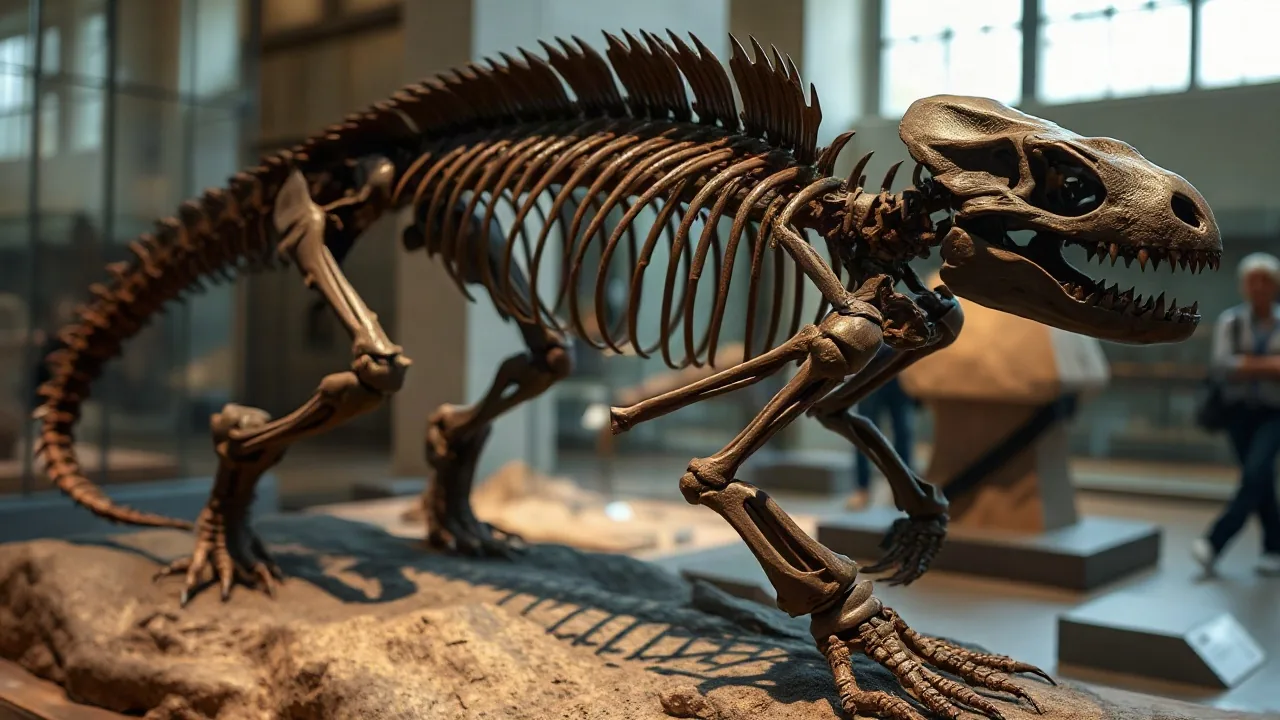
A newly identified species of armored amphibian, dating back 237 million years to the Late Triassic period, has been confirmed to have lived entirely in marine environments. The fossilized skeleton, discovered in China in 2004, offers a significant new perspective on the evolutionary adaptability of early amphibians. This creature, a stem amphibian, possessed unique adaptations that allowed it to inhabit the ancient seas, challenging previous assumptions about the terrestrial dominance of early amphibian lineages.
Scientists have now been able to definitively identify the creature after years of study, classifying it as a significant evolutionary 'game-changer.' The specimen showcases an array of armor plating, suggesting a predatory lifestyle within the prehistoric oceans. Its marine adaptation is particularly noteworthy, as most known amphibians from this era are thought to have been primarily land-dwelling or semi-aquatic, making this discovery a pivotal moment in understanding amphibian diversification.
Marine Adaptations and Predatory Behavior
The most striking feature of this ancient amphibian is its robust armor, which likely provided protection against marine predators or aided in its own predatory pursuits. Researchers believe its streamlined body and specialized limbs were well-suited for swimming, allowing it to navigate and hunt effectively in its saltwater habitat. The discovery provides crucial evidence that amphibians, at least in some lineages, were successfully colonizing and exploiting marine niches much earlier and more extensively than previously understood.
Dr. Jian Li, a paleontologist involved in the study, stated, "This finding fundamentally alters our perception of early amphibian evolution. We previously thought that the transition to fully marine life was a rare event, but this armored amphibian demonstrates a remarkable success story in the ancient seas." The detailed analysis of the skeleton, including its skull structure and vertebral column, points to a sophisticated organism capable of sustained activity in the ocean.
The geological context of the find places it within the Late Triassic, a period of significant global change following the Permian-Triassic extinction event, often referred to as the 'Great Dying.' This era saw the diversification of many new life forms, including dinosaurs. The presence of such a specialized marine amphibian during this time highlights the varied ecological strategies that evolved in the aftermath of mass extinction events.
Further research is ongoing to understand the full ecological role of this creature. Its anatomy suggests it was an active predator, likely feeding on fish and invertebrates in the ancient seas. The ongoing analysis of the fossil will provide more insights into its diet, reproductive strategies, and its place within the broader Triassic food web. The implications of this discovery extend to our understanding of vertebrate evolution and the colonization of diverse environments by tetrapods.
The identification of this marine amphibian is a testament to the continued discoveries being made in paleontology, pushing the boundaries of what is known about prehistoric life. It underscores the importance of fossil preservation and the detailed scientific work required to interpret these ancient remains. The study, published in the journal Nature, represents a significant contribution to the field, offering a vivid glimpse into a lost world and the evolutionary innovations that shaped life on Earth.