
Parasites and Fungi: Nature's True Zombie Creators
Discover how certain parasites and fungi manipulate their hosts, creating behaviors akin to real-life zombies in the natural world. These organisms exert remarkable control, altering host actions for their own survival and reproduction.

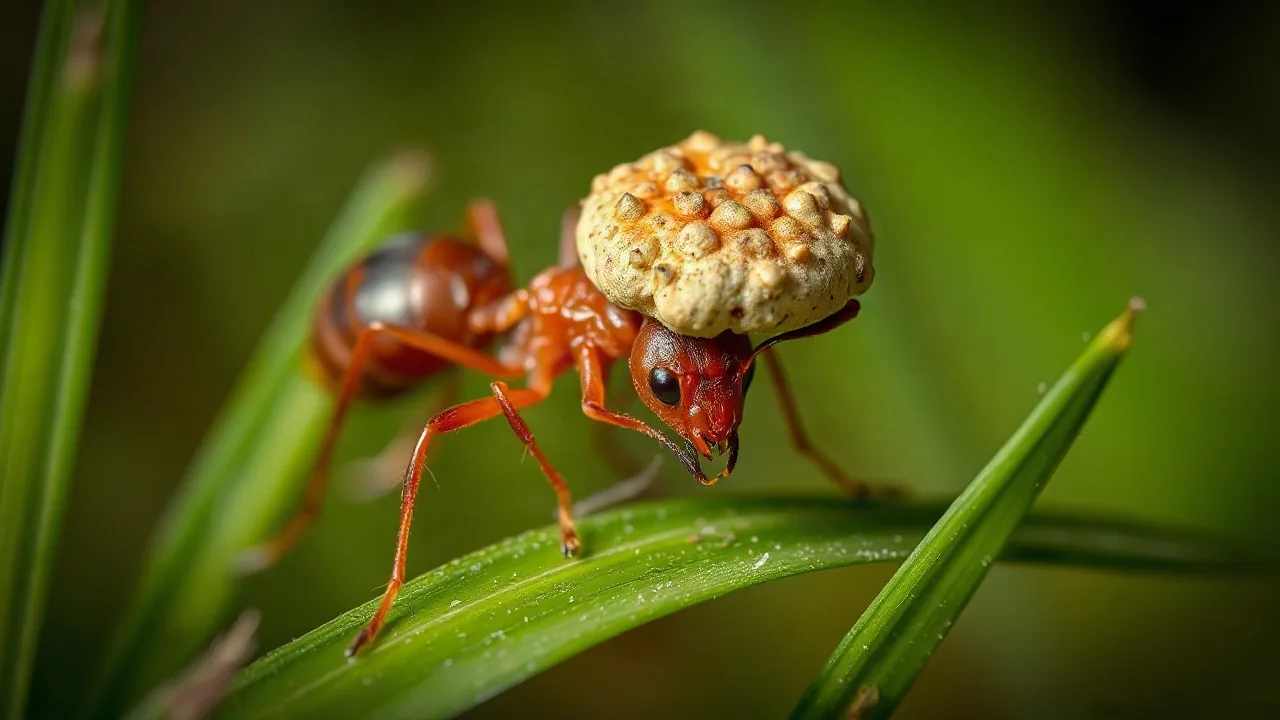
Nature harbors its own brand of zombie-makers, and they aren't fictional monsters but rather microscopic organisms like certain fungi and parasites. These insidious life forms possess the remarkable ability to hijack the nervous systems and bodies of their hosts, compelling them to act in ways that eerily resemble the undead from popular culture. This phenomenon, observed across various species, showcases the extreme ends of parasitic manipulation.
One prominent example involves the Ophiocordyceps unilateralis fungus, often dubbed the "zombie-ant fungus." This specialized pathogen infects ants, typically carpenter ants, and begins to exert control over their behavior. Once infected, the ant leaves its usual colony and climbs to a strategic location on a plant stem or leaf. It then locks its mandibles onto the surface, often in a position that allows the fungus to release its spores most effectively over a wider area. The ant remains in this death grip, unable to move, while the fungus grows out of its head and body, eventually releasing spores to infect more ants.
This precise behavioral modification is crucial for the fungus's reproductive cycle. "The fungus is essentially repurposing the ant's body for its own needs," explained Dr. David Hughes, an entomologist at Penn State University who has extensively studied these fungi. "It drives the ant to a specific microclimate that is ideal for fungal growth and spore dispersal." The infected ant essentially becomes a puppet, its final actions dictated by the parasitic invader.
Beyond the Ant: Diverse Zombie-Making Strategies
The "zombie" phenomenon is not limited to ants and fungi. Other parasites employ equally sophisticated, albeit different, methods to control their hosts. For instance, the lancet fluke, a parasitic flatworm, uses a remarkable three-host life cycle. This parasite begins in snails, where it reproduces asexually. Certain larval stages then emerge from the snail and are ingested by ants. Within the ant, the fluke forms a cyst, but instead of killing the ant, it migrates to the ant's head. This manipulation leads the ant to climb to the top of a blade of grass at dawn, a behavior that makes it highly susceptible to being eaten by grazing livestock, the fluke's final host. This ensures the parasite's transmission to its preferred digestive tract environment.
Another example is the jewel wasp, which has a complex parasitic relationship with cockroaches. Female wasps paralyze their cockroach prey with a precise sting, but instead of consuming it, they lay an egg on its body. The larva hatches and feeds on the cockroach, keeping it alive and immobilized but eventually manipulating its behavior to lead it to a safe place where the wasp larva can pupate. In some cases, the cockroach is driven to act as a bodyguard for the developing wasp larva.
These biological mechanisms highlight the evolutionary arms race between hosts and parasites. Over millions of years, parasites have evolved intricate strategies to exploit their hosts, often by manipulating their behavior. This manipulation can range from subtle changes in movement to drastic alterations in instinctual responses, all serving the parasite's goal of survival and reproduction. Understanding these complex interactions provides a fascinating glimpse into the intricate web of life and the often-unseen battles occurring in ecosystems worldwide.
The implications of studying these natural zombies extend beyond basic biology. Researchers are exploring how these parasites control host behavior, which could potentially lead to new insights in neuroscience and the development of treatments for neurological disorders. By understanding how external agents can hijack biological systems, scientists may unlock new avenues for treating conditions characterized by impaired neural function or altered behavioral patterns. The study of nature's zombies, therefore, offers a unique window into the fundamental principles of life and consciousness.