
Brain Regeneration: New Study Reveals Astrocytes Repair Damage Via Nuclear Migration
Researchers have discovered a novel mechanism where specialized astrocytes in adult mouse brains migrate their nuclei long distances to repair focal injuries and autoimmune damage. This finding challenges previous assumptions about the brain's limited regenerative capacity.

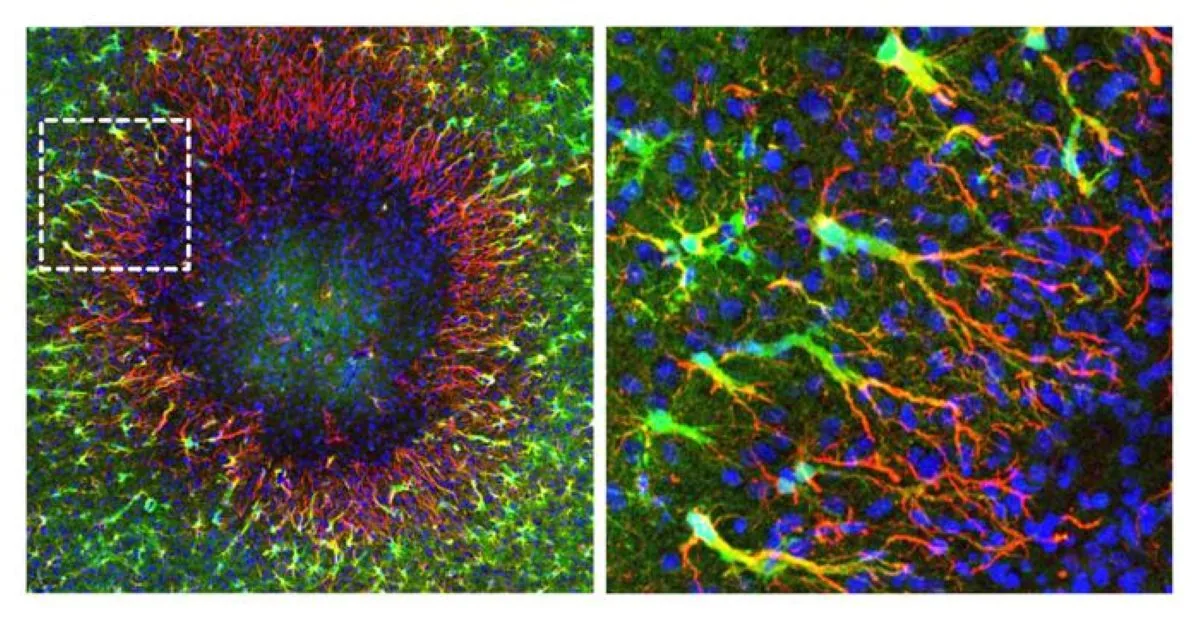
Scientists have uncovered a remarkable new process by which the adult mammalian brain can repair itself after injuries or autoimmune damage. This previously unknown mechanism involves a specialized group of cells called astrocytes, which can repopulate damaged brain regions by sending newly formed cell nuclei gliding through their extensions. The discovery, made using advanced microscopy in living mouse models, challenges long-held beliefs about the limited regenerative abilities of the adult central nervous system. Researchers from the University of Zurich (UZH) led the study, which was published in the journal Nature Neuroscience.
Astrocytes are star-shaped glial cells crucial for supporting and nourishing neurons. They play vital roles in supplying nerve cells with nutrients, regulating blood flow, and maintaining the overall health of brain tissue. Traditionally, it was believed that when astrocytes are lost—as can occur in traumatic brain injuries or autoimmune conditions like neuromyelitis optica spectrum disorder (NMOSD), where the body's immune system attacks these cells—the adult brain struggled to replace them effectively. This new research, however, demonstrates a robust self-repair capability.
The UZH team, co-led by Marina Herwerth and Matthias Wyss from the Institute of Pharmacology and Toxicology, identified these unique “regenerative” astrocytes residing at the perimeter of damaged brain areas. Instead of solely relying on traditional cell division at the injury site, these specialized astrocytes engage in an extraordinary feat: they extend their star-shaped cellular processes and send newly generated cell nuclei gliding along these pathways into the depleted lesion core. This process effectively rebuilds the depleted astrocyte network, re-establishing vital functions necessary for neuronal survival and tissue homeostasis.
Unveiling a Novel Mechanism for Brain Repair
Using two-photon microscopy and longitudinal gene mapping in living mice over several weeks, the researchers were able to observe these intricate processes in real-time. This allowed them to identify the specific astrocytes involved in rebuilding injured tissue and to map the molecular signals activated during this repair. “The findings of our study reveal a previously unknown ability of the adult brain to repair itself,” stated Bruno Weber, head of the research team. “They point toward new ways of supporting recovery from ailments involving the loss of astrocytes.”
This mechanism of long-distance nuclear migration is a significant departure from previous understanding. It suggests that glial cell networks possess a greater degree of plasticity and regenerative potential than previously acknowledged. The ability of these cells to re-establish functional glial networks is critical, as astrocytes are involved in essential homeostatic functions, including providing nutrients to neurons, regulating local blood flow through their end-feet, and maintaining the delicate balance of ions in brain tissue. The reconstruction of these networks is therefore paramount for the survival and proper functioning of nerve cells.
The study identified specific genes and signaling pathways that become temporarily active during this nuclear migration process. These molecular players represent potential therapeutic targets for accelerating brain repair. By selectively activating these pathways, scientists hope to develop pharmacological interventions that can enhance the brain's natural ability to heal following injuries such as traumatic brain injury (TBI) or neurodegenerative conditions linked to astrocyte loss. The research holds significant promise for treating conditions like NMOSD, where the targeted destruction of astrocytes leads to severe neurological deficits.
“We were able to identify numerous genes and signaling pathways that are temporarily activated during repair,” Weber emphasized. “They could serve as starting points in the future for influencing post-disease and -injury regeneration processes.” This breakthrough not only deepens our understanding of neuroscience but also opens new avenues for clinical applications aimed at mitigating the devastating effects of brain damage and neurological disorders.