
New Hairy-Legged Sea Spider Species Discovered in Salish Sea
Scientists have identified a new species of sea spider, Tanystylum kiixin, characterized by its hairy legs, three lips, and red eyes, in the waters of the Salish Sea.

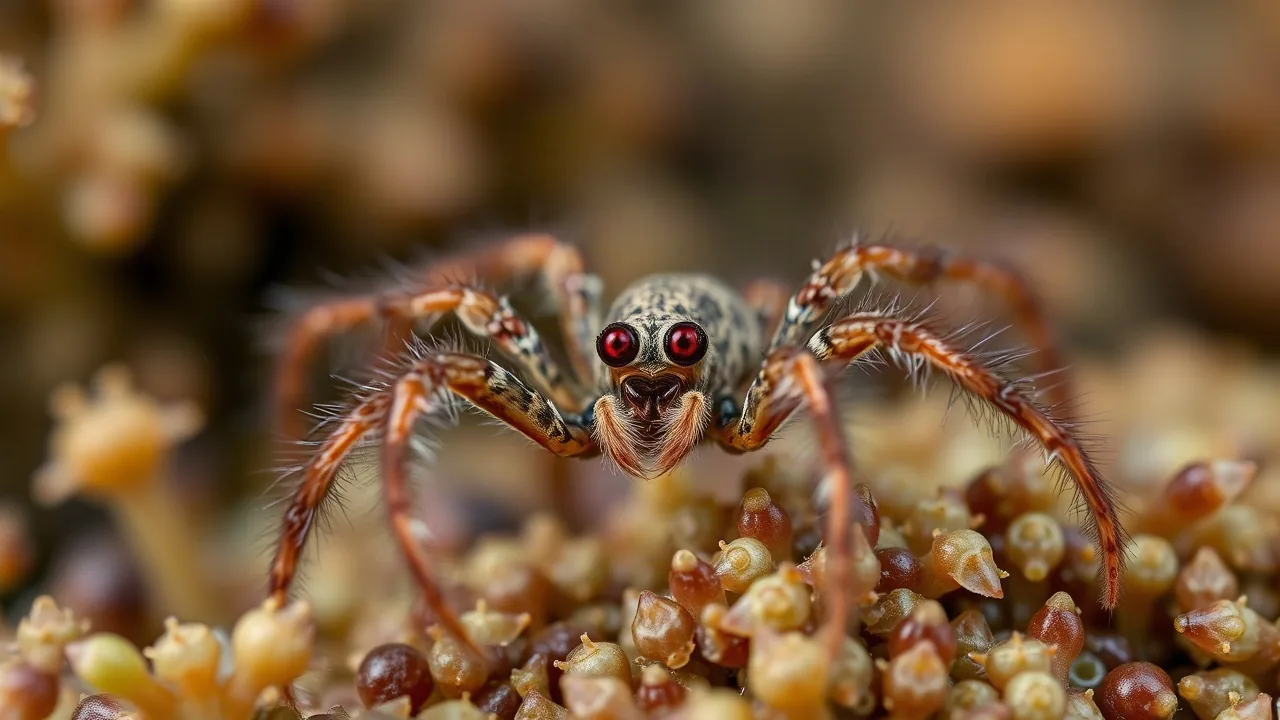
A newly identified species of sea spider, distinguished by its distinctive hairy legs, three lips, and striking red eyes, has been discovered dwelling in the Salish Sea, a marine ecosystem spanning the border between Canada and the United States. The creature has been scientifically named Tanystylum kiixin, a designation that honors the Indigenous Coast Salish people and their connection to the region.
The discovery was made by researchers from the University of British Columbia, who have been conducting extensive surveys of marine life in the area. This small but fascinating arthropod belongs to the class Pycnogonida, commonly known as sea spiders, which are marine arthropods found in all of the world's oceans. Despite their name, they are not true spiders, which belong to the class Arachnida. Sea spiders are characterized by their extremely long legs relative to their body size and often have reduced abdomens.
Unveiling the unique characteristics of Tanystylum kiixin
Tanystylum kiixin exhibits several unique traits that set it apart from other known species. Its legs are notably covered in dense hairs, a feature not commonly observed in its relatives. The species also possesses three distinct lips, a morphological detail that aided in its identification. Perhaps most striking are its bright red eyes, offering a stark contrast against its often translucent body.
Dr. P.O.Y. Maevia, a lead researcher on the project, explained the significance of the finding. "Discovering a new species, especially one with such pronounced and unusual features, is always a thrilling moment for marine biology," she stated. "The hairy legs and the three-lipped mouthparts of Tanystylum kiixin are particularly intriguing and will require further study to understand their function."
The research team collected specimens of Tanystylum kiixin during expeditions conducted between 2023 and 2024. Initial analysis suggests that this sea spider may also be a parasite, potentially feeding on other marine invertebrates. Further research is planned to confirm its diet and reproductive habits, as well as to explore its genetic makeup.
The Salish Sea, where the new species was found, is a complex network of coastal waterways, inlets, and islands. It is known for its rich biodiversity, supporting a wide array of marine life, from tiny plankton to large whales. However, the ecosystem faces numerous threats, including pollution, climate change, and overfishing, making ongoing biological surveys critically important for conservation efforts.
This discovery underscores the vastness of unexplored life within our oceans. Scientists estimate that a significant percentage of marine species remain undiscovered, highlighting the need for continued exploration and research into these vital habitats. The identification of Tanystylum kiixin adds another piece to the complex puzzle of marine biodiversity and emphasizes the ecological importance of the Salish Sea.