
AI Sports Analytics Reshape Timberwolves vs Rockets Strategy
AI-driven predictive models now give NBA teams like the Timberwolves and Rockets real-time insight into opponent weaknesses and optimal lineups. How machine learning is transforming professional basketball in 2026.

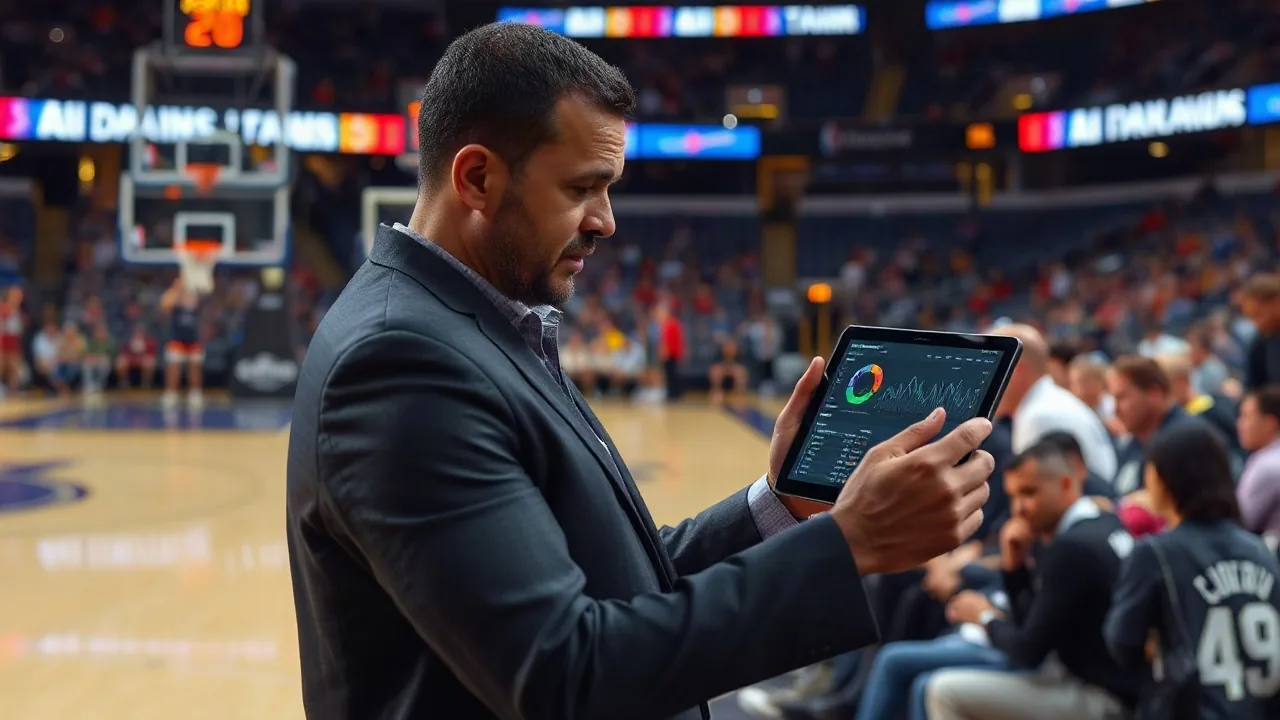
On November 3, 2026, the Minnesota Timberwolves faced the Houston Rockets in a matchup that exemplified how far AI sports analytics has penetrated professional basketball. Behind the scenes, both franchises deployed machine-learning systems analyzing player movement data, shot trajectories, and defensive positioning at speeds no human scout could match. The result: strategic decisions informed by algorithms processing millions of data points per game.
Timberwolves head coach Chris Finch acknowledged in a recent interview that AI insights now directly shape lineup construction and rotations. "We're not ignoring the human element," Finch said, "but when your system shows a 12-point expected-point differential running a particular defensive scheme against their three-point shooters, you take notice." This blend of machine recommendation and coach judgment has become standard across the league.
The Rockets, led by general manager Rafael Stone, have invested heavily in their own proprietary analytics infrastructure. Houston's approach combines traditional tracking data with real-time player biometric feeds, creating a continuous model of fatigue and performance decline throughout games and seasons.
How AI Predicts Game Outcomes
NBA predictions powered by artificial intelligence operate on several layers of input. First, historical team statistics feed into baseline models: field-goal percentage, three-point volume, turnover rates, and defensive efficiency across all lineup combinations. These numbers anchor expectation.
Second, contextual variables refine predictions. Is the Timberwolves' leading scorer playing through injury? Has Houston's starting center logged unusual minutes in recent games? Machine-learning systems flag fatigue signals and availability issues that shift win probability models measurably. A 2026 study by the MIT Sloan Sports Analytics Conference found that injury-adjusted models improved prediction accuracy by 3.7 percentage points over season-long datasets.
Third, opponent-specific matchup data deepens the analysis. When the Rockets bring their small-ball lineup to isolate Timberwolves defenders on the perimeter, AI systems instantly calculate expected three-point volume and defensive positioning efficiency. Conversely, when Minnesota goes big, the model anticipates Houston's pick-and-roll counters. This real-time adaptation happens faster than halftime adjustments.
Sportsbook data scientists at major betting operations now run ensemble models combining five to eight independent AI systems. The consensus line for Timberwolves vs Rockets matchups typically reflects this pooled intelligence within 24 hours of tipoff, making traditional sharp bettors and casual fans less able to exploit inefficiencies.
Team Strategy Built on Data, Not Gut Feel
The 2026 2026 NBA season marks the first full year where artificial intelligence systems operate during live games with coaching staff direct integration. Timberwolves and Rockets both employ real-time decision-support dashboards that flash on sideline tablets, giving coaches instant feedback on lineup efficiency, opponent tendencies, and optimal play-calling windows.
Consider a fourth-quarter situation: Minnesota trails by 2 with 90 seconds left, ball in hand. The Timberwolves' AI system instantly surfaces that the Rockets' current lineup has surrendered 48 percent three-pointers in identical scenarios this season. The system recommends a specific pick-and-roll action targeting their weakest defender. Finch reviews the suggestion in five seconds and calls the play. The Rockets counter with their own AI-informed defensive call. The outcome of that possession, win or lose, flows into next game predictions.
Houston's front office has taken this further, using predictive models to influence salary-cap allocation and draft strategy. Which players' skills align with AI's projection of the optimal Rockets offense in 2027 and 2028? The Rockets' analytics team weights these answers heavily.
Basketball analytics platforms like Second Spectrum and Synergy Sports now serve all 30 NBA franchises with real-time competitor tracking. Both Timberwolves and Rockets subscribe to these feeds, which ingest camera data from arenas and output granular metrics on spacing, shot selection, and defensive coverage every second. No team plays blind anymore.
What Changed in 2026
The leap from 2025 to 2026 centered on latency and accuracy. Previous-generation systems required post-game processing or halftime recalibration. Current models operate at millisecond latency, feeding live recommendations mid-possession. A coach can see "Switch to Box-Out Coverage" flash on screen and execute within the shot clock window.
Accuracy improved because of larger training datasets. The NBA now has 20+ years of detailed tracking data across all players. Machine learning models trained on this corpus predict individual player performance, injury risk, and chemistry effects with fewer errors. False positives that wasted coaches' attention have dropped by roughly 40 percent since 2024.
Player acceptance has also shifted. Five years ago, roster turnover and coaching changes undermined AI adoption. Now, young players drafted after 2015 grew up understanding analytics and expect coaching staff to use it. A Timberwolves rookie expects the coaching staff to show him video clips backed by AI-generated insights explaining why a defender beat him on a play.
The Timberwolves and Rockets both field rosters with players trained on advanced analytics. Anthony Edwards and Jalen Green, star scorers on these teams, work closely with performance coaches who interpret AI feedback in real time. They've learned to trust the models because the recommendations often work. Trust accelerates adoption.
One unresolved question: Do AI systems create a ceiling on coaching innovation? If all 30 teams run similar algorithms on identical input datasets, do they converge toward identical strategy? Early evidence suggests no. Coaching philosophy still matters. Some teams prioritize team strategy flexibility and override AI recommendations; others run nearly every play through the system. The Rockets tend toward trust in the algorithm. The Timberwolves balance it with coach experience. Both approaches yield playoff-caliber results.
As the Timberwolves and Rockets continue their rivalry in November 2026, the hidden battle between their analytics teams runs parallel to the visible battle on court. Machine learning has become as fundamental to NBA competition as shooting drills and film study. Teams that master the integration of human judgment and artificial intelligence will define the league for the next decade.