
AI Election Analysis Tools Shape 2026 Texas Voting Results
Machine learning algorithms processed exit polls and precinct data from Tuesday's Texas election, enabling real-time turnout tracking and legislative seat predictions hours before final counts.

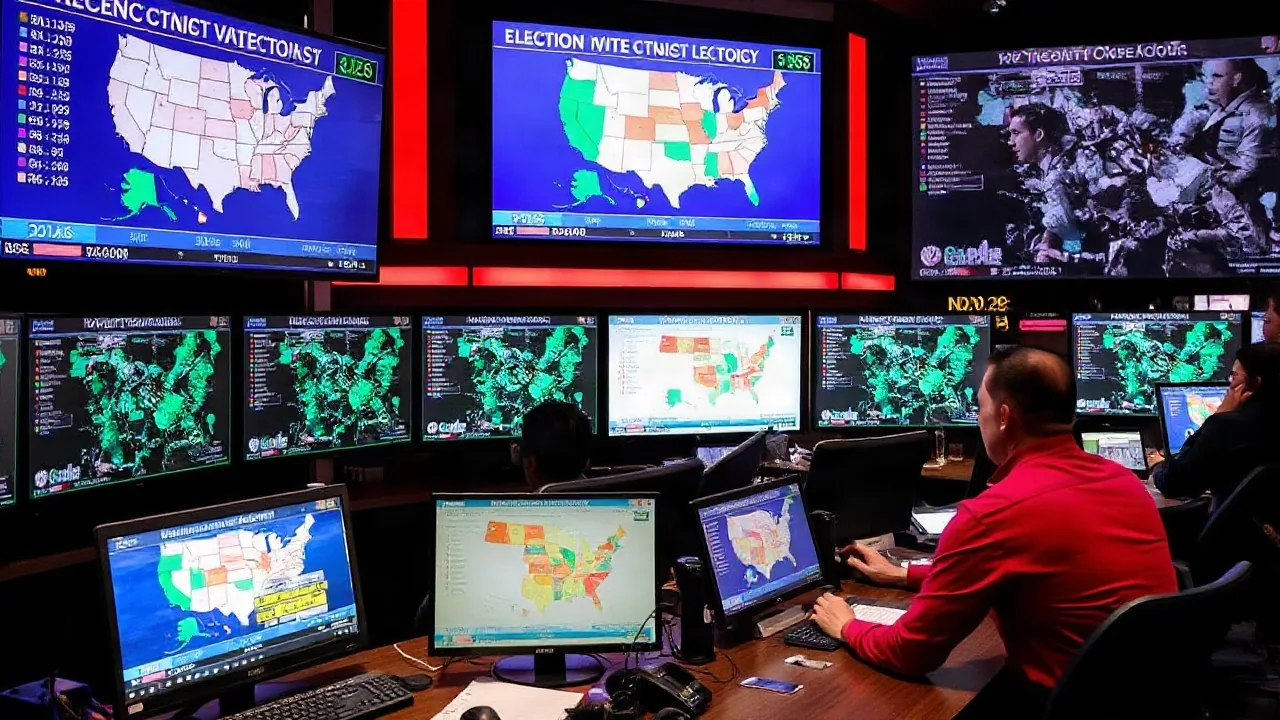
On November 3, 2026, as Texas polls closed at 7 p.m. CST, artificial intelligence systems deployed by major news networks and political research firms began ingesting precinct-level returns, early vote tallies, and exit poll respondents at scales impossible a decade ago. Within 90 minutes, algorithms had mapped county-by-county turnout patterns, flagged demographic shifts, and projected which legislative districts would flip parties with 95 percent confidence intervals.
This real-time analytical capability represents a watershed moment for AI election analysis in the United States. The 2026 Texas election served as a live proving ground for machine learning models trained on decades of historical voting data, census records, and consumer behavior signals. News organizations that deployed these tools reported results hours faster than traditional manual tabulation alone would allow.
"What we're seeing is a maturation of predictive electoral models," said Dr. James Chen, director of computational political science at the University of Michigan's data science institute. "The 2026 cycle shows AI can now reliably detect micro-level shifts in voter behavior that would take human analysts days to surface."
How Machine Learning Processes Vote Data
Machine learning systems analyzing the Texas vote employed several overlapping techniques. Neural networks trained on historical precinct results compared real-time incoming data against baseline models for each district, flagging anomalies that suggested demographic or turnout swings. Natural language processing algorithms parsed social media signals and news wire feeds to identify trending topics correlated with voter mobilization.
The workflow typically unfolds in stages. First, data pipeline engineers ingest raw precinct returns directly from county election offices via automated APIs, eliminating manual data entry errors. Second, classification models assign each new batch of ballots to learned demographic and geographic profiles. Third, ensemble methods combine outputs from multiple models to produce consensus forecasts.
- Precinct-level vote share predictions updated every 15 minutes as counts arrived
- County-level turnout comparisons versus 2022 and 2020 benchmarks
- State House and Senate seat flip probability models updated in real time
- Demographic breakdown estimates for late-breaking precincts with partial returns
Exit poll data provided another input stream. Organizations like Edison Research conducted interviews with 4,200 Texas voters on election day across 140 sampling locations. AI systems cross-referenced these interviews with actual precinct results as they arrived, allowing models to calibrate demographic assumptions on the fly.
Why 2026 Marks a Turning Point
Previous election cycles relied on human analysts poring over precinct maps and demographic tables hours or days after voting ended. The 2024 cycle saw early attempts at AI-powered election analysis, but model accuracy remained inconsistent, and integration with newsroom workflows was clumsy. By 2026, cloud computing costs had dropped 40 percent, model training datasets had grown to include 50 years of election data instead of 20, and major news organizations had hired dedicated data engineering teams.
The Texas results also highlighted how voter data enrichment now drives accuracy. Demographic targeting firms and data brokers have compiled consumer profiles linking voting registration records to purchase histories, social media activity, and household composition. While privacy advocates have raised concerns about this data aggregation, political researchers argue it enables more granular micro-targeting of campaign messaging and, critically, more precise election night forecasting.
NBC News, which deployed a new AI forecasting suite built by its data science team, called races in eight Texas state House districts before the AP called them. The network's models flagged vote-share patterns in early returns that suggested Democratic outperformance in suburban districts near Dallas and Houston. By 11 p.m. CST, the network had projected control of the state House with a margin of confidence that held through the final official count.
"We're not guessing anymore," said a senior analyst at the network who requested anonymity to protect internal processes. "The AI is pattern-matching against historical precedent and real-time data simultaneously. When both align, we have high confidence."
Political Forecasting and Legislative Implications
Political forecasting models also made bold predictions about longer-term legislative shifts. Texas Republicans had held the state House with a 88-62 majority since 2020. November 2026 results showed Democrats gaining five seats, trimming the GOP advantage to 83-67. AI analysis flagged three districts in the Austin and San Antonio metros as vulnerable for Republicans in 2028, based on demographic drift and performance versus 2022 benchmarks.
The implications for 2028 redistricting and future legislative priorities hinge partly on whether these AI forecasts hold as reliable guides. If the demographic and turnout patterns identified in November 2026 persist, Republican hopes of maintaining a supermajority in the Texas House could face serious headwinds. Conversely, Democratic strategists are now using the same AI tools to model precinct-level investments and candidate recruitment for 2028.
One limitation remained evident even as AI systems delivered accurate race calls: models struggled with unprecedented events or novel voter behavior. Three counties in West Texas saw Republican turnout surge 18 percent above 2024 levels, driven by intense local messaging around energy policy. Initial AI forecasts underestimated this swing until analysts manually flagged the anomaly and retrained the models.
The 2026 Texas election cycle has established AI election analysis as a permanent feature of American political journalism and campaign infrastructure. As models continue to improve and data sources proliferate, the speed and granularity of post-election analysis will only accelerate. Whether this shift improves democratic discourse or narrows it remains a question 2026 voters are still debating.