
NASA Artemis 3 Lunar Lander Tests Advance Moon Mission
NASA is running detailed test flights for its Artemis lunar lander, accelerating the timeline toward crewed moon landings. The agency has released specific benchmarks for vehicle performance and safety validation.

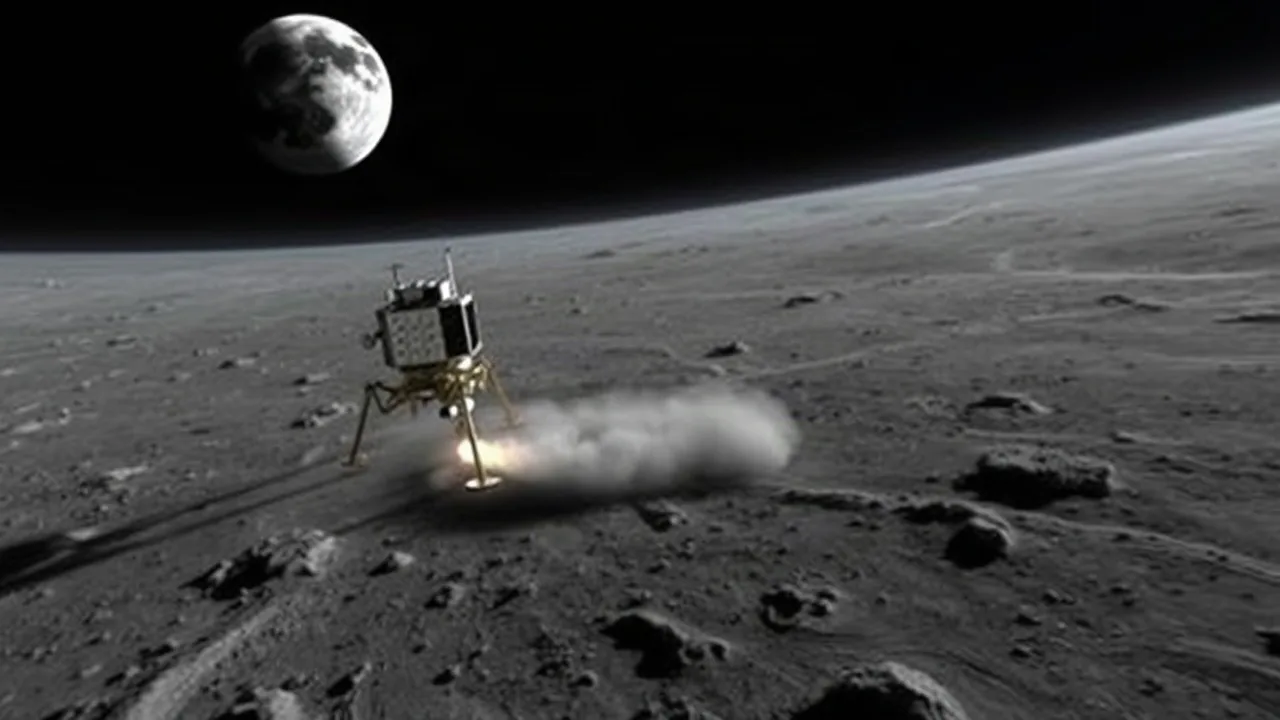
NASA announced expanded test protocols for its Artemis 3 lunar lander on October 24, 2026, detailing a series of uncrewed validation flights designed to prove the vehicle can safely deliver astronauts to the lunar surface. The tests come as the agency works to meet its target launch window in late 2026, marking a pivotal moment in the renewed effort to return humans to the moon.
The Artemis 3 lander, developed by SpaceX under contract, will carry two crew members to the lunar south pole region, an area rich in water ice and previously unexplored by humans. This mission represents the cornerstone of NASA's Artemis program, which aims to establish sustained human presence on the moon by the early 2030s.
Test Flight Details and Vehicle Performance Metrics
NASA's test campaign includes three uncrewed flights before the first crewed mission. The first test, designated Artemis Integrated Flight Test 1, will validate the lander's ascent stage, descent stage, and abort systems under full lunar conditions. Engineers will monitor thermal performance, fuel management, guidance and navigation systems, and landing sensor accuracy during each flight.
"These test flights are essential to ensuring crew safety and mission success," said Mark Kirasich, Artemis program manager at NASA's Johnson Space Center, in a statement released October 23. "We're not rushing to the moon; we're being methodical about proving every critical system before we fly astronauts."
The descent phase remains the most technically demanding portion of the mission. The lander must autonomously identify a safe landing site among rocky terrain and craters, slow from orbital velocity to near-zero over approximately 12 minutes, and settle on legs designed to absorb impact forces on uneven ground. Performance requirements specify landing accuracy within 100 meters of the target and touchdown velocity under 2 meters per second.
Timeline Acceleration and Program Momentum
NASA's revised schedule compresses the original Artemis timeline significantly. The agency initially planned Artemis 3 for 2027 or later, but recent advances in lunar lander development and integration have allowed the agency to target the fourth quarter of 2026. This acceleration reflects confidence in SpaceX's design and the maturity of supporting systems.
Test flight number two will focus on rendezvous and docking operations with the Orion crew capsule in lunar orbit. A third uncrewed test will validate end-to-end mission operations, including crew cabin systems, life support redundancy, and emergency procedures. Each test generates data that feeds into the final flight readiness review before crewed operations commence.
The entire campaign depends on successful Artemis 2 launch and recovery. Artemis 2, scheduled for early 2025, will send four astronauts around the moon and back without landing. That mission serves as the validation for Orion's heat shield, life support, and navigation systems in a deep-space environment.
Lunar Site Selection and Scientific Objectives
NASA has narrowed the landing zone to a region near Shackleton Crater at the lunar south pole. This location offers several advantages: access to ancient layered deposits that hold a geologic record spanning billions of years, proximity to permanently shadowed craters containing water ice, and terrain features that support long-term base development.
Artemis 3 astronauts will conduct surface operations lasting up to seven days, depending on life support consumables and power availability. Mission planners expect the crew to collect samples, deploy geophysical instruments, and assess resource extraction potential. The moon mission also carries technology demonstrations for future missions, including mobility aids and habitat testing equipment.
The space exploration community views Artemis 3 as a watershed moment. Successful execution would validate human landing infrastructure and operational concepts that apply directly to future missions. Each astronaut-hour on the lunar surface generates valuable data for NASA's longer-term goal of establishing a sustained presence.
International partners including the European Space Agency and Japan's space agency will contribute experiments and instruments to Artemis 3. This collaboration strengthens diplomatic ties and broadens the scientific return from each landing opportunity.
Cost estimates for the full Artemis program through 2030 stand at approximately 93 billion dollars across all agencies and contractors. The lunar lander development alone represents a significant portion of that budget, reflecting the technical complexity and safety-critical nature of the hardware. NASA's investments in aerospace supply chain development also support broader commercial spaceflight growth.
The October 2026 announcement of detailed test metrics signals NASA's commitment to transparency and public confidence in the program. By releasing specific performance standards and test schedules, the agency invites scrutiny and accountability. This approach contrasts with earlier space programs and reflects lessons learned from decades of post-Apollo human spaceflight operations.
Success in late 2026 would position NASA to conduct Artemis 4 in 2028, potentially landing additional crews and expanding the south pole footprint. The cadence of missions drives not only scientific discovery but also economic activity in the space industrial base.