
SpaceX Jobs: Aerospace Careers at the Frontier
SpaceX is actively recruiting engineers, technicians, and operations staff across its Texas, Florida, and California facilities. Learn what positions are open and how to apply.

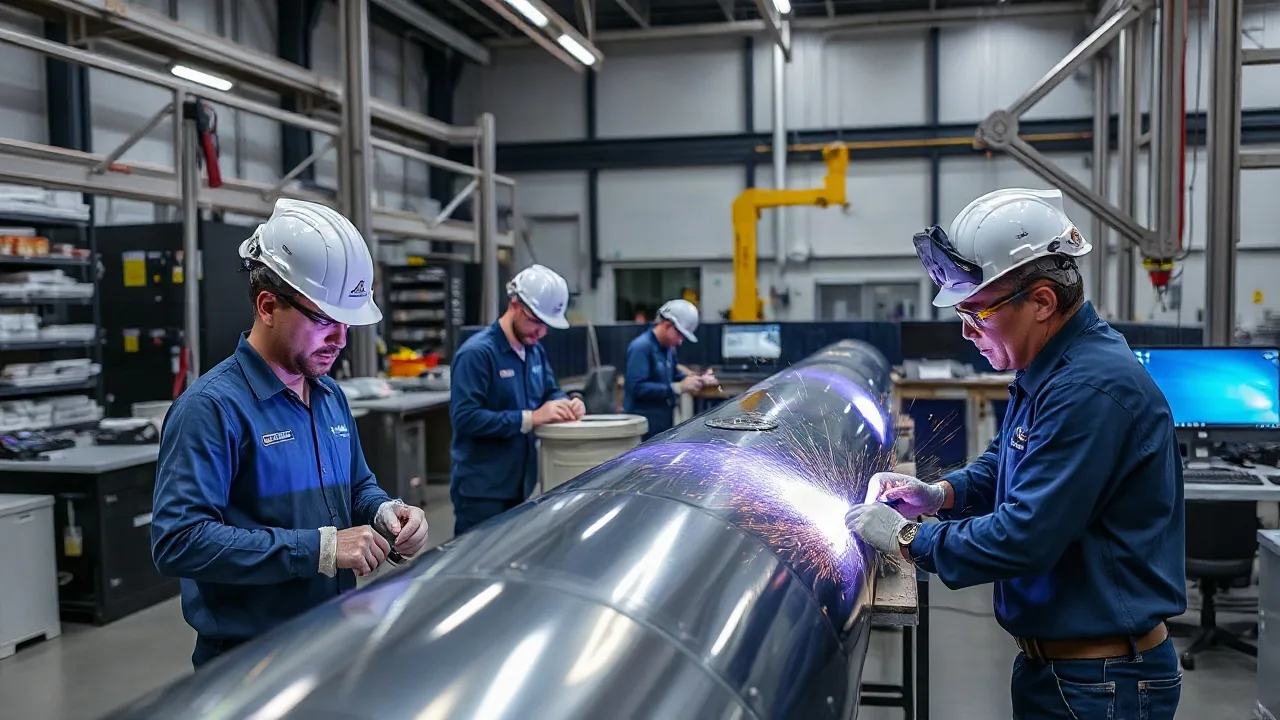
SpaceX's hiring push in late 2026 reflects the company's accelerated launch schedule and expansion of Starship production. The aerospace manufacturer is seeking talent across manufacturing, software engineering, mission operations, and propulsion systems at multiple locations including Starbase in Texas, Kennedy Space Center in Florida, and Hawthorne, California.
The demand for qualified personnel is acute. "We're ramping production faster than we anticipated," said a SpaceX recruiter on the company's careers page this October. The firm has posted over 300 open positions across all divisions, with most roles requiring bachelor's degrees in engineering disciplines or equivalent hands-on experience.
Entry-level and mid-career applicants should understand that aerospace careers at SpaceX involve high-pressure timelines. Starship is scheduled for multiple flights per month by year-end 2026, and the engineering teams supporting those launches operate under tight deadlines.
What Positions Are Currently Available
SpaceX's open roles span several core areas:
- Software engineers for flight software, avionics, and ground systems
- Mechanical engineers for vehicle structure, thermal systems, and landing gear
- Manufacturing technicians for welding, machining, and assembly
- Mission operations specialists for launch control and telemetry
- Propulsion engineers for engine development and testing
- Quality assurance engineers and testing coordinators
Compensation varies by role and experience. Software engineers and senior mechanical engineers typically earn between $120,000 and $180,000 annually, plus stock options. Manufacturing roles start around $55,000 to $75,000 with benefits including health insurance, retirement matching, and tuition reimbursement.
Most openings are full-time, though SpaceX occasionally posts contract positions for specialized short-term projects. Clearances or prior security vetting can accelerate the hiring process.
The Application and Interview Process
Applying to SpaceX begins on the company's official careers portal. Candidates upload a resume, transcript, and a cover letter tailored to the specific role. Unlike many tech firms, SpaceX rarely uses keyword-filtering systems; human recruiters review each submission.
The interview pipeline typically involves three to five rounds. Initial phone screens assess technical fundamentals and problem-solving approach. Follow-up interviews include whiteboard-style engineering questions, real-world case studies, and conversations with the hiring manager and team members.
Applicants are often asked to walk through past projects in detail, explain design tradeoffs, and discuss how they would approach novel problems. Preparation using technical textbooks and online resources in thermodynamics, controls, or software architecture pays off.
Background checks and security clearances can add 2 to 4 weeks to the final stages. Foreign nationals may require additional vetting under International Traffic in Arms Regulations (ITAR), since SpaceX produces controlled defense and aerospace technology.
Why SpaceX Is Hiring at This Scale
SpaceX's headcount surge correlates with three strategic milestones. First, Starship is now the primary focus for lunar missions under NASA's Artemis program and for future Mars transport. Second, the Falcon 9 fleet continues to launch Starlink satellites and commercial payloads, requiring sustained operations teams. Third, Starbase expansion in South Texas is physically larger than ever, accommodating more concurrent manufacturing and testing lines.
The company also faces stiff competition for talent from NASA careers, Blue Origin, Axiom Space, and traditional defense contractors. By offering stock options and the chance to work on historically significant missions, SpaceX attracts ambitious engineers despite demanding work hours.
"The mission is a huge draw," said a propulsion engineer hired by SpaceX in 2025. "People want to build rockets that land themselves and eventually reach Mars. That's not abstract; it's tangible."
Entry into space exploration through SpaceX can lead to senior roles within the company or transitions to NASA, lunar landers, or asteroid mining ventures. Many engineers view a 3 to 5 year stint at SpaceX as a credential-builder that opens doors across the industry.
Skills and Qualifications You'll Need
Technical foundation is non-negotiable. Most candidates hold a bachelor's degree in mechanical engineering, aerospace engineering, electrical engineering, or computer science. Some roles accept equivalent industry experience without a degree, particularly in manufacturing and operations.
Engineering jobs at SpaceX often require proficiency in:
- MATLAB, Python, C, or C++ for simulation and control systems
- CAD software such as CATIA or Siemens NX
- ANSYS or COMSOL for finite-element analysis
- Git and version control for collaborative code
Soft skills matter too. SpaceX values clear communication, cross-functional teamwork, and comfort with rapid iteration. The company's culture emphasizes "first principles" thinking, so candidates should be ready to question assumptions and propose unconventional solutions.
Security clearances, while not always required for hire, accelerate advancement into roles involving classified propulsion data or launch operations for government missions.
How SpaceX Compares to Other Aerospace Employers
Compared to traditional aerospace firms like Boeing or Lockheed Martin, SpaceX offers higher equity upside but also longer work weeks and less job stability during business downturns. Compared to startups like Relativity or Axiom, SpaceX provides more established infrastructure and larger teams to learn from.
Rocket science careers at NASA involve similar technical depth but typically slower iteration cycles, more bureaucracy, and stronger work-life balance protections. SpaceX appeals to engineers who prioritize velocity and mission-driven work over schedule predictability.
Salary benchmarks across the industry remain competitive. SpaceX does not always pay the highest base salary, but equity grants and the company's rising valuation make total compensation attractive for long-term employees.
Prospective applicants should visit spacex.com/careers and filter by location and discipline. Networking at aerospace conferences or through employee referrals can also bypass initial resume screening. Follow-ups should be professional but persistent: hiring managers expect follow-up messages if an application falls silent for more than two weeks.