
4.1-Billion-Year-Old Mars Meteorite Discovered in Sahara
A rare meteorite unearthed in the Sahara Desert has been identified as a 4.1-billion-year-old fragment of Mars. The discovery offers unprecedented insights into the Red Planet's earliest history.

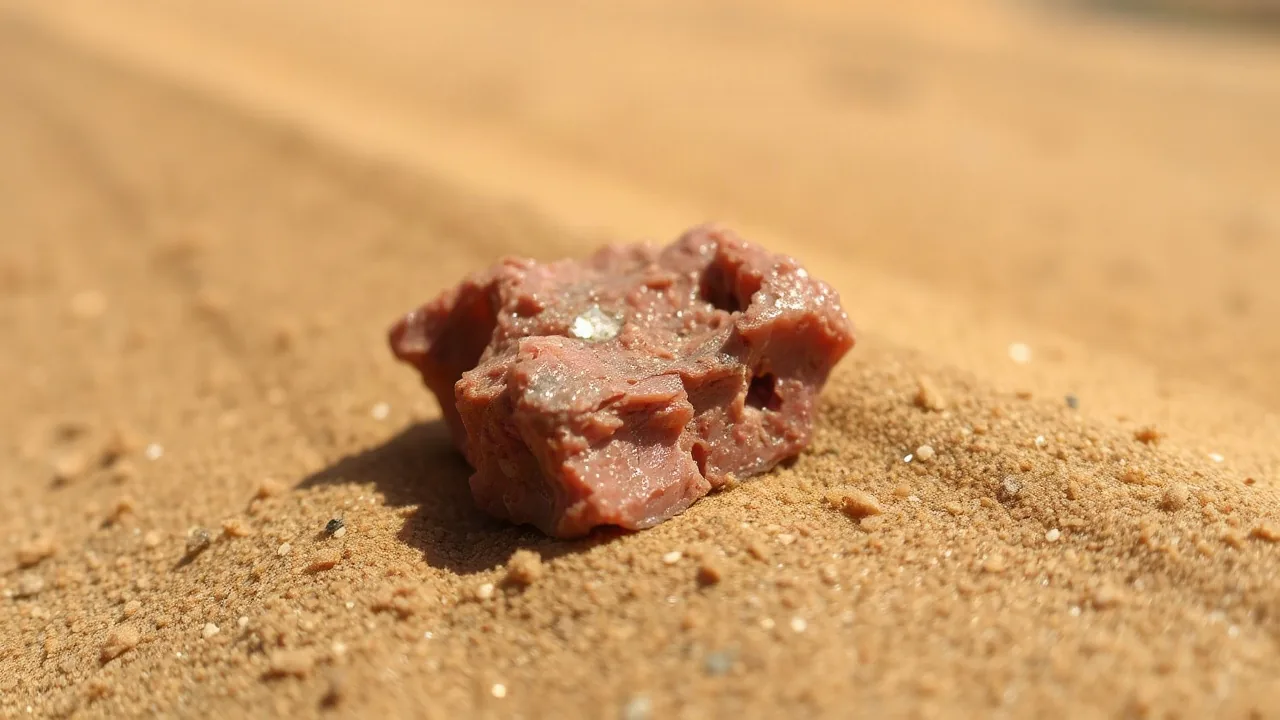
A meteorite discovered in the vast Sahara Desert has been confirmed as a 4.1-billion-year-old piece of Mars, making it one of the oldest known Martian samples ever found. The rose-colored rock, identified as the Teghaza 001 meteorite, provides scientists with a unique window into the Red Planet's infancy and could hold clues to the origins of life.
The sample was found by local inhabitants in the Teghaza region of the Sahara Desert and was later acquired by researchers for analysis. Initial studies reveal a composition that points to an origin from Mars, dating back to a period when the planet was far more geologically active and potentially habitable than it is today. This ancient rock predates other well-known Martian meteorites, offering a glimpse into a much earlier epoch of Martian history.
Unlocking Secrets of the Early Red Planet
The age of the Teghaza meteorite is particularly significant. "To find a piece of Mars this old is extraordinary," said Dr. Anya Sharma, a planetary scientist at the Lunar and Planetary Institute. "It suggests that large portions of Mars' crust formed much earlier than previously understood, and these early processes might have been conducive to the emergence of life." Scientists are eager to analyze the meteorite's mineralogy and isotopic composition to reconstruct the conditions on early Mars. Specifically, they are looking for evidence of water interactions and the presence of organic molecules that could indicate past biological activity.
The discovery is not just important for understanding Mars; it also has implications for the study of Earth's own ancient history and the potential for life beyond our planet. By studying the earliest stages of Mars' evolution, researchers can draw parallels and contrasts with Earth's development. Understanding how Mars, a planet so similar to Earth in its early stages, lost its atmosphere and surface water can provide crucial context for our own planet's future and the ongoing search for extraterrestrial life.
Further analysis of the Teghaza meteorite is expected to involve advanced techniques such as mass spectrometry and electron microscopy. These methods will help researchers determine the precise atmospheric conditions under which the rock formed and the extent to which it was altered by impacts or volcanic activity over billions of years. The findings could reshape our understanding of planetary formation and the conditions necessary for life to arise, potentially influencing future space missions to the Red Planet.