
Caltech Inaugurates Ray Jayawardhana as 10th President Amid AI, JPL Questions
Ray Jayawardhana officially became Caltech's 10th president on October 31, 2026. His tenure begins with significant questions surrounding the future of NASA's Jet Propulsion Laboratory and the role of artificial intelligence.

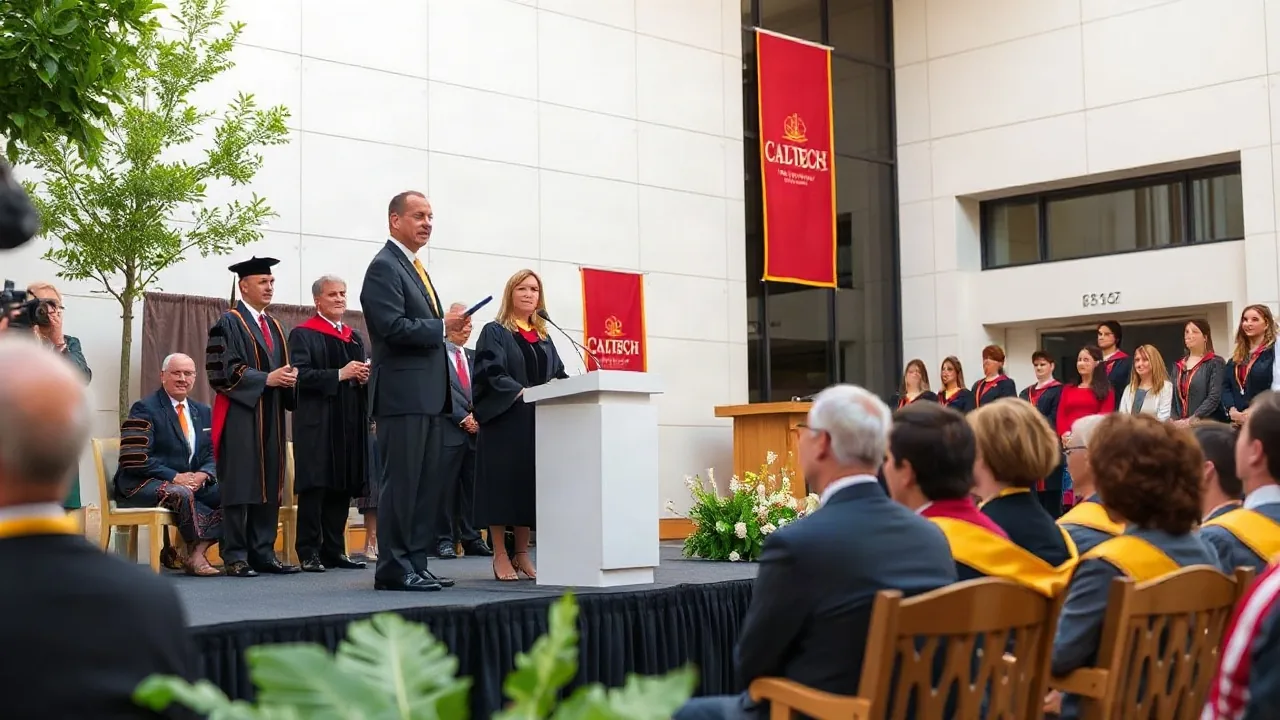
Pasadena, CA – October 31, 2026 – The California Institute of Technology formally inaugurated astrophysicist Ray Jayawardhana as its 10th president on Thursday. The transition at the helm of the prestigious science and engineering university comes at a pivotal moment, marked by ongoing discussions about the future of NASA's Jet Propulsion Laboratory (JPL), potential impacts of artificial intelligence, and broader geopolitical uncertainties. Jayawardhana, previously the provost of Cornell University, steps into the role with a mandate to navigate these complex issues and steer Caltech’s research and educational mission forward.
The inauguration ceremony, held on the Caltech campus, marks the official beginning of Jayawardhana's leadership. He inherits a renowned institution with a deep history of scientific breakthroughs, including significant contributions to space exploration through its management of JPL for NASA. However, the relationship between Caltech and JPL has been a subject of recent scrutiny, with concerns raised about the long-term funding and operational autonomy of the laboratory, especially in light of shifting federal priorities. These discussions are particularly relevant as Jayawardhana takes the reins.
Navigating a Complex Research Landscape
Jayawardhana's arrival coincides with a period of rapid advancement and ethical debate surrounding artificial intelligence. Caltech, with its strong emphasis on computation and data science, is positioned to play a significant role in AI research and development. The university's leadership will be crucial in fostering innovation while also addressing the societal implications of increasingly powerful AI systems. This includes exploring AI's potential applications across scientific disciplines and considering the ethical frameworks necessary for its responsible advancement.
In addition to the challenges posed by AI and JPL's future, Jayawardhana will also need to address the evolving landscape of higher education and scientific funding. The recent announcement of a $27.5 million gift intended to bolster aerospace research at both Caltech and JPL highlights the continued importance of private philanthropy and strategic partnerships. This influx of resources underscores the institution’s commitment to cutting-edge research, particularly in areas critical to national interests and scientific discovery. Jayawardhana emphasized the importance of collaborative endeavors in his remarks, stating, “Our strength lies in our ability to bring together diverse minds to tackle the most profound challenges.”
The influence of political administrations on scientific endeavors is another significant factor. As the United States navigates its political future, institutions like Caltech must maintain scientific integrity and continuity amidst potential shifts in policy and funding priorities. The university’s unique position, managing a critical national research facility like JPL, places it at the intersection of scientific inquiry and governmental oversight. Jayawardhana’s leadership will be tested in his capacity to advocate for sustained scientific investment and to foster an environment conducive to groundbreaking research, regardless of external political currents.
Caltech has a long-standing legacy of pioneering research, from fundamental physics to cutting-edge engineering. The institution's contributions have consistently pushed the boundaries of human knowledge. With Jayawardhana at the helm, the focus is expected to remain on fostering interdisciplinary collaboration and supporting the ambitious projects that define Caltech's scientific output. His background as an astrophysicist brings a unique perspective to the presidency, potentially emphasizing the exploration of the cosmos and the fundamental questions of the universe.
The new president's vision for the university will likely encompass strengthening its core academic programs, expanding research initiatives, and ensuring Caltech remains at the forefront of technological and scientific innovation. The coming months will provide greater insight into Jayawardhana's strategic priorities and his approach to addressing the opportunities and challenges that lie ahead for this esteemed institution and its pivotal role in national and global scientific advancement. His tenure begins with significant expectations from the academic community, policymakers, and the public alike.