
Amyloid Fibers in Semen Deliver RNA Into Sperm and Mouse Embryos
Researchers discover that amyloid fibers in semen can bind RNA and deliver it into sperm cells and subsequently into mouse embryos.

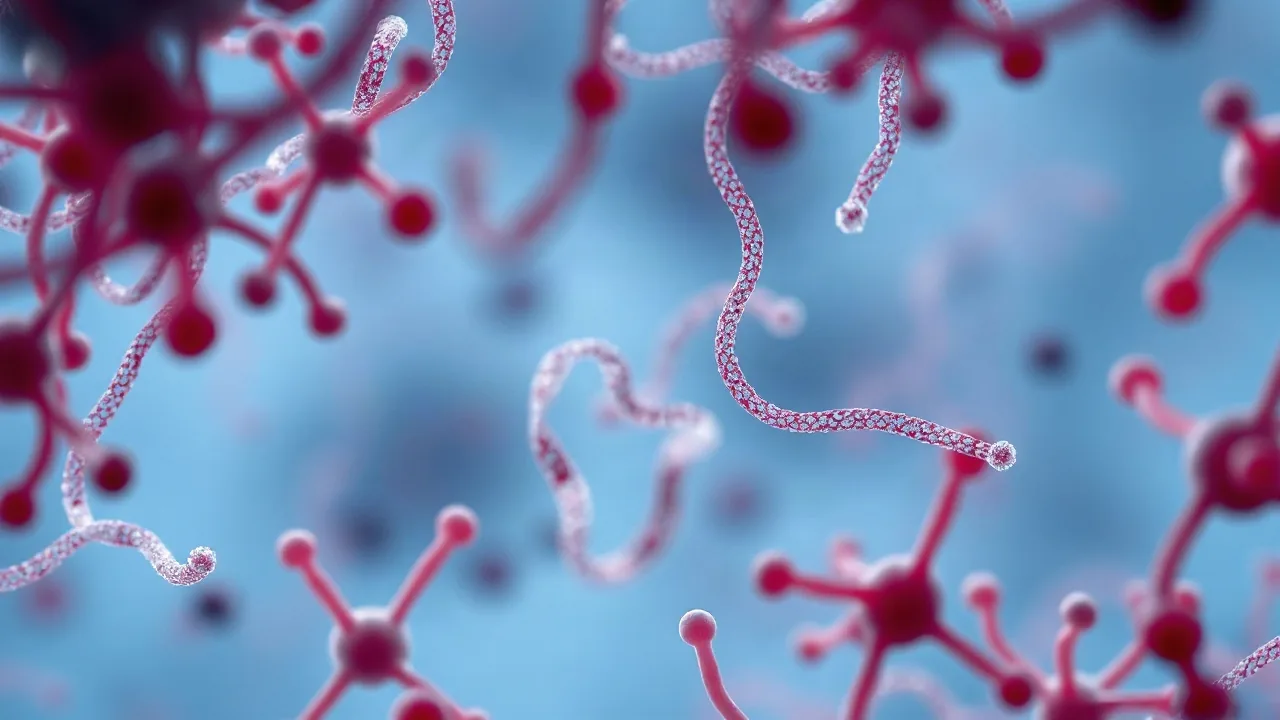
A recent study published in Molecular Cell reveals that tiny protein fibers found in semen play an unexpected role by helping deliver RNA into sperm cells and mouse embryos. While amyloid structures are typically associated with neurodegenerative conditions such as Alzheimer's and Parkinson's diseases, scientists have identified functional roles for them elsewhere in the human body.
The research team, which includes structural biologist Anthony Fitzpatrick and physiologist William Mallen at Columbia University's Zuckerman Institute, set out to understand how these fibers might interact with genetic material. The investigations focused on a small fragment of prostatic acid phosphatase (PAP), an enzyme produced by the prostate. The PAP fragment carries a positive electrical charge, while RNA carries a negative charge, allowing them to bind together and form tiny droplets that assemble into fibers.
Tracing the Journey of RNA Into Sperm Cells
Using bull sperm for detailed imaging due to their relatively large size, the researchers applied a three-dimensional imaging technique for frozen cells called cryo-electron tomography. This approach allowed them to track laboratory-made fibers tagged with tiny gold particles, revealing the fibrils inside the sperm cells.
"Seeing those amyloid fibers inside sperm cells was just so extraordinary to me," Mallen stated. "There were hints of this happening earlier in our other experiments, but actually seeing this totally blew us away."
Further laboratory experiments involving mouse sperm and eggs demonstrated that exposing sperm to fibers made from human PAP fragments led to those human protein fragments appearing in resulting two-cell mouse embryos. Additionally, embryos formed from sperm given RNA alongside the fibers contained significantly more of a test marker protein than embryos formed from sperm given RNA without the fibers.
"By learning how disorders based on epigenetics work, we can come closer to how to possibly treat or prevent them," Mallen explained, noting potential implications for understanding how certain metabolic disorders might pass down paternal lines.
The investigators caution that the embryo delivery experiments relied on mice, laboratory-made fibers, and added RNA, and they have not yet confirmed whether naturally occurring fibers and their usual cargo alter embryo development. No human embryos or natural conceptions were tested during the course of the research.