
Aratasaurus fossils reveal potential 115 million-year-old dinosaur blood
Scientists studying a 115-million-year-old dinosaur bone have found molecular traces of heme, offering new evidence of fossilized blood.

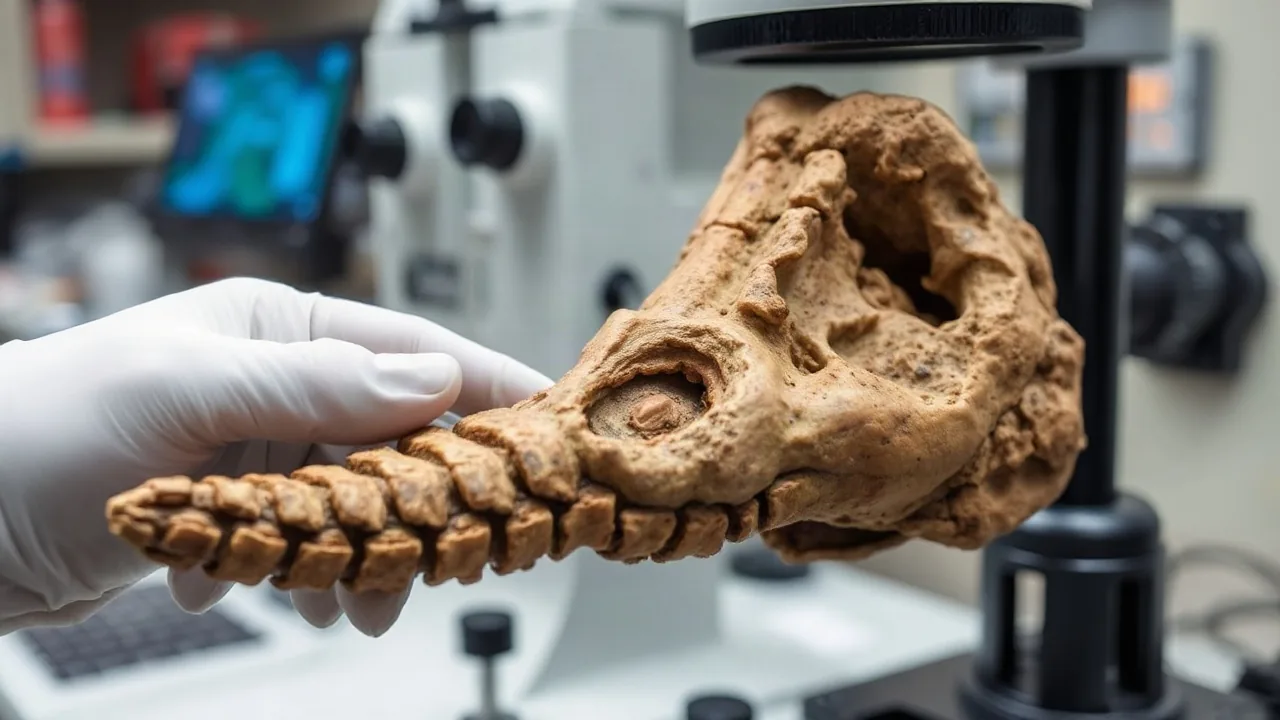
Researchers investigating a 115-million-year-old dinosaur bone have reported discovering traces of heme, an organic molecule that assists blood in carrying oxygen, within the vascular canals of the specimen. The findings, published in the Proceedings of the National Academy of Sciences, focus on the fossil of Aratasaurus museunacionali, a distant relative of the Velociraptor that lived during the early Cretaceous period. The bones were originally recovered in 2008 at a mine located in the Romualdo Formation of northeast Brazil.
Detecting endogenous biomolecules in vertebrate fossils has historically faced skepticism because labile compounds degrade rapidly and remain vulnerable to contamination. According to the study authors, identifying heme-derived molecules and confirming their spatial association helps reduce the likelihood of contamination. Previous claims of discovering fossilized blood cells have often struggled with contamination issues and the difficulty of distinguishing biological structures from non-biological formations.
Analyzing Ancient Biomolecules
The analyzed fossil survived a severe 2018 fire that destroyed the National Museum at the Federal University of Rio de Janeiro. Following the blaze, a team of researchers from the U.S., Japan, and Brazil—including Curtin University's Kliti Grice—examined the remains using advanced techniques such as liquid chromatography–mass spectrometry, Raman spectroscopy, and transmission electron microscopy.
These methods detected heme inside the bone's vascular canals while finding no such molecules in the surrounding rock, indicating the substance originated from the dinosaur rather than the environment. Cell-like structures in the nearby sediment were instead dominated by plant or microbial compounds derived from chlorophyll. Grice noted that the team evaluated and ruled out several alternative explanations before concluding the structures represented authentic fossilized red blood cell remains.
The preservation occurred because the dinosaur sank into a watery, low-oxygen environment where microbial mats grew over the remains. Researchers suggest that the mineral hausmannite may have acted as an antioxidant to slow down the decay process, allowing the blood cells to mineralize alongside the bone.
Despite these findings, debate remains within the scientific community. North Carolina State University paleontologist Mary Schweitzer expressed caution, noting that the cell-like structures appear larger and more rounded than those of modern birds and crocodilians, and lack a nucleus, suggesting to some researchers that the structures may not be blood cells at all.