
AI HealthTech: Transforming Medical Diagnosis in 2026
Artificial intelligence is reshaping how doctors diagnose disease, with major health systems nationwide reporting faster, more accurate results. Leading medical centers are now deploying AI diagnostic tools across cardiology, oncology, and radiology.

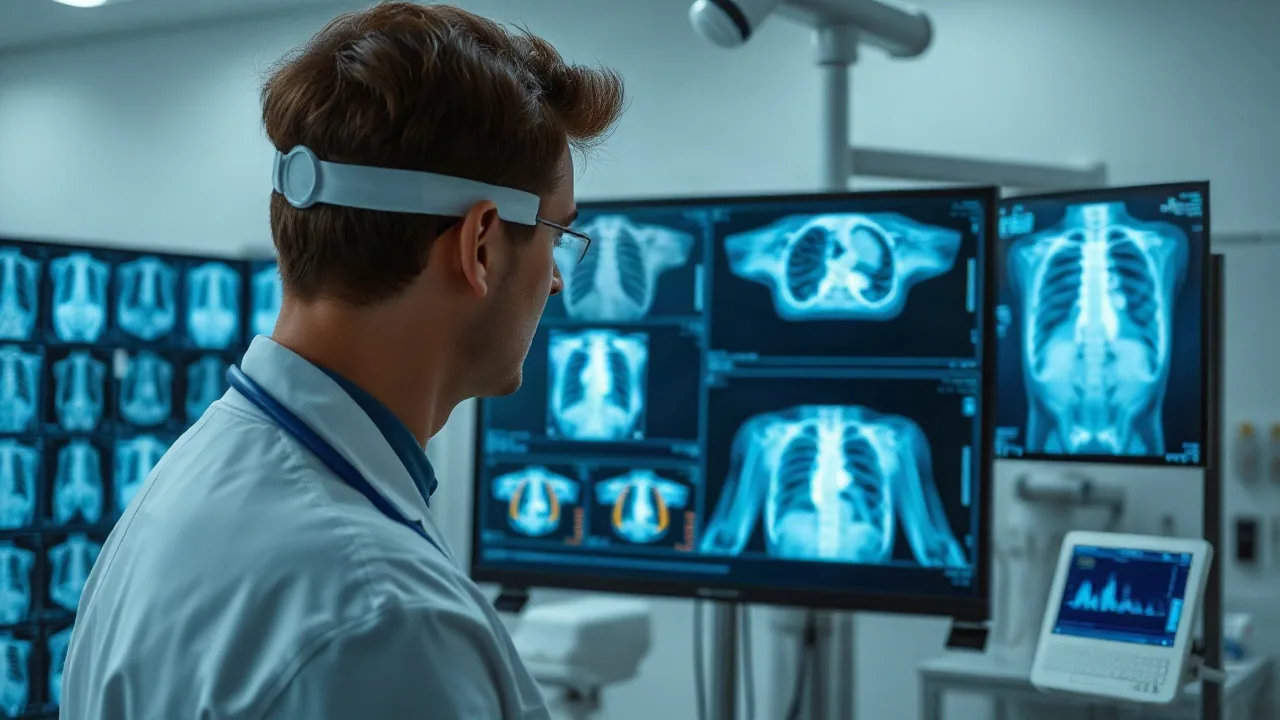
At Ohio State University Wexner Medical Center this fall, radiologists began reviewing chest X-rays flagged by an AI algorithm that detects early-stage pneumonia with 94% accuracy. The system, developed in partnership with a Silicon Valley startup, has cut diagnostic review time by 18 minutes per case on average. This scene plays out daily across dozens of major U.S. hospitals in 2026, marking a fundamental shift in how medical diagnosis happens.
The deployment reflects years of machine learning refinement and regulatory approval. In November 2024, the FDA cleared over 520 AI-based medical devices; by mid-2026, that number has nearly doubled. Hospitals are no longer piloting these tools in isolation. They are integrating them into routine clinical workflows.
"We are seeing a measurable reduction in diagnostic errors and a significant improvement in physician confidence," said Dr. Emily Chen, Chief of Radiology at a major Midwest health system, in an October 2026 interview. "The AI doesn't replace the radiologist. It enhances our ability to spot what matters most."
Breaking AI's Role in Patient Diagnosis
AI in medicine operates across three primary domains in 2026:
- Image analysis: deep learning models detect abnormalities in X-rays, MRIs, and CT scans with speed and consistency exceeding human performance on specific tasks.
- Pathology: AI algorithms classify tissue samples and predict cancer recurrence by analyzing cellular patterns from biopsy slides.
- Risk stratification: machine learning ingests electronic health records to identify patients at highest risk for sepsis, heart failure, or readmission within 30 days.
The financial impact is notable. A 2026 report from the American Hospital Association found that early adoption of AI healthtech reduced average length of stay by 2.3 days and cut diagnostic retesting by 12% across surveyed institutions. No single system dominates; competing platforms from Google Health, IBM Watson, and specialized vendors like Tempus and Flatiron have carved distinct niches.
USC's Keck School of Medicine released comparative data in September 2026 showing that AI-assisted diagnosis improved clinician agreement on complex cardiac cases from 76% to 89% concordance. The finding underscores that AI's value lies partly in standardizing interpretation across different physicians and institutions.
Adoption Barriers and Clinical Reality
Not all hospitals are moving at the same pace. Rural facilities with limited IT infrastructure lag urban medical centers by 18 to 24 months. Integration with legacy electronic health record systems remains costly and time-consuming, with implementation projects averaging 14 to 16 months.
Clinician skepticism persists, though it is waning. A survey of 1,200 U.S. physicians conducted in Q3 2026 found that 64% now believe AI diagnostic tools will substantially improve outcomes within five years, up from 41% in 2024. Liability and malpractice concerns linger; hospitals are still refining policies on who bears responsibility if an AI recommendation is missed or miscalculated.
Training data bias remains a live issue. Several published cases in 2026 documented that certain AI models for diagnostic tools showed lower sensitivity in underrepresented demographic groups. The FDA now requires bias audits as part of the approval process for new AI devices, a mandate that took effect in January 2026.
Outlook and Regulatory Momentum
The Centers for Medicare and Medicaid Services introduced new reimbursement codes in October 2026 for AI-assisted diagnostic interpretation in radiology and pathology. This move signals that payers view these technologies as mature enough for standardized billing. Reimbursement rates range from $15 to $45 per case, depending on complexity.
Venture capital inflows into health technology startups focused on diagnosis remain robust. In the first nine months of 2026, companies in this space raised $3.2 billion, a 21% increase over the comparable period in 2025.
Challenges ahead include achieving interoperability across platforms, ensuring cybersecurity protections for sensitive patient data tied to AI systems, and building clinician confidence through transparent, explainable AI outputs. Several leading vendors are adopting SHAP (Shapley Additive exPlanations) methodology to show doctors exactly which features drove a particular algorithm decision.
By late 2026, the question is no longer whether AI will transform diagnosis. It is how quickly the healthcare ecosystem can standardize adoption, address equity gaps, and train the next generation of clinicians to work effectively alongside machine intelligence. The shift is underway.