
Archaea Clues Unravel Complex Life Origin
Scientists have cultivated novel archaea, shedding light on the evolutionary path of complex life and the origins of eukaryotes. These findings offer insights into the early stages of cellular complexity.

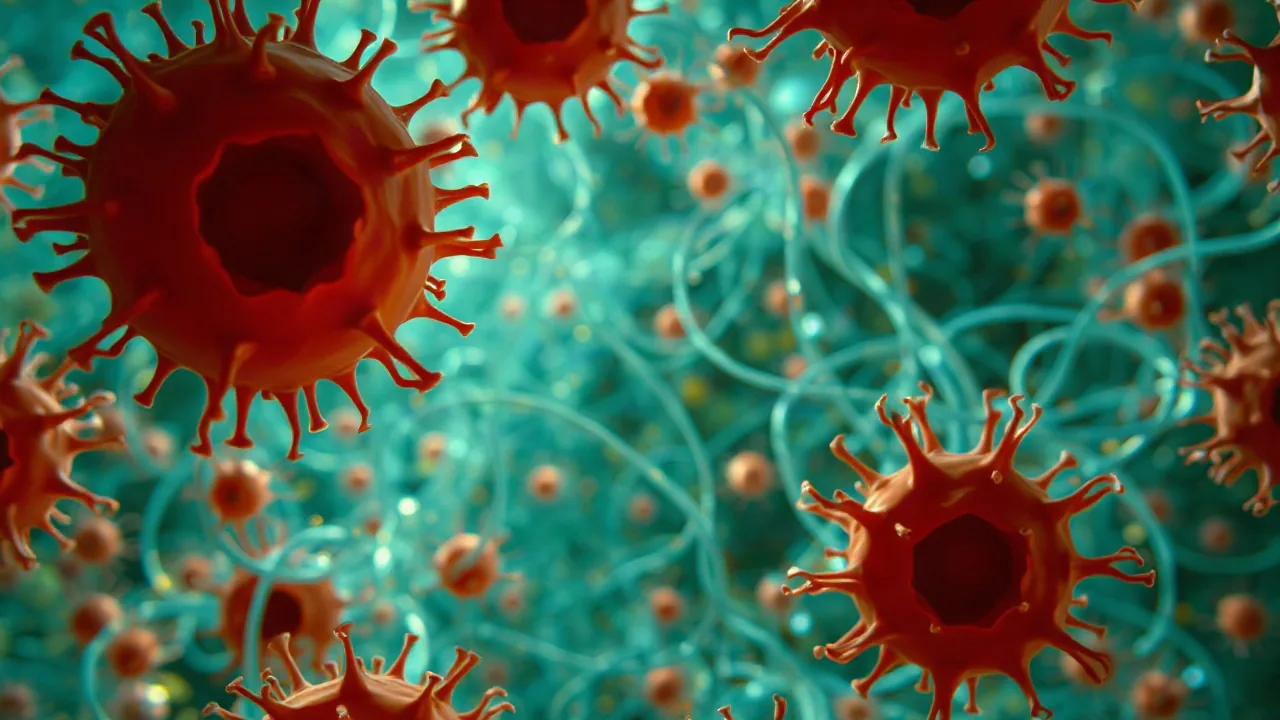
In a significant breakthrough, researchers have successfully cultivated novel archaea, microscopic organisms that are among the closest living relatives to eukaryotes – the domain of life that includes plants, animals, fungi, and protists. This cultivation effort, detailed in a recent study published in Nature, provides crucial new clues about the evolutionary transition from simple prokaryotic cells to the complex cellular structures that define eukaryotic life. The findings offer a rare glimpse into the ancient biochemistry that may have paved the way for the emergence of multicellular organisms.
The newly cultivated archaea, identified as a group of syntrophic peptidotrophic organisms, inhabit environments characterized by their close association with other microbes. Unlike many well-studied archaea, these particular species possess metabolic pathways that depend on their neighbors for essential nutrients, a characteristic that scientists believe mirrors the conditions under which early eukaryotic cells might have evolved. This dependence suggests a symbiotic origin, where a host cell engulfed or merged with another organism, leading to a new, more complex cellular entity.
Unlocking the Secrets of Cellular Evolution
For decades, scientists have sought to understand the precise lineage of eukaryotes, with archaea being the primary candidates for their closest prokaryotic ancestors. However, cultivating these elusive organisms in laboratory settings has been a persistent challenge. The successful cultivation of these specific peptidotrophic archaea, which thrive in oxygen-deprived, organic-rich environments such as the gut of termites or deep-sea sediments, represents a major advancement. These microbes are metabolically simple, relying on breaking down peptides and amino acids from their partners, a process that differs significantly from the more energy-intensive respiration seen in many other life forms.
Dr. Masaru Kogen from the Japan Agency for Marine-Earth Science and Technology (JAMSTEC), a lead author on the study, stated, "Understanding the metabolism and lifestyle of organisms that are phylogenetically very close to the last eukaryotic common ancestor is key to reconstructing the events that led to eukaryogenesis." He added, "These peptidotrophic archaea are an excellent model for exploring the conditions and metabolic capabilities that existed before the emergence of complex cellular machinery like mitochondria." The researchers employed specialized techniques to replicate the unique anaerobic and nutrient-rich conditions required by these archaea, enabling their sustained growth outside of their natural habitats.
The study’s implications extend to understanding the fundamental building blocks of life. Eukaryotes are characterized by their membrane-bound organelles, including the nucleus and mitochondria, which perform specialized functions. The metabolic simplicity and reliance on external sources for key compounds in these newly cultured archaea suggest that the early stages of eukaryotic evolution may have involved simpler metabolic systems that were later enhanced through symbiotic relationships and gene transfer. This research provides a tangible biological system to test hypotheses about gene loss, metabolic streamlining, and the acquisition of new capabilities that were critical for the evolution of complex life on Earth.
This discovery is not just a win for microbiology but for all of biology, as it helps to fill a critical gap in our knowledge of life's history. The cultivation of these archaea provides a living laboratory to investigate the genetic and biochemical foundations of eukaryotic origins. Future research will likely focus on comparative genomics and proteomic analyses of these archaea to pinpoint specific genes and metabolic pathways that were inherited by eukaryotes, or that played a role in the symbiotic event itself, offering further insights into the intricate evolution of life.