
New Hairy-Legged Sea Spider Species Found in Salish Sea
Scientists have identified two new species of sea spiders in the Salish Sea, one of which is a parasite with its own parasites. These newly discovered arachnids possess unusual features like red eyes and three lips.

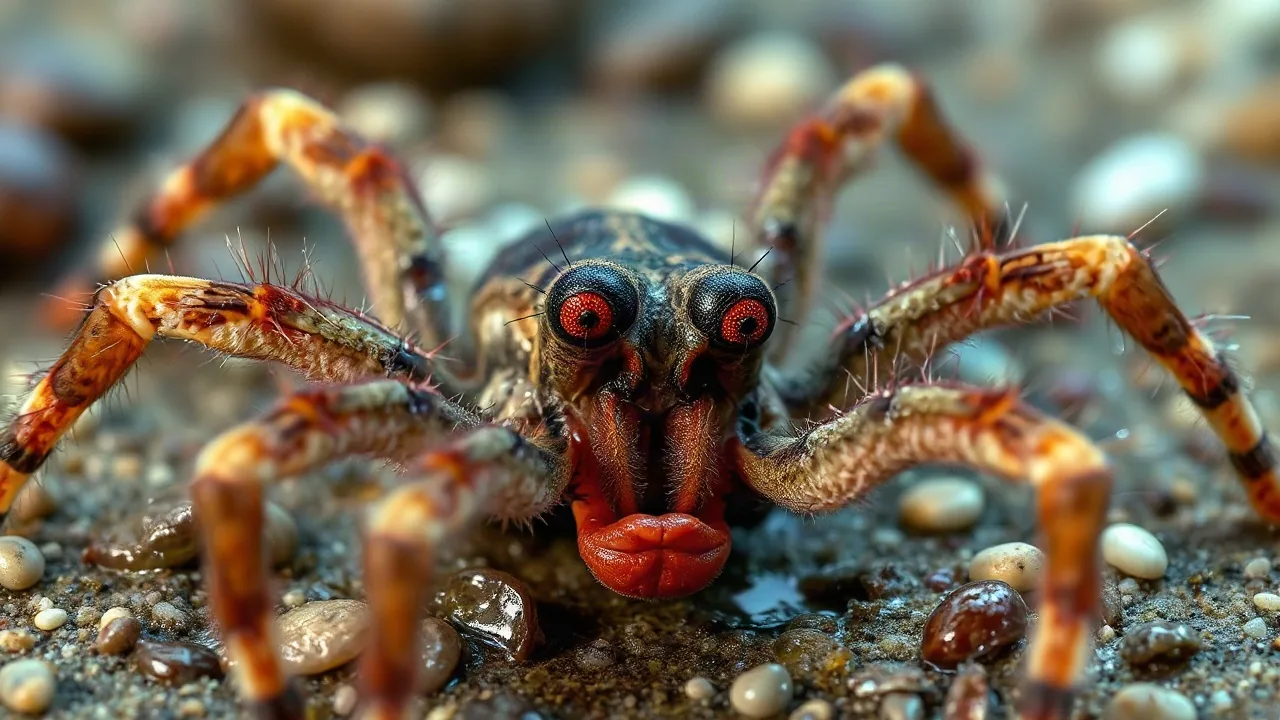
Two newly identified species of sea spiders, notable for their distinctive red eyes and three-lipped mouths, have been discovered in the Salish Sea, a body of water between Vancouver Island and mainland British Columbia. One of the species, a type of parasitic sea spider, has the unusual characteristic of also being host to its own parasites, a discovery that has intrigued researchers.
The scientific expeditions that led to these findings involved meticulous collection and observation of marine life. These peculiar arachnids, which belong to the class Pycnogonida, are not true spiders but are marine arthropods. They are characterized by their long, spindly legs and their specialized feeding habits, often involving piercing the tissues of sedentary marine invertebrates to extract nutrients.
Unusual Morphology and Parasitic Nature
The newly christened species, one of which has notably hairy legs, presents a unique morphology that sets it apart from previously known sea spiders. Researchers were particularly fascinated by the presence of three distinct lips, an anatomical feature rarely observed in such detail in related species. The red eyes, while striking, are not entirely unprecedented among marine arthropods, but in combination with the other features, they contribute to the creature's unusual appearance.
Dr. P. B. van Soest, a marine biologist involved in the classification process, stated, "These discoveries underscore how much we still have to learn about the biodiversity within our oceans, even in relatively well-studied regions like the Salish Sea. The parasitic nature of one species, coupled with its own host of parasites, opens up fascinating avenues for ecological research into host-parasite dynamics."
Sea spiders, also known as 'pycnogonids' or 'pantanopods', inhabit all of the world's oceans, from shallow coastal waters to the deep sea. Despite their name, they are not closely related to terrestrial spiders. Their bodies are typically composed of a small central torso and disproportionately long legs, and they lack specialized respiratory and excretory systems, relying on diffusion for gas exchange and nutrient distribution. Many species are known to be predators or parasites of other marine organisms.
The ongoing study of these new species is expected to shed light on the evolutionary adaptations of marine life in environments with fluctuating salinity and temperature. The Salish Sea, a complex estuarine system, provides a unique habitat for a wide array of marine organisms, making it a critical area for biodiversity research. Understanding the ecological roles of creatures like these newly found sea spiders is crucial for monitoring the health of the marine ecosystem.