
Dogs Show Paw Preference: Male Canines Mirror Human Left-Handedness
New research suggests dogs, particularly males, exhibit a preference for their left paw, echoing a similar tendency observed in human males. This study explores the prevalence and potential reasons behind canine paw dominance.

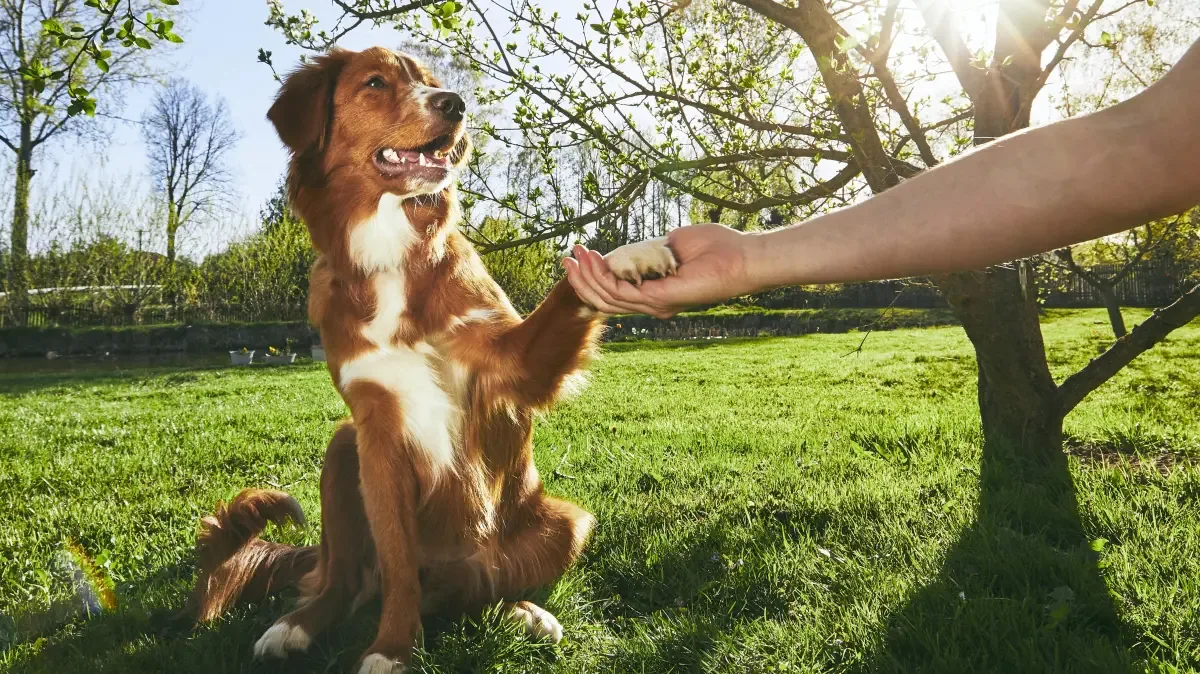
A recent scientific investigation has revealed that dogs, much like humans, display a preference for one paw over the other. The study, published in the journal 'Animal Cognition,' indicates that male dogs are more likely to be "southpaws" or left-pawed, a trait that mirrors a similar predisposition in human males. While not as pronounced as human handedness, this canine paw preference is a significant finding in animal behavior research.
Researchers observed over 400 dogs of various breeds and ages as they performed simple tasks designed to elicit a paw preference. These tasks included reaching for a treat placed in front of them, stepping over an obstacle, and interacting with a puzzle feeder. The results showed a clear tendency for a majority of the dogs to favor one paw, with a notable skew towards left-pawedness among the male participants. Approximately 56% of male dogs in the study showed a preference for their left paw, compared to 47% of female dogs. This difference, while subtle, suggests a potential biological or hormonal influence, similar to theories surrounding human handedness.
Understanding Canine Paw Dominance
The phenomenon of paw preference, or lateralization, in animals has been a subject of scientific curiosity for decades. While it's widely accepted that humans have a dominant hand, the extent to which this applies to other species, particularly domesticated animals, is still being explored. This latest research adds a significant piece to the puzzle, suggesting that evolutionary or developmental factors may influence motor control lateralization in dogs in ways that parallel human tendencies.
Dr. Sarah Lewis, lead author of the study and an animal behaviorist at the University of Bristol, stated, "We were surprised by the strength of the association between sex and paw preference in dogs. While environmental factors can influence learned behaviors, the consistency across different breeds and tasks points towards an underlying biological basis." She added that further research is needed to explore the hormonal or genetic factors that might contribute to this observed difference. Understanding these factors could provide insights not only into canine development but also into the broader evolutionary pathways of lateralization across species.
The study also found that the strength of the paw preference varied among individuals, with some dogs being strongly right or left-pawed, while others showed no clear preference, using both paws interchangeably. This variation highlights the complexity of motor control and lateralization, suggesting that it's not a simple binary trait but rather a spectrum influenced by multiple factors. Factors such as early life experiences and training regimens may also play a role in shaping a dog's preferred paw use, though the current study focused on naturally occurring preferences.
This research could have practical implications for dog training and handling. For instance, understanding a dog's paw preference might help trainers tailor certain exercises or commands. It could also be relevant in veterinary contexts, particularly for rehabilitation therapies where targeted limb use is important. While the differences observed are not drastic enough to warrant a complete overhaul of training methods, acknowledging a dog's natural inclination could potentially enhance communication and effectiveness between humans and their canine companions. The study underscores the intricate connection between brain function, physical expression, and even the sex of the animal, offering a new perspective on the behavioral nuances of our four-legged friends.