
New Enzyme Reverses Cellular Aging Markers in Human Tissues
Scientists have developed a novel enzyme that successfully breaks down advanced glycation end products (AGEs), key markers of cellular aging, in human tissues. This breakthrough offers a potential path to reversing age-related damage.

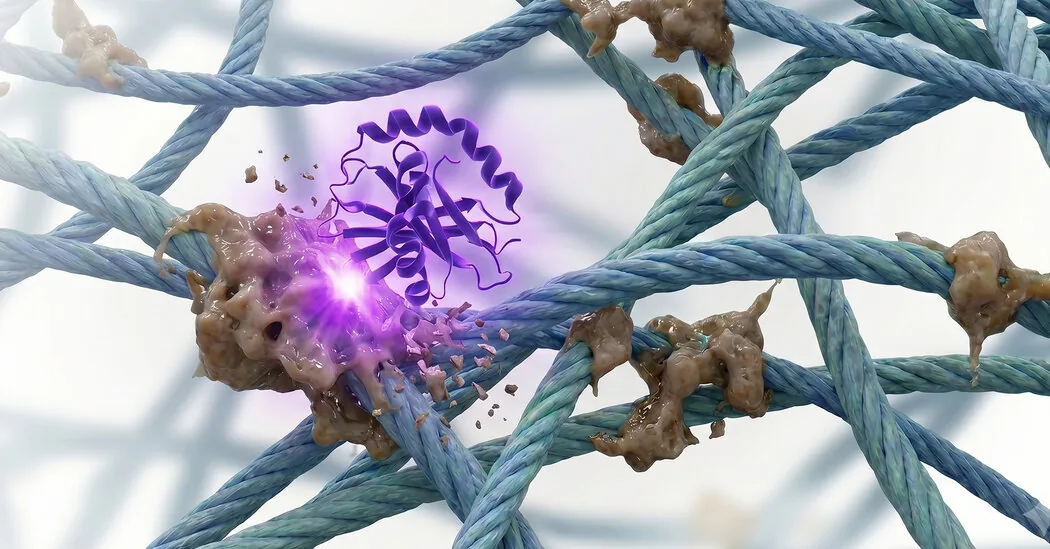
Scientists have engineered a novel enzyme capable of reversing a key marker of aging in human tissues, a significant step toward combating age-related diseases. Published on July 16 in Nature Communications, the study details an enzyme that can dismantle advanced glycation end products (AGEs), compounds that accumulate over time and contribute to tissue stiffening and inflammation. Revel Pharmaceuticals, a startup co-founded by lead author Aaron Cravens, developed the enzyme.
AGEs form when sugars react with proteins and fats in the bloodstream, a process akin to the browning of baked goods. These compounds become embedded in tissues, particularly collagen, which has a long lifespan of approximately 15 years. The accumulation of AGEs is linked to a range of health issues, including cardiovascular disease, kidney disease, diabetes, and vision impairment. While previous research has attempted to block AGE formation, this new approach focuses on breaking down existing AGEs.
"It’s a small step in this bigger direction, because aging is very complicated," said Aaron Cravens, founder and CEO of Revel Pharmaceuticals. "It’s the first time, I think, that anyone in the field has shown at the structural level that you can actually reverse some of these changes." Cravens explained that the enzyme, dubbed CMLase, targets a specific and prevalent AGE called Nε-carboxymethyllysine (CML).
Targeting Tissue-Specific Aging
For decades, much of the scientific focus on aging has centered on cellular senescence and the loss of cellular repair mechanisms. However, this study highlights the importance of addressing the aging of more durable tissue structures. Collagen, a primary structural protein in the body, becomes increasingly rigid and prone to inflammation as AGEs bind to it. This stiffening affects the function of organs and blood vessels.
The research team demonstrated that their engineered enzyme could effectively cleave CML from collagen fibers in human tissue samples. This process not only removed the AGE but also appeared to restore some of the collagen's original flexibility and structure. The implications for treating age-related conditions are substantial, as restoring tissue function could mitigate the progression of diseases driven by AGE accumulation.
The development of CMLase represents a significant advancement in gerontology. By directly addressing the structural consequences of aging, rather than just cellular processes, researchers are opening up new therapeutic avenues. This work could pave the way for treatments that don't just slow aging but actively reverse some of its detrimental effects on the body's infrastructure. Further studies are planned to evaluate the enzyme's efficacy and safety in living organisms.