
Hobbit' Pelvis Shows More Human-Like Walking, Study Finds
New research on the pelvis of Homo floresiensis, or 'hobbits,' suggests their gait was more similar to modern humans than previously understood, deepening evolutionary debates.

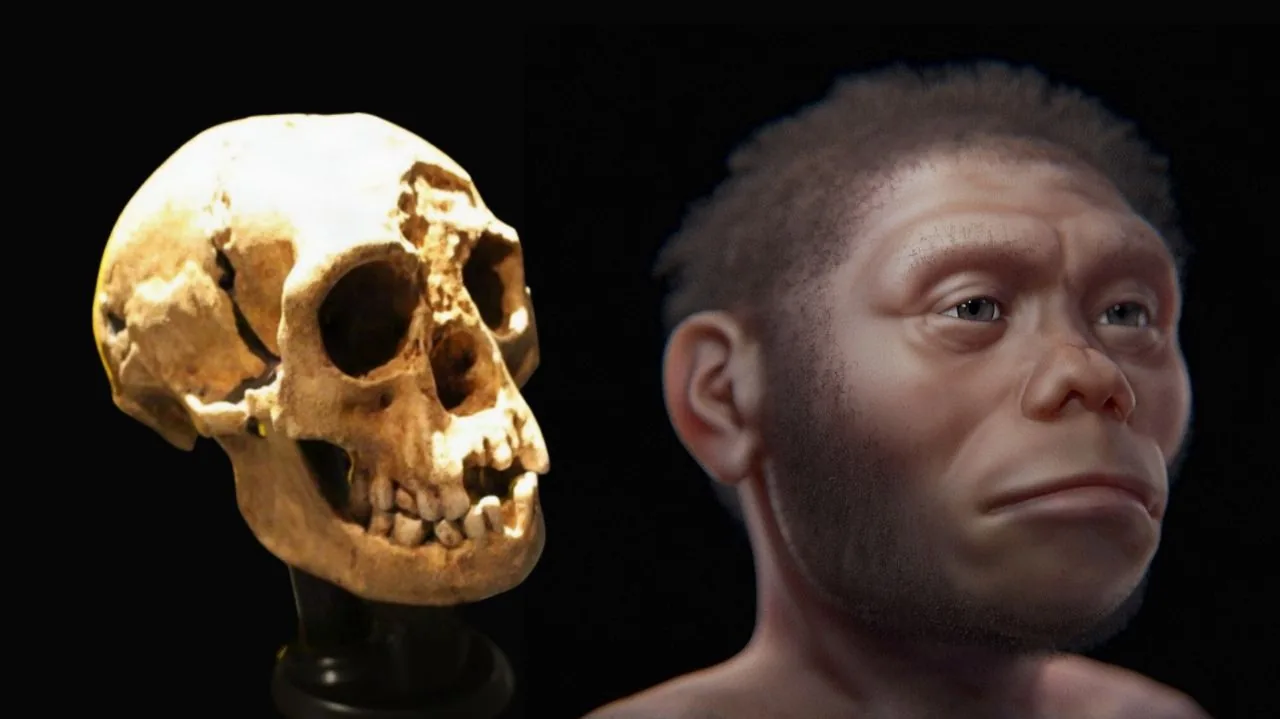
A recent study analyzing the hip bones of Homo floresiensis, commonly known as the "hobbits," reveals that their pelvises were more human-like than earlier research indicated. This discovery offers new insights into how these diminutive human relatives ambulated and intensifies ongoing discussions about their evolutionary origins. Homo floresiensis inhabited the Indonesian island of Flores and was first identified in 2003 from skeletal remains unearthed at Liang Bua cave. Adults typically stood around 3.5 feet (1 meter) tall.
The current investigation centered on LB 1, an adult female specimen believed to have lived between 100,000 and 60,000 years ago. Her skeleton exhibits a mosaic of traits associated with both modern humans and much earlier hominin ancestors, a characteristic that has complicated efforts to definitively place the species within the human evolutionary tree.
To conduct their analysis, researchers utilized micro-CT scans of the LB 1 pelvis. These scans were meticulously compared against the pelvic structures of living humans, African apes, and 26 fossil hominin specimens. The team focused on specific anatomical features associated with locomotion, such as the angle and length of the ilium. Crucially, they developed a novel method for measuring "iliac flare," which describes the outward extension of the upper hip bones, a feature that has been a focal point in previous Homo floresiensis studies.
A New Perspective on Locomotion
The degree of iliac flare has been a significant point of contention, as a wider flare, similar to that seen in australopiths like Australopithecus afarensis (the species of the famous "Lucy" fossil), is typically linked to less efficient upright walking compared to the biomechanics of modern humans. Earlier studies produced conflicting results, partly due to variations in how iliac flare was measured.
This new measurement technique provided the researchers with a more consistent framework for comparing LB 1's pelvis with those of ancient human relatives, apes, and australopiths. The findings indicated that nearly every measured feature of LB 1's pelvis fell within the spectrum observed in modern Homo sapiens. The only significant deviation from the modern human range was the length of the ischium.
When considering the pelvis as a whole, the evidence suggests that LB 1's hip structure bore a closer resemblance to Pleistocene Homo groups than to australopiths or African apes. The pelvis also shared characteristics with Homo erectus and other early members of the Homo genus. This anatomical alignment implies that Homo floresiensis possessed a form of upright walking that was more akin to other human species than previously posited.
However, the study clarifies that the "hobbits" did not walk precisely like contemporary humans. Their pelvic morphology suggests a slower gait, indicating they were not optimized for rapid movement or extensive long-distance travel, and some degree of arboreal activity remained a possibility. This finding aligns with the already recognized unusual combination of traits found throughout the species' skeleton.
The implications of this research are significant for understanding the diversity of early human forms. While some hand bones of Homo floresiensis show similarities to australopiths, their shoulders and upper arms display more distinctly human-like features. The recent pelvic evidence adds another human-like characteristic to this complex anatomical mosaic. The ongoing debate surrounding the exact origins of Homo floresiensis continues, with two primary hypotheses persisting: one proposing descent from Homo erectus populations that reached Flores and subsequently underwent island dwarfism, and another suggesting ancestry from a small-bodied population of an earlier Pleistocene Homo species.
This latest pelvic study does not definitively resolve these competing theories. Nonetheless, the work underscores the substantial variation present in early human skeletons, making the precise evolutionary lineage of the hobbit challenging to ascertain from skeletal evidence alone. Future investigations, potentially involving ancient DNA or protein analysis, may provide further clarity. For now, the human-like pelvic structure offers a clearer picture of hobbit locomotion, even as their evolutionary history remains an open question.