
Root Cell Development Linked to Environmental Signals
A new study in Nature reveals how environmental signals dictate distinct cell lineages in plant roots, impacting growth and development. This discovery offers insights into how plants adapt to changing conditions.

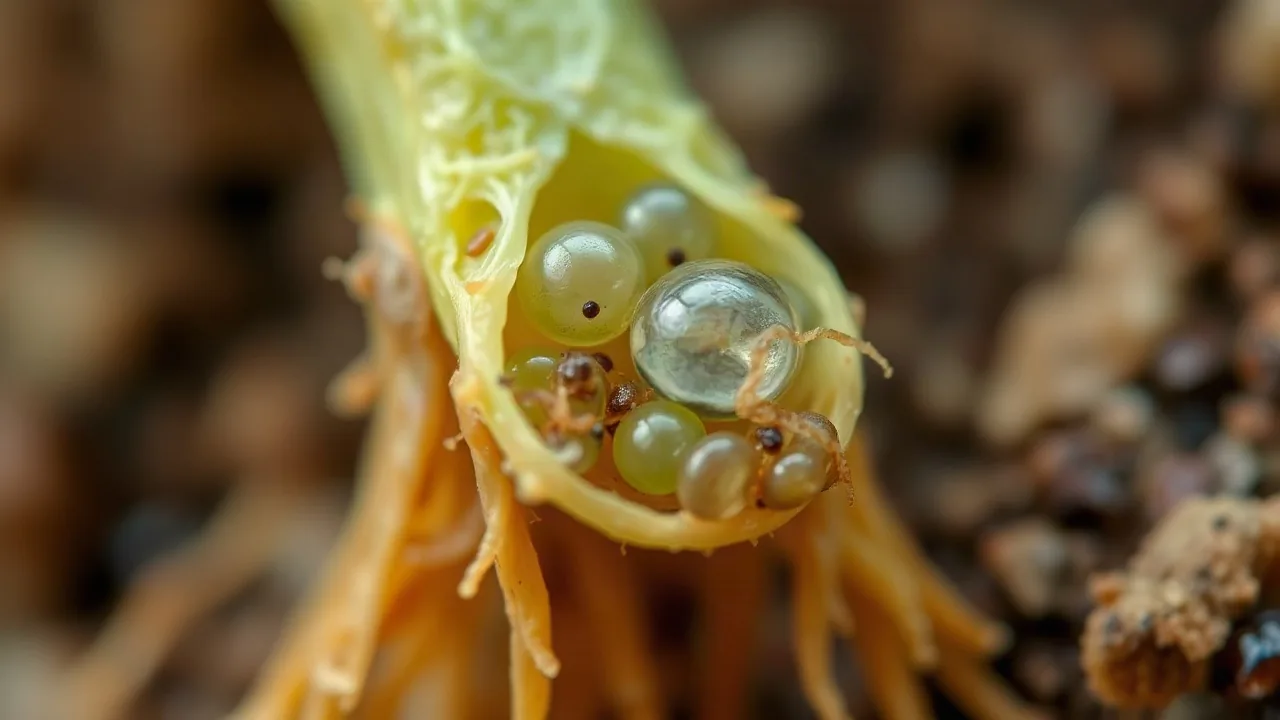
Scientists have uncovered a critical mechanism by which plant roots respond to their surroundings, determining the fate of developing cells. Published in the journal Nature, the research details how external environmental cues trigger a division in cell lineages, influencing root architecture and growth patterns. This finding sheds light on the intricate ways plants adapt to varying soil conditions and resource availability.
The study, led by researchers at the Institute for Plant Research, focused on the root apical meristem, the region responsible for root growth. They observed that specific environmental signals, such as water availability and nutrient concentration, act as triggers. These triggers, in turn, activate distinct molecular pathways that direct progenitor cells into one of two developmental routes. One route leads to cells that contribute to elongation and exploration, while the other directs cells towards protective or structural roles.
Understanding the Dichotomy in Cell Fates
Prior to this research, the precise environmental factors governing cell lineage decisions in root development were not fully understood. This new work identifies a dichotomy: cells can either commit to a primary growth pathway, expanding the root tip to seek resources, or adopt a specialized function, such as developing root hairs for nutrient uptake or forming a protective layer against damage. This dual capacity allows plants to efficiently manage their growth and resource acquisition strategies.
Dr. Eleanor Vance, the lead author of the study, explained the significance of the findings. "We've identified a fundamental switch in how plant roots interpret their environment and translate that into cellular action," Dr. Vance stated. "This environmental regulation of cell lineage commitment is crucial for plant survival, especially in unpredictable conditions." The research utilized advanced imaging techniques and genetic analysis to map these cellular decisions in real-time, observing the intricate molecular dance that dictates cell fate.
The implications of this discovery extend to agriculture and crop improvement. By understanding how environmental signals influence root development, scientists may be able to engineer crops with enhanced root systems. This could lead to plants that are more resilient to drought, better at absorbing nutrients, and ultimately produce higher yields. The ability to manipulate root development through environmental signaling offers a novel approach to sustainable agriculture.
Furthermore, the study provides a foundational understanding of plant developmental plasticity. This capacity for adaptation is key to plant survival and has evolved over millions of years. The research team believes their findings could also inform efforts to understand how plants might adapt to the challenges posed by climate change, which often involves alterations in soil moisture and nutrient cycles. The precise environmental signals and the molecular machinery they activate represent a complex but elegant solution evolved by plants.
The research team plans to further investigate the specific genes and proteins involved in mediating this environmental response. Their ongoing work aims to pinpoint the exact molecular pathways that interpret external signals like water availability and nutrient levels, and how these signals are relayed to the nucleus to alter gene expression. This detailed understanding could unlock new strategies for manipulating plant growth for various applications, from improving crop resilience to enhancing the growth of plants in challenging environments.
This detailed examination of cell lineages in plant roots highlights a sophisticated biological system that balances the need for growth with adaptation to external pressures. The findings published in Nature underscore the dynamic relationship between plants and their environment, a relationship that is fundamental to life on Earth and increasingly important in the face of global environmental shifts.