
Synthetic 'SpudCell' Mimics Living Cells, Promises Biological Manufacturing
Scientists have engineered a "synthetic cell" called SpudCell that mimics key life functions like growth and division. The breakthrough could pave the way for biological factories producing medicines and materials.

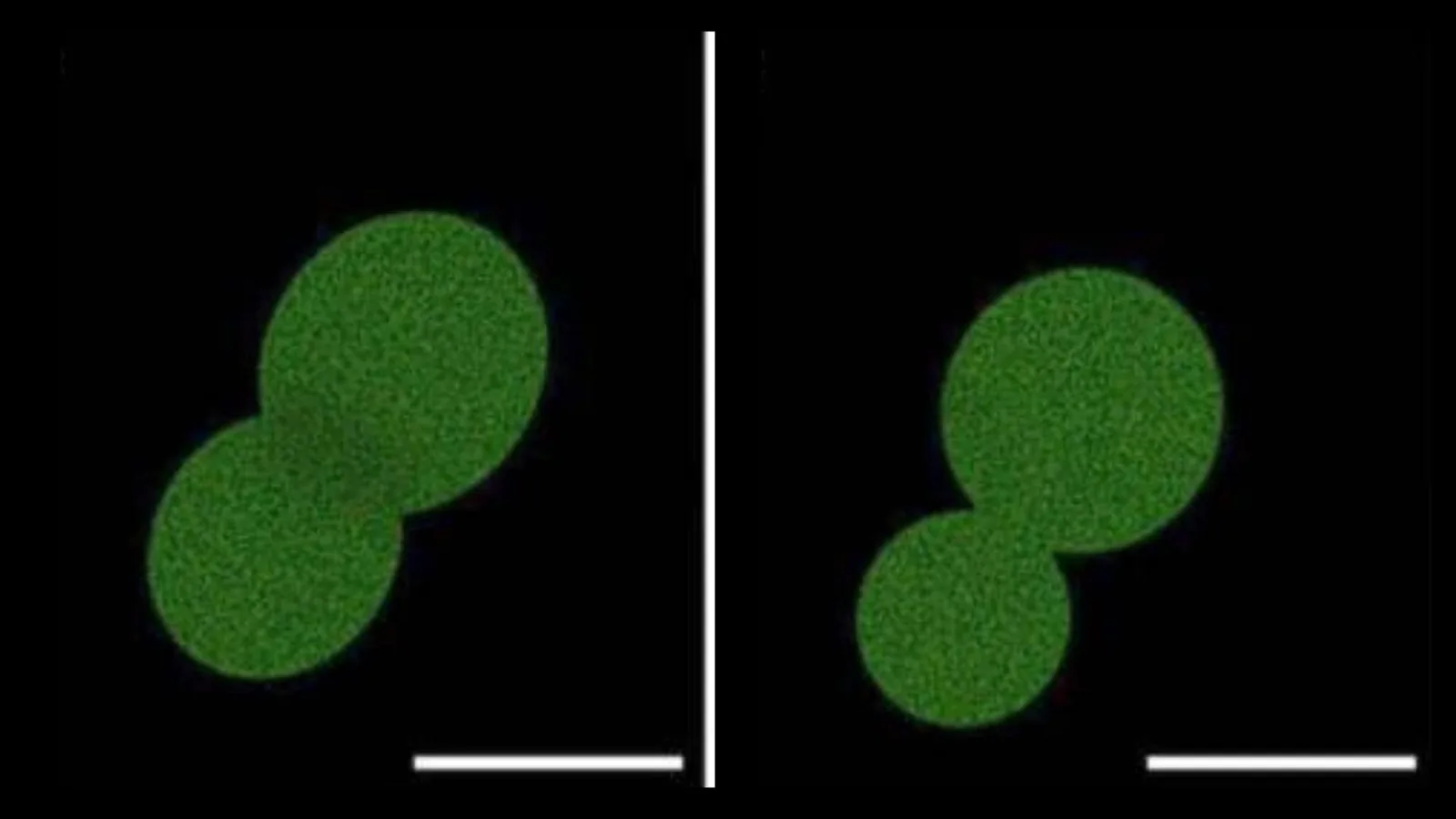
Scientists at the University of Minnesota have developed a novel synthetic cell, dubbed "SpudCell," that exhibits remarkable life-like behaviors including growth and division. Announced in a preprint released July 2 on bioRxiv and awaiting peer review, this creation represents a significant stride toward constructing living cells from fundamental chemical components. While not considered alive by its creators, SpudCell is envisioned as a versatile biological platform capable of manufacturing essential chemicals for industry and medicine.
Dr. Kate Adamala, a lead researcher and synthetic biologist at the University of Minnesota, described SpudCell not as a living organism but as a foundational system. "I do not believe [SpudCell] is alive," Adamala stated, emphasizing its potential as a "framework that could generate all the chemicals we need for our civilization with biology." The implication is that SpudCell could function as miniature factories, producing everything from pharmaceuticals and fertilizers to plastics, thereby reducing reliance on petroleum-based products. The announcement has generated some debate, with critics suggesting it may be a strategy to promote Biotic, a nonprofit organization founded by the study's authors to secure funding for further development of the technology.
Adamala acknowledges the need for attention and investment in her field, citing a critical urgency to develop sustainable solutions. "I feel this incredible stressful urgency that if we don't get to work on it now, then we're going to run out of time," she commented, referencing the escalating climate crisis. "We need to highlight that bioengineering can offer a solution. That's why I'm doing it."
From Cell Mimicry to Manufacturing Potential
The SpudCell system, detailed in the preprint, closely imitates a living cell's structure and function. Researchers combined 36 purified enzymes with a lipid membrane and a simplified genome, approximately 50 times smaller than that of a typical bacterium. This 'bottom-up' approach, assembling components from scratch, enabled the creation of a cell-like entity that could ingest nutrients, expand, and divide, thus completing a full cell cycle in a laboratory setting. "We built a cell-like system that is fully chemically defined, so there are no unknown building blocks in it," Dr. Adamala explained. "It's capable of doing things that people up until now used to think only natural living cells can do." The name "SpudCell" draws a comparison to a potato's appearance and also references the historic Sputnik satellite, according to reports.
This advancement builds on earlier work, such as the 2016 "minimal cell" project by the J. Craig Venter Institute, which sought to create the smallest possible self-replicating bacterial cell. However, the current study is distinguished by its successful demonstration of feeding, growth, and division achieved through a purely synthetic, chemically defined assembly. Mauro Rinaldi, a lecturer in biotechnology and biochemistry at the University of Hull not involved in the research, called it "a great advancement" that "moves the needle because one of the key things about cells is division."
Despite these achievements, SpudCell has limitations. It cannot yet generate its own energy, relying on external sources like mitochondria in natural cells. It also requires externally supplied fats, sugars, and enzymes, and lacks the internal machinery (ribosomes) to produce its own proteins. Furthermore, its DNA, housed on plasmids rather than organized chromosomes, is distributed somewhat randomly during division due to the absence of a cellular skeleton typically used for precise DNA segregation. Biophysicist Cees Dekker of Delft University of Technology raised technical questions, noting that while "ingenious engineering tricks" achieve complex functions, a truly autonomous cell remains a significant challenge. Dekker also expressed reservations about the extensive media coverage preceding peer review, stating, "If these findings are solid, that great media attention is definitely warranted; if peer review would, however, reveal weaknesses or issues, all the current media reporting is premature."
Adamala views SpudCell as a highly adaptable base for future engineering applications. Cells have long been employed in producing chemicals, with synthetic insulin manufactured in bacteria being a prime example. However, natural cells often resist creating substances toxic to them. A synthetic platform like SpudCell could overcome these evolutionary constraints. The researchers envision its use in producing advanced therapeutics, such as mRNA or peptide-based drugs, by directly synthesizing their modified molecular building blocks. This could potentially accelerate drug development and reduce manufacturing costs compared to traditional chemical synthesis. Additionally, SpudCell could serve as portable, "shippable laboratories." They could be dehydrated, transported globally without refrigeration, and activated on-site to produce vital compounds like vaccines or proteins, addressing needs in remote or resource-limited areas. "It's probably at least a couple of decades from now when we can actually scale it up to the point where we can replace all the petrochemicals with biology, but I do believe it's doable," Adamala projected.
The nonprofit Biotic aims to facilitate global funding for such pioneering work. "Biotic is a funding agency that is going to globally fund this work," Adamala said. While the potential is considerable, Rinaldi cautioned that the technology must undergo rigorous peer review, and much of the initial hype may dissipate as the science matures.