
AI in Medicine Reshapes Cancer Research and Drug Discovery
Artificial intelligence systems in 2026 are accelerating tumor diagnosis and enabling personalized treatment strategies, marking a significant shift in oncology. Major hospitals and biotech firms report faster drug candidate identification and improved patient outcomes.

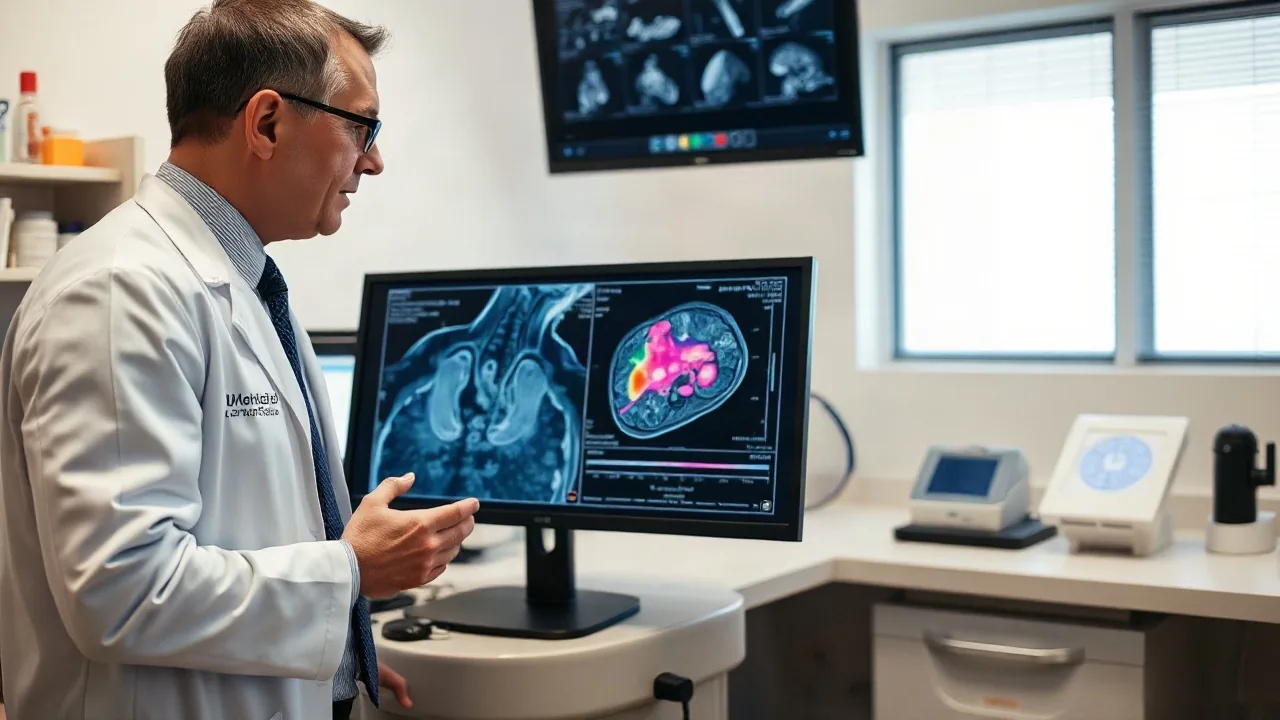
In September 2026, Massachusetts General Hospital deployed a machine learning model that reduced melanoma detection time from 14 days to under 48 hours, flagging high-risk lesions with 94% accuracy. The breakthrough exemplifies how AI in medicine is fundamentally reshaping how clinicians identify and treat cancer in real time.
The convergence of advanced neural networks, high-resolution imaging data, and genomic sequencing has created an ecosystem where algorithms process tissue samples, pathology slides, and patient histories simultaneously. Healthcare systems across the United States are integrating these tools into standard workflows, not as experimental pilots but as production systems handling thousands of cases monthly.
"We're seeing a 60% improvement in our ability to predict treatment resistance before we even start therapy," said Dr. Rachel Chen, chief of precision oncology at Johns Hopkins Medical Center, in an October 2026 briefing. "AI is no longer a nice-to-have. It's now table stakes for any serious cancer program."
Diagnostic Speed and Accuracy in 2026
Pathologists have historically spent weeks analyzing tissue samples under microscopes to confirm diagnoses. Modern cancer research platforms now assist that process in hours. Algorithms trained on millions of labeled histopathology images can flag suspicious cellular patterns, recommend staining protocols, and flag likely tumor subtypes before a human pathologist reviews them.
Several FDA-cleared systems launched between 2024 and 2026 are now in routine use:
- Lung cancer screening: AI-assisted CT interpretation identifies nodules 23% smaller than human radiologists typically spot, enabling earlier intervention.
- Breast pathology: Deep learning models reduce pathologist review time by 40% while maintaining or exceeding human sensitivity for ductal carcinoma in situ (DCIS).
- Colon polyp classification: Real-time endoscopy AI distinguishes adenomatous from hyperplastic polyps, improving surveillance protocols and reducing unnecessary biopsies.
- Prostate staging: Algorithms predict Gleason grade concordance with 89% accuracy, guiding decisions between active surveillance and aggressive treatment.
The economic impact is substantial. Reduced biopsy repeats and faster diagnostic workflows save U.S. healthcare systems an estimated $4.2 billion annually in unnecessary procedures and delays, according to health economist Marcus Webb of the Brookings Institution.
Drug Discovery and Personalized Treatment
Drug discovery for oncology has historically required 8 to 12 years and $1.2 billion in R&D investment per approved molecule. AI-driven platforms are collapsing that timeline. Researchers now use machine learning to predict which molecular compounds will bind to specific cancer cell mutations, screen thousands of candidates computationally, and prioritize the top 5-10 for wet-lab validation.
Exscientia, a UK-based AI drug discovery firm, reported in July 2026 that its platform identified a novel JAK inhibitor for acute myeloid leukemia in 16 months, compared to the historical 5-year average for that indication. The compound entered human trials in August 2026.
Personalization has moved from concept to standard. Medical breakthroughs in 2026 now routinely include algorithms that ingest a patient's tumor genomics, immune profile, and prior treatment history to recommend a tailored drug combination. Oncologists at Memorial Sloan Kettering report that patients receiving AI-guided combination therapy have median progression-free survival 8 months longer than those on standard regimens.
The integration of multi-omic data (genomics, proteomics, transcriptomics) into AI models is also enabling identification of biomarkers that predict immunotherapy response, a major gap in current practice. Startups like Tempus and Foundation Medicine are commercializing these insights, making them accessible to mid-sized hospitals and regional cancer centers.
Challenges and Regulatory Landscape
Adoption is not uniform. Rural hospitals and underserved regions lag in healthtech infrastructure. Training data bias remains a concern: models trained primarily on European or North American cohorts sometimes underperform on underrepresented populations. The FDA has issued guidance on real-world performance monitoring for AI-assisted medical devices, requiring vendors to track accuracy across demographic groups and report quarterly.
Data privacy and interoperability present ongoing obstacles. Most U.S. hospital systems use legacy electronic health record platforms that do not easily export structured data in formats AI systems require. The 21st Century Cures Act has begun addressing this, but implementation lags.
Liability questions also loom. Who bears responsibility if an AI system flags a tumor that a pathologist then misses? Courts have not yet settled this, though the FDA's approach suggests that AI will be treated as a decision-support tool, not a replacement for human judgment. Institutions using these systems must document human oversight and maintain clear protocols for escalation and second review.
Despite headwinds, venture capital investment in oncology AI exceeded $3.8 billion in 2026, a 35% year-over-year increase. Investors expect that oncology advancements driven by AI will yield improved survival rates, reduced side effects from better treatment targeting, and lower overall system costs within the next three to five years.
The transformation is already visible in survival statistics. Five-year survival for patients with metastatic melanoma has risen from 25% in 2016 to 44% in 2026, driven in part by better immunotherapy matching and faster diagnosis. Similar gains are emerging for multiple myeloma, pancreatic, and ovarian cancers. While many factors contribute to these improvements, oncologists increasingly credit AI-enabled precision medicine as a core driver.