
Protest and Cybersecurity: Protecting Data During Activism
Activists and protesters face heightened digital risks during demonstrations. Learn how to shield your personal information and devices while exercising free speech online.

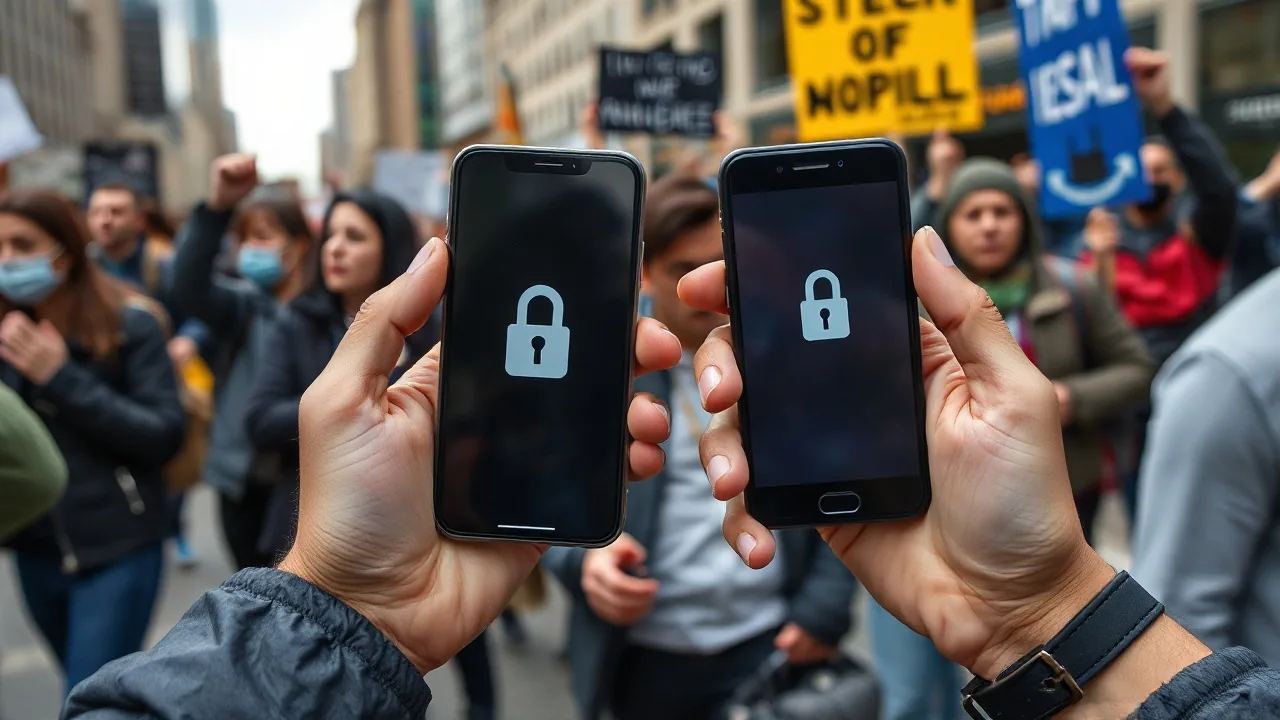
Thousands of demonstrators gathered outside city halls and federal buildings across the United States in July 2026, streaming their actions on social media and organizing via encrypted messaging apps. As protest movements grow more digitally coordinated, law enforcement and bad actors exploit the moment to harvest personal data, tracking devices, and compromised accounts. Understanding how activism intersects with cybersecurity has become essential for anyone participating in or supporting demonstrations.
Protest participants are uniquely vulnerable. They post photos and videos in real time, share location data without thinking, and communicate through unvetted apps. Surveillance tools capture metadata, facial recognition software logs attendees, and malicious actors posing as fellow activists distribute spyware through fake encrypted-messaging invites. The intersection of protest activity and poor digital hygiene creates a perfect storm for data theft.
How Activism Exposes Your Digital Footprint
When you post from a protest, you are broadcasting your location, beliefs, and social networks. Law enforcement agencies in 31 U.S. states now deploy stingray devices—cell-site simulators that capture phone connections and location data—near large gatherings. Private corporations sell location tracking data harvested from mobile apps to brokers who re-sell it to political organizations, employers, and surveillance firms.
Rebecca Chen, senior analyst at the Digital Privacy Institute, noted in an August 2026 report: "Protesters who carry smartphones to document demonstrations should assume that their device is being tracked. The combination of commercial surveillance, government interest, and activist infiltration means personal data collected at a rally can follow you for years."
Facial recognition technology has matured rapidly. Clearview AI, the facial search company, indexed over 20 billion images from public sources by mid-2026. During protests, cameras and phones capture faces that can be matched against databases in seconds. Even if you do not post your own images, other attendees may upload photos containing you.
Essential Data Protection Strategies for Protesters
Security experts recommend a tiered approach to digital security during activism. The first layer is device hardening: encrypt your smartphone, use a strong PIN, and disable location services before attending a demonstration. Turn off Bluetooth and Wi-Fi to prevent device discovery.
Second, use online privacy tools that isolate your activity from surveillance:
- Install Signal or Wire, end-to-end encrypted messaging apps without centralized servers.
- Use a virtual private network (VPN) that does not log traffic or require user accounts tied to your identity.
- Consider a burner phone or second SIM card for protest-only communication, separate from your primary device.
- Disable iCloud, Google Drive, and cloud backup so photos and messages do not sync to cloud accounts.
Third, practice operational security before and after the event. Tell no one outside your immediate group where you are going or when. Do not tag your location on social media. Avoid using your real name in activist group chats. Change your passwords after a protest in case your device was compromised during attendance.
Fourth, apply security measures to your accounts. Enable two-factor authentication on email, social media, and banking platforms. This step prevents an attacker with a stolen or snooped password from locking you out or accessing sensitive accounts.
Legal and Institutional Risks
Beyond technical surveillance, protesters face organizational and legal exposure. In 2026, approximately 40 U.S. law enforcement agencies have agreements to access cell-site data without warrants under emergency protocols. Digital records of your location, communications, and associates can be subpoenaed or obtained through government requests to tech platforms.
Employers, educational institutions, and credit agencies also monitor social media activity. Participating in certain protests or being publicly associated with activist causes can trigger background checks, employment review, or discrimination. While legal protections exist under the First Amendment, enforcement is uneven and litigation is costly.
Your digital footprint from protests can be weaponized years later. Delete or archive sensitive posts, deactivate geotagged photos, and review your social media privacy settings quarterly. Information security for activists is a long-term commitment, not a one-time fix.
As demonstrations continue to reshape American politics, the responsibility to protect yourself and your community falls on individuals. No single tool guarantees anonymity, but combining encrypted communication, device hardening, and good operational security practices dramatically reduces the risk of surveillance, harassment, or prosecution based on digital evidence collected during your activism.