
Cybersecurity risks of connected school buses in 2026
School districts across the US are racing to secure networked buses against hackers targeting student data and vehicle systems. Here's how IoT vulnerabilities are reshaping transportation safety.

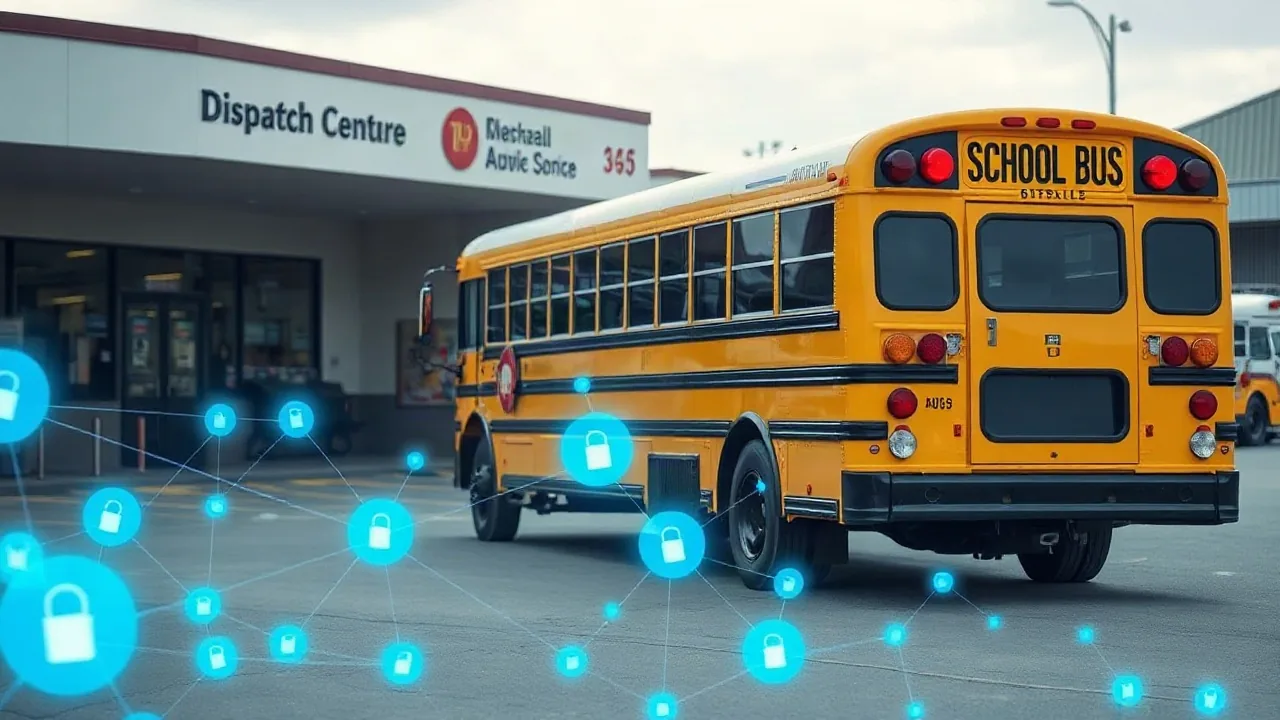
A large midwestern school district discovered unauthorized access to its fleet management system in July 2026, exposing GPS locations and student ridership patterns to an unknown actor for nearly three weeks. The incident, disclosed by the district to parents in August, highlighted a critical blind spot: school bus networks often lack the cybersecurity defenses standard in banking or healthcare, despite carrying some of America's most vulnerable passengers.
Connected school buses now stream real-time data through GPS trackers, mobile apps, and onboard diagnostics systems. Thousands of districts have deployed these connected vehicles to streamline operations, reduce fuel costs, and improve student pickup accuracy. But each integration creates a new entry point for digital threats.
The Transportation Information Sharing and Analysis Center (T-ISAC), which coordinates cybersecurity responses across transit authorities, received 47 reported incidents involving school bus systems in the first half of 2026, up 68 percent from the same period in 2025. Most attacks targeted fleet management platforms rather than the buses themselves, but the trend alarmed transportation officials nationwide.
The anatomy of IoT vulnerability in school transportation
School bus vulnerabilities stem from a perfect storm of aging infrastructure, budget constraints, and rapid technology adoption. Many districts rushed to install GPS and telematics systems without conducting thorough security audits. IoT security standards for education remain fragmented, with no federal mandate requiring bus fleets to meet specific encryption or authentication protocols.
Dr. Sarah Chen, director of transportation security at the Education Strategy Group, said in an interview this September: "Most school buses run on Linux or Windows kernels without regular patching. A bus that hasn't received a software update in two years is essentially running known vulnerabilities that hackers can exploit within minutes."
Common attack vectors include:
- Weak default credentials on fleet management dashboards, often unchanged since deployment
- Unencrypted wireless connections between onboard systems and central servers
- Third-party apps and integrations with poor security validation
- Mobile apps used by drivers and dispatchers that lack multi-factor authentication
Attackers have already exploited these gaps. In May 2026, a ransomware gang locked a Texas district's routing software for 72 hours, forcing buses to operate on printed maps and costing the district an estimated $180,000 in recovery and overtime labor.
Student data and safety implications
Beyond operational chaos, the real concern is student data protection. Fleet systems often store names, addresses, pickup times, and health information. A breach exposes children to stalking, kidnapping, or identity theft. Attackers could also manipulate GPS coordinates to direct buses off-route, or intercept emergency communication channels during a crisis.
The National Association of School Resource Officers documented three cases in 2026 where data stolen from school bus systems was used to target students outside school hours. None resulted in physical harm, but investigators confirmed the attackers used GPS waypoint data to identify routes and schedules.
"Parents expect the same level of protection for their kids on a bus as they do in the school building," said Marcus Thompson, superintendent of safety for the American School Bus Council, in a prepared statement in July 2026. "Right now, that trust is not reflected in how we secure these vehicles."
The ASBC released an updated security framework in August 2026, recommending that all districts adopt zero-trust architecture for bus networks by the end of 2027. The guidance includes encrypting all data in transit, implementing device fingerprinting for driver apps, and establishing 24/7 monitoring for unauthorized access attempts.
Preparing for 2026 and beyond
Several states have begun mandating cybersecurity audits for school transportation fleets. California, New York, and Texas passed legislation this year requiring annual third-party penetration testing and incident reporting to state education agencies. Federal funding for school cybersecurity, allocated through the Education Infrastructure Act, now explicitly covers vehicle systems in addition to classroom networks.
Districts implementing robust defenses are seeing results. The Clark County School District in Nevada completed a full security overhaul of its 2,400-bus fleet in June 2026, investing $2.3 million in network segmentation, endpoint detection, and staff training. The district has not reported a single compromise since implementation, and other large districts are now modeling their programs on Clark County's approach.
Key steps districts are taking include:
- Isolating bus networks from administrative systems using air-gapped or heavily firewalled segments
- Rotating credentials monthly and enforcing 15-character minimum passwords with multi-factor authentication
- Deploying real-time anomaly detection on fleet management servers
- Training drivers and dispatchers to recognize phishing and social engineering attempts
- Contracting with dedicated transit security consultants for quarterly risk assessments
Smaller districts, often with tighter budgets, are forming regional cooperatives to share security resources and negotiate volume pricing on cybersecurity tools. The Michigan School Bus Safety Association launched a shared incident response team in August 2026, providing free forensics and recovery support to member districts.
The challenge remains urgent but solvable. As school buses become smarter, the industry is slowly catching up on security. Districts that act now can protect student data and ensure safe transportation for years to come.