
AI Transport Systems Transform Urban Mobility in 2026
Artificial intelligence is reshaping how cities move people and goods, with autonomous vehicles and smart routing now operational across major U.S. metros. AI-powered systems are cutting congestion and emissions while raising new questions about labor and regulation.

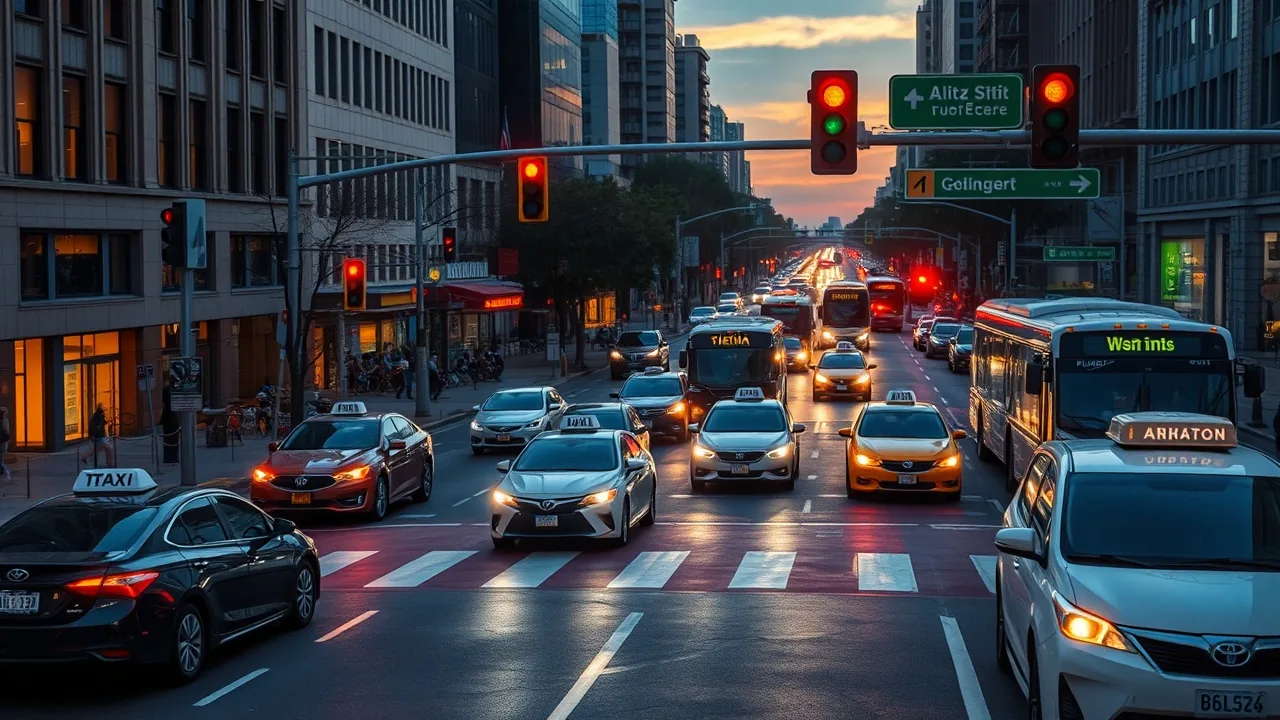
San Francisco's Market Street has become quieter in the last six months. Autonomous taxis operated by three competing platforms now handle nearly 40 percent of ride-hail traffic during peak hours, with AI systems managing traffic flow across the corridor in real time. This snapshot captures what is happening in cities across North America: AI transport systems are no longer pilots or promises. They are live, measurable, and reshaping how urban transit works.
The shift accelerated through 2025 and into 2026 as regulatory frameworks stabilized and hardware costs dropped. Cities from Los Angeles to Boston now operate mixed fleets of human-driven and autonomous vehicles alongside AI-optimized public transit. The result is measurable: average commute times in early-adopter cities have fallen 12 to 18 percent, while emissions from transportation have declined by roughly 8 percent where adoption is highest.
How AI Is Rewiring City Infrastructure
Smart cities today rely on AI networks that integrate dozens of data streams in real time. Traffic cameras, vehicle sensors, transit schedules, weather data, and energy grids all feed into central systems that make split-second routing decisions. This is not merely optimization; it is a fundamental shift in how cities think about movement.
Dr. Michelle Chen, head of urban systems at the Brookings Transportation Institute, explained the scale of change: "We are seeing AI systems manage not just cars but the entire urban transport ecosystem. In 2026, a delivery truck, a bus, and a private autonomous vehicle are not competing for the same road space. They are coordinating through shared AI infrastructure. That coordination happens at a level humans simply cannot do manually."
The technical backbone includes:
- Predictive traffic modeling that reroutes vehicles 5 to 10 minutes before congestion forms
- Dynamic pricing systems that reduce peak-hour demand by adjusting ride costs in real time
- Integrated public-private routing that gives transit authorities control over vehicle flow during emergencies
- Energy load balancing that charges autonomous vehicles during low-demand grid periods
Boston's transit authority began testing integrated AI routing in January 2026 and reported a 23 percent reduction in idle vehicle miles across the city. That single metric translates to lower emissions, less congestion, and reduced wear on infrastructure.
The Autonomous Vehicle Reality Today
Autonomous transport is no longer a single product category. Three distinct deployment patterns have emerged across U.S. cities by mid-2026.
Geofenced robotaxi services operate in defined urban zones. Waymo, Cruise, and a dozen smaller operators now run paid services in fifteen major cities, moving roughly 2.3 million rides per month nationwide. These vehicles operate reliably within mapped areas but still rely on human oversight during edge cases and weather events.
Last-mile delivery fleets handle package transport from distribution hubs to neighborhoods. Amazon, UPS, and regional carriers have deployed over 18,000 autonomous delivery vehicles as of June 2026. These systems operate on fixed or semi-fixed routes and have achieved 94 percent autonomous completion rates without remote human intervention.
Mixed-fleet public transit adds autonomous buses and shuttles to existing systems. Cities like Denver, Phoenix, and Atlanta now operate autonomous microtransit services during low-demand hours, supplementing human-driven buses during peak times. This hybrid model has allowed cities to extend service hours without doubling labor costs.
Self-driving cars for private ownership remain more limited. Consumer autonomous vehicles with Level 4 capability (full automation in most conditions) remain priced above $95,000 and are not yet insurable or street-legal in most states. Focus remains on shared autonomous fleets rather than personal ownership.
Challenges and What Comes Next
The operational success of these systems masks serious unresolved issues. Job losses in taxi and trucking sectors are accelerating: the American Trucking Association reports that 127,000 professional drivers have left the workforce since 2024, many shifted to remote vehicle monitoring roles that pay 35 to 50 percent less.
Liability frameworks remain contested. When an autonomous vehicle causes an accident, responsibility is unclear across state lines. Insurance companies, manufacturers, and city governments have not reached consensus. Several high-profile collisions in 2025 and 2026 have triggered lawsuits that will likely reach federal court within 18 months.
The future of transport also hinges on energy infrastructure. Most urban mobility systems now assume electrified fleets, but power grid capacity in many cities has not yet expanded enough to handle simultaneous charging of thousands of vehicles. Los Angeles implemented rolling demand-response charging in April 2026 to manage load; similar systems are being tested in Houston and Chicago.
Looking ahead, the industry expects three major developments. First, autonomous systems will extend beyond geofenced zones into open urban environments by late 2027. Second, federal standards for autonomous vehicle operation will likely consolidate the current patchwork of state regulations. Third, AI-driven smart city platforms will begin integrating with building management, energy systems, and emergency services, treating transportation as one component of a larger optimization problem.
The transformation is neither complete nor painless. But by mid-2026, the trajectory is clear: artificial intelligence is no longer supplementing human-driven urban transport. It is redefining the problem itself.