
DoorDash Delivery Reshapes Urban Mobility and Traffic Patterns
DoorDash and similar delivery platforms are fundamentally altering how cities move goods and people, creating new challenges for traffic management and reshaping the gig economy landscape in 2026.

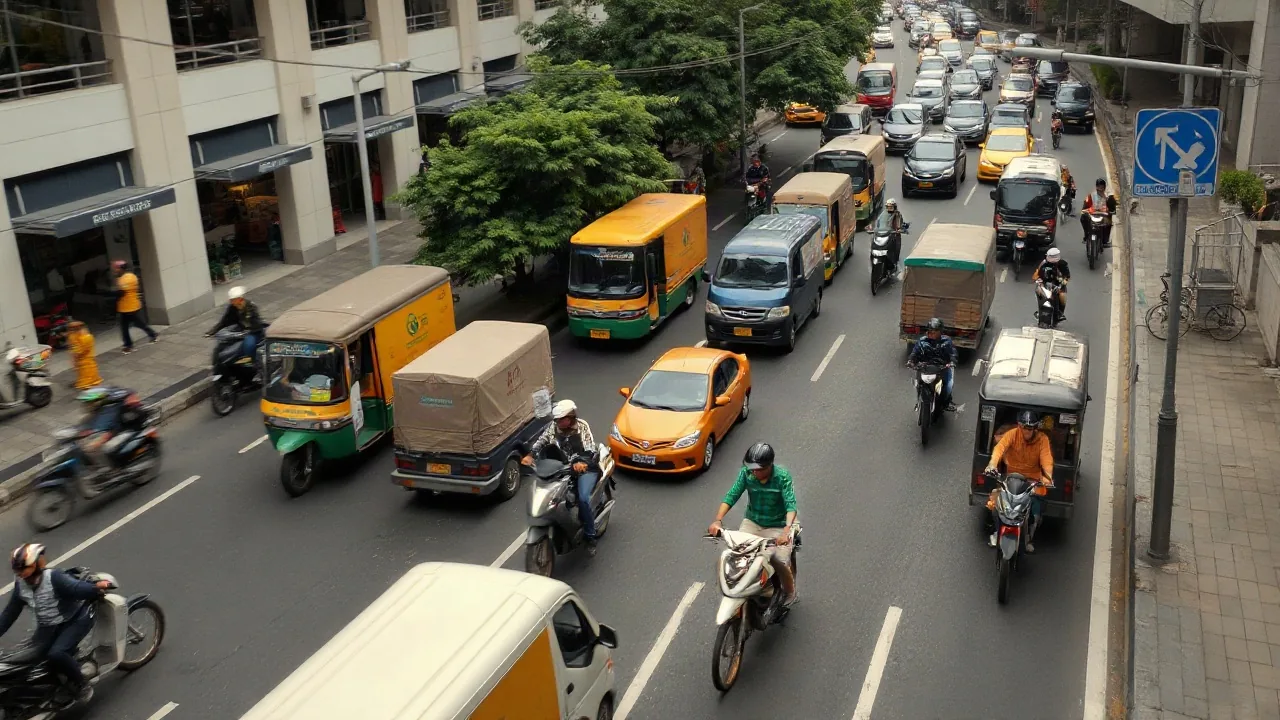
A delivery driver in Chicago weaves through downtown traffic on a Wednesday afternoon, completing her 12th order of the day via DoorDash. Behind her, dozens of other couriers follow similar routes, their movements coordinated by algorithms that now generate more vehicle miles in some U.S. cities than traditional taxi services. This scene has become routine across American urban centers, reflecting a seismic shift in how goods reach consumers and how cities manage the resulting congestion.
DoorDash, which operated in over 7,000 cities across North America as of mid-2026, has evolved from a simple meal-delivery app into a primary force reshaping urban mobility patterns. The company's growth parallels an explosion in platform-based delivery services, collectively adding an estimated 300,000 vehicles to American streets annually. The impact extends far beyond restaurant orders, touching logistics, city planning, and the fundamental economics of work itself.
"We're seeing delivery vehicles now represent 5 to 8 percent of peak-hour traffic in major metropolitan areas," said Maria Chen, senior urban planner at the Institute for Transportation Studies at UC Berkeley, in a September 2026 interview. "That's a dramatic shift from just five years ago. Cities that didn't plan for this density of delivery traffic are now facing congestion costs that exceed hundreds of millions annually."
The Traffic and Infrastructure Collision
New York City's Department of Transportation reported in August 2026 that delivery vehicles make approximately 4 million trips per week across the city. This volume has forced municipal governments to implement smart cities initiatives designed specifically to route delivery traffic and reduce conflicts with passenger vehicles and pedestrians.
Several factors amplify the challenge. Delivery economics favor frequent stops in high-density areas, concentrating vehicle trips rather than spreading them. DoorDash drivers, often working with flexible schedules, lack the route optimization that traditional commercial logistics employ. Peak delivery hours overlap with rush-hour commutes, compounding congestion.
Cities have responded with mixed interventions:
- Dedicated delivery zones in high-traffic corridors (Los Angeles, San Francisco, Boston)
- Time-window restrictions for commercial deliveries (Chicago, Philadelphia)
- Congestion pricing models that charge per vehicle mile in central districts (Seattle pilot, 2026)
- Requirements for electric or low-emission delivery vehicles by 2030 (California executive order, September 2026)
DoorDash itself has invested in fleet electrification, announcing 50,000 electric bike and scooter units deployed across U.S. markets by mid-2026, a move designed partly to address municipal pressure and partly to reduce its own operational costs. The company's Chief Operations Officer stated in June 2026 that last-mile delivery via micro-mobility represents "the economically and environmentally optimal solution for dense urban cores."
The Gig Economy Transformation
Beyond traffic, DoorDash's dominance in gig economy labor has reshaped income generation for millions of Americans. As of September 2026, approximately 2.3 million people in the U.S. earn income through DoorDash, either as full-time employees or part-time independent contractors. This scale gives the company outsize influence over labor policy and worker earnings across the nation.
Compensation models have evolved. DoorDash's base delivery pay in September 2026 ranges from $2 to $8 per order depending on market, with tips comprising 40 to 60 percent of driver earnings in major cities. However, driver earnings have declined relative to 2023 levels as market saturation increased and the company optimized its algorithm to reduce per-order payouts.
Several states have begun classifying delivery workers differently, creating patchwork regulations that complicate DoorDash's operational model. California's Proposition 22, affirmed in 2022 but now under renewed legal challenge, remains foundational to the company's current labor structure. The outcome of pending classification disputes in New York and Massachusetts will likely define the industry's cost structure through 2027 and beyond.
Future Transport and Autonomous Integration
DoorDash has signaled investment in autonomous delivery systems, piloting robot deliveries in three cities as of mid-2026. These small ground-based robots, designed for sidewalk and curb delivery, present a potential solution to labor cost pressures. However, their deployment depends on regulatory approval and technical maturation. Current systems handle flat urban terrain effectively but struggle in weather and complex intersections.
The company's partnership with Aurora Technologies (autonomous trucking) and multiple drone delivery pilots suggest DoorDash anticipates a mixed-mode future transport ecosystem. Drone delivery for suburban markets and autonomous ground vehicles for urban distribution could reduce labor dependency while maintaining service speed.
"Autonomous delivery is 3 to 5 years away from meaningful revenue scale," said Thomas Russo, senior analyst at Goldman Sachs, in July 2026. "Until then, human couriers remain the only economically viable option for the density and variability that cities require."
What remains clear is that DoorDash, whether through human drivers or future robots, has permanently altered the calculus of urban movement. Cities now budget for delivery traffic in the same way they once budgeted for taxi medallions. Municipal planners and corporate logistics operators alike must account for the reality that rapid consumer convenience has become embedded infrastructure, reshaping streets, labor markets, and the meaning of mobility itself.