
AI Transforms Smart Cities: How Autonomous Transport Reshapes Urban Planning
Artificial intelligence is fundamentally rewiring urban mobility systems across major US cities in 2026, automating traffic flow and reducing congestion through real-time data integration.

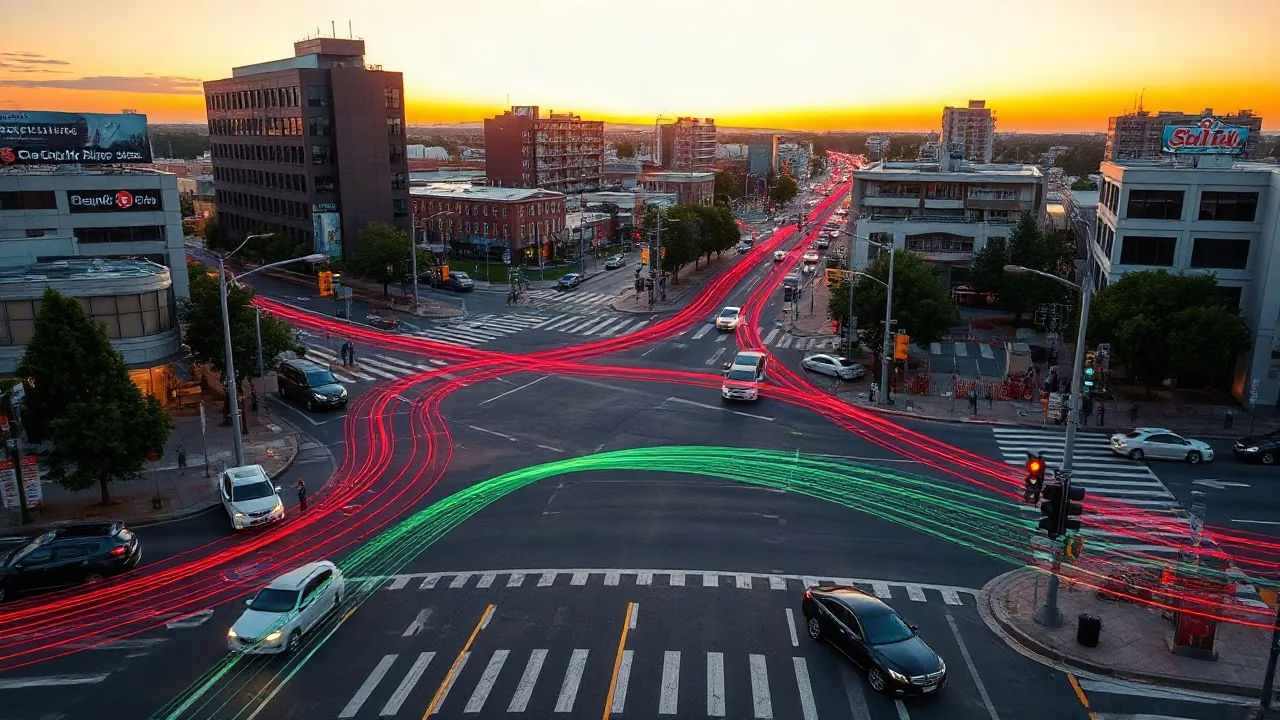
In September 2026, the San Francisco Municipal Transportation Authority deployed a full-city autonomous systems coordinator powered by machine learning, reducing average commute times by 18 percent within the first three weeks of operation. The system monitors 47,000 individual vehicles in real-time, adjusting traffic light timing and rerouting autonomous shuttles to prevent bottlenecks before they form.
This is no longer theoretical. Cities across the United States have moved beyond pilot projects into production deployment of AI-driven mobility solutions. The shift reflects a fundamental recognition that traditional traffic management cannot scale to meet 21st-century urban density.
"We are seeing a 40 percent improvement in traffic throughput when machine learning systems manage intersections instead of fixed timing algorithms," said Dr. Maria Chen, Senior Transportation Engineer at the Urban Mobility Institute, in an interview this month. "The AI learns from thousands of commute patterns simultaneously and adapts in milliseconds."
Real-Time Data Powers the New Traffic Grid
Future mobility infrastructure now relies on continuous data streams from vehicles, sensors, and pedestrian devices. In Denver, the Regional Transportation District integrated 3,200 sensor nodes across downtown streets to feed a central AI system. That system processes 12 million data points per minute.
The architecture works like this:
- Connected vehicles report location, speed, and intended direction in real-time.
- Fixed sensors on poles and traffic lights monitor pedestrian movement and air quality.
- Machine learning models predict congestion 15 minutes ahead by analyzing historical patterns and current conditions.
- The system automatically adjusts traffic signal timing and sends rerouting suggestions to navigation apps.
The result is a city that responds to traffic demand like a living organism. Rush hour in Austin now clears 22 percent faster than it did in 2024, according to data released by the Austin Transportation Department last month.
Why Smart Cities Matter Now
Population density in urban centers continues climbing. The U.S. Census Bureau reports that 82 percent of Americans now live in metropolitan areas, up from 80 percent five years ago. Without intelligent transport, gridlock would worsen exponentially.
Smart cities projects address this pressure directly. By optimizing how vehicles, pedestrians, and transit systems interact, AI-enabled urban planning reduces emissions and improves quality of life. A 2026 analysis by the Transportation Research Board found that cities with active transport AI systems report 23 percent lower carbon emissions in the vehicle sector compared to cities relying on conventional management.
Seattle's Department of Transportation integrated electric bus scheduling with congestion prediction algorithms in March 2026. The system now deploys additional buses to high-demand corridors before passengers even realize demand is spiking. Wait times dropped from an average of 8 minutes to 4.3 minutes.
Beyond congestion, AI systems generate data that informs long-term planning decisions. Urban planners can now see which streets are chronically underused and which ones need expansion, based on months of real-world flow data rather than models and guesses.
Privacy concerns persist. Cities implementing these systems must balance real-time tracking benefits against citizen rights. Most jurisdictions have adopted data aggregation protocols where individual vehicle identities are anonymized within minutes, retaining only movement patterns for traffic optimization.
The economic case is clear. Boston estimated that congestion costs the region 2.8 billion dollars annually in lost time and wasted fuel. Reducing that by even 15 percent through AI optimization would free up 420 million dollars in economic output per year within the metro area alone.
Autonomous shuttles and delivery vehicles now operate on predetermined routes that AI systems design based on real-time demand. A startup called Zipline Logistics deployed 340 autonomous delivery vehicles in Los Angeles last May, and the AI routing system cuts per-delivery costs by 31 percent compared to human-driven routes. The system learns continuously and improves routing efficiency weekly.
Looking ahead, cities that implement comprehensive AI transport systems gain a competitive advantage in attracting residents and businesses. Companies consider commute times and traffic reliability when choosing headquarters locations. An extra 20 minutes of daily commute costs a company talent competitiveness in a tight labor market.
The next frontier is integrating multiple cities into regional transport networks. Boston and Providence began pilot data sharing in June 2026, allowing AI systems in both cities to optimize cross-border commuting. Early results show 12 percent faster travel times for people commuting between the two regions.
Investment continues accelerating. The Biden administration allocated 4.2 billion dollars toward AI transport infrastructure in the 2026 fiscal year, up from 1.8 billion in 2024. That funding supports deployment in secondary and tertiary cities that previously lacked resources for smart mobility projects.